
In this neighborhood, close to Boston University and Harvard, the first question those looking for a room ask is, 'Will I live alone or share with a roommate?' The next question naturally follows: 'So, which unit is the most cost-effective?' Examining the market rates for different unit types reveals quite clear answers.
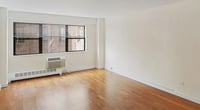
Studios average $2,364, with a size of around 450 square feet. While having an independent living space is advantageous, it's important to consider that with this budget, finding a roommate to share a larger unit is much more cost-effective per person. This option is primarily chosen by graduate students or professionals who prioritize privacy.
One-bedroom units are priced at $3,188, around 650 square feet. The gap between studios and one-bedrooms is significant, exceeding $800. While the advantage of a separate bedroom exists, the cost can be burdensome for individuals, making it a less viable option unless one is a couple or dual-income household.
Two-bedroom units are about $3,900, with a size of around 900 square feet. When shared by two roommates, the cost per person drops to about $1,950, making it even cheaper than living alone in a studio. This phenomenon explains why roommate sharing is common in the local rental market.
Three-bedroom units are priced around $3,997, with a gap of less than $100 compared to two-bedrooms. This is largely influenced by the typical three-story wooden houses in Alston, known as triple-deckers. Even with more rooms, the similar building structure keeps the price differences minimal. This is also the range where sharing among three roommates results in the lowest individual cost.
- Studio: approximately $2,364, 450 sqft
- One-bedroom: approximately $3,188, 650 sqft
- Two-bedroom: approximately $3,900, 900 sqft
- Three-bedroom: approximately $3,997, 1,150 sqft
Looking at new supply, recent developments are polarized between high-rise buildings focused on small studios and one-bedrooms, and existing triple-deckers that maintain multi-room listings. It's worth noting that larger roommate share listings are more commonly found in older buildings than in new constructions.
Overall, the rental gap indicates that this neighborhood has a particularly large cost difference between single and multi-person living arrangements. This can be interpreted as the local rental market being priced from the outset with roommate sharing in mind.
For Korean households, especially those staying alone for studies or internships, finding a roommate to share a two-bedroom or three-bedroom unit is definitely advantageous for budget management. However, the discomfort of living with roommates who have different lifestyles should also be considered. The figures are based on data from renthop.com and apartments.com for 2026.
 vibeworldbuilder1982
 Top Real Estate




 moo moo |
 ultron78 |
 garlic bread |
 Sugar Cream Door Bulletproof Noodles |
 urbanmint |
 Investment Information News Update |
 Lime berry |
 Later Never Comes |
 treasure |
  strawberry |
  Augusta Univ |
  B.I.G. Victor |
  Victory 1988 |
  Swift Falcon |
  venture |
  SPAM 101 |
  choi family |
  zoryan |
  cloud0 |
  SKy Face |
  wonder |
  Dragon Lee |
  productionblog |
  What can make money? |
  Oklahoma Hoya OK |
  prixon74 |
  Roman Pan |
  USALATU BLOG |