

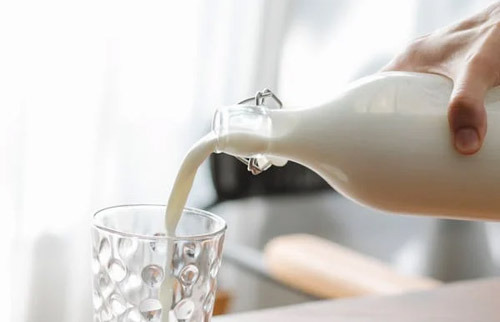
So when considering how to store leftover milk, freezing comes to mind. To put it simply, milk can be frozen. However, it's important not to just freeze it haphazardly; there are a few precautions to take to use it properly.
First, let's look at the storage method. If you freeze milk in its original paper carton or glass bottle, problems can arise. Milk expands as it freezes, so a full container can burst or break. Therefore, when freezing, it's essential to use plastic containers or airtight containers, leaving some space at the top.
Especially with glass bottles, they can break immediately if the volume expands, so it's best not to use them at all. The recommended temperature for the freezer is below -18 degrees Celsius, and at this temperature, milk can be stored for up to 3 months. However, the longer it's stored, the more the quality diminishes, so it's best not to keep it too long.
So what happens when it's thawed? Many people might be surprised to learn that thawed milk is not the same as fresh milk. The water and fat separate, changing the texture and creating a slightly thicker consistency. Because of this, if you pour it directly into a cup and drink it raw, the taste will be quite different from the fresh milk you're used to. However, if you use it wisely, there's no problem. After thawing, shaking it well can help mix it somewhat evenly, and it's much better to use it for cooking or baking rather than drinking it raw. When used in recipes like pancake batter, muffins, soups, custards, or cream sauces, you won't notice a significant difference in taste or texture. So the best use for frozen milk is as a "cooking ingredient."
The thawing method is also important. Many people hastily take it out to thaw at room temperature, but this can pose hygiene risks. Milk has a high protein and moisture content, creating a favorable environment for bacteria to grow, so thawing at room temperature can lead to spoilage. Therefore, the safest method is to thaw it slowly in the refrigerator. It may take half a day to a day, but this is the best way to preserve taste and safety. Rapid thawing in the microwave is also possible, but it can result in uneven heating or clumping, so it's not recommended. And an important point: once thawed, milk should not be refrozen. Refreezing after thawing can drastically reduce quality and is not hygienic. So the principle is to use thawed milk immediately.
In summary, while milk can be frozen, it's not recommended to freeze it for drinking. If you want fresh taste, it's best to consume refrigerated milk quickly. However, if you have leftover milk that you don't use often, freezing it for cooking is an excellent solution. You can repurpose milk that would otherwise be wasted into pancake batter, soups, or baking ingredients. In fact, this method is quite useful for those who often have leftover milk at home. It's especially convenient to have frozen milk on hand when making snacks for kids or quickly whipping up pancakes in the morning.
So the conclusion is this: freezing milk is possible, but if you expect the same fresh taste, you might be disappointed. Instead, it's a smart way to utilize leftover milk without wasting it. When you take it out occasionally while cooking in the kitchen, frozen milk can become a surprisingly reliable stock ingredient.







 Moscow Kim |
 Seattle - Emerald City |
 self-evaluation |
 Sandiego Auntie |
 Karina's Blog |
 tartbear |
 Thersburg Mrs |
 monkey |

 Anytime Journey |
  Mrs. Duluth |
  jaxter |
  Atlanta Mama |
  Baguette Blog |
  US Embassy |
  Korean Mom |
  My NYC |
  moo moo |
  Mr Oh |
  forevergee |
  festival |
  manchester |
  constant |
  Leapfrog Move |
  vibranto |
  Tora Tora |
  yellowbutter |
  Dolly |
  NYC saladbar |