
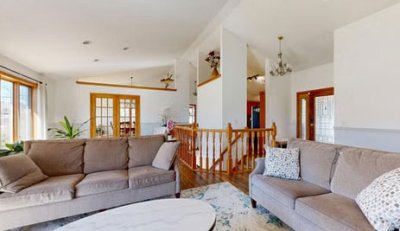
When looking at Anchorage's rental market by unit type, it is noticeable that even within the same city, the options vary significantly based on lifestyle choices. Recent market trends show an uneven supply and demand from studios to three-bedroom units, with distinct characteristics for each unit type.
Studios are typically priced around $1,196 per month, with an average area of about 450 to 500 square feet. This type of unit is mainly sought after by military personnel, seasonal workers, and young renters in their 20s and early 30s who are just starting to settle down, as there is a steady demand to keep initial settling costs low.
One-bedroom units average around $1,320, with an area of about 700 square feet. This is about $100 more than studios, but the clear separation of personal space makes it a popular choice for single professionals and newlyweds.
Two-bedroom units average around $1,600, with an area of about 1,000 square feet. This price range overlaps with young renters looking to share costs with roommates and families with one or two children.
Three-bedroom units average $2,045, with an area of about 1,300 square feet. These are primarily sought after by families with multiple children or multi-generational households, and there are relatively fewer new constructions available, leading to limited options.
- Studio approximately $1,196 / 450-500 sqft
- One-bedroom approximately $1,320 / 700 sqft
- Two-bedroom approximately $1,600 / 1,000 sqft
- Three-bedroom approximately $2,045 / 1,300 sqft
In terms of supply, one-bedroom and two-bedroom units make up the largest proportion. Recently constructed apartment complexes are often designed with a focus on one- to two-bedroom units, which seems to align with the trend of Anchorage's household composition shifting towards one- to two-person households.
The rental gap between studios and one-bedrooms is not large, but it widens significantly from one-bedroom to two-bedroom, and again from two-bedroom to three-bedroom. While the cost per square foot may decrease, the overall financial burden increases, which suggests that families considering a move should calculate the balance between total rental budget and the number of rooms in advance.
For Korean households, it is practical to consider the grade level of children, school districts, and commuting distances when deciding on a unit type. If you are newly assigned or in the initial settling phase, starting with a one-bedroom unit to get a feel for the living rhythm before moving to a two-bedroom or larger may also be worth considering.
 lightyear
 EricUnisex








 moo moo |
 ultron78 |
 garlic bread |
 Sugar Cream Door Bulletproof Noodles |
 urbanmint |
 AL ALASKA |
 Sunny's Travel in America |

 Information on Area Codes in the Americas |
 viewtop |
  treasure |
  strawberry |
  Augusta Univ |
  B.I.G. Victor |
  Victory 1988 |
  Swift Falcon |
  venture |
  SPAM 101 |
  choi family |
  zoryan |
  cloud0 |
  SKy Face |
  wonder |
  Dragon Lee |
  productionblog |
  What can make money? |
  Oklahoma Hoya OK |
  prixon74 |
  Roman Pan |
  USALATU BLOG |