
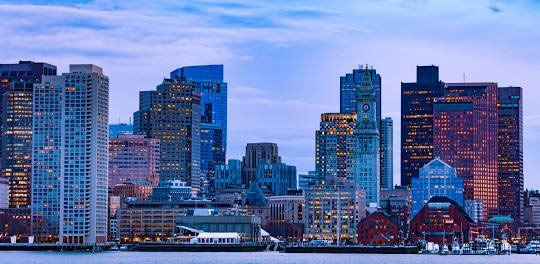
Boston is a city representing the New England region in the northeastern United States, and it is one of the oldest cities in the country and the capital of Massachusetts.
Historically, it holds a very important status in terms of population composition and economic aspects.
Historical Overview
- Colonial Era and Independence Movement: Around 1630, English Puritans settled and laid the foundation of the city. Major events of the American Revolutionary War, such as the Boston Tea Party and the Boston Massacre, took place here.
- Modernization and Industrial Development: In the 19th century, shipping, trade, and manufacturing grew, propelling it to become a key city in the East, and in the 20th century, education, healthcare, finance, and high-tech industries developed, establishing it as a global city.
- Center of Culture and Academia: With prestigious universities like Harvard and MIT, the academic and research culture has flourished, leading to a vibrant ecosystem of innovative industries and startups.
Population
- City Population: The population of Boston itself is estimated to be around 700,000 (as of the early to mid-2020s).
- Metropolitan Population: Including the Greater Boston area, the population exceeds 4 million, forming a large living area.
- Racial and Cultural Diversity: International students and immigrants continue to flow in, gradually diversifying the racial composition, with Asian and Hispanic populations also on the rise.
Median Household Income
- Income Level: The median household income in Boston is approximately $70,000 to $80,000 or more (this may vary by source and year), which is significantly higher than the national average.
- Causes: This is due to the development of high-income industries such as high technology (IT, biotech), healthcare, finance, education, and research.
- Cost of Living Consideration: Given the high income, housing and living costs are also expensive, so it is important to understand the actual cost of living in advance.
In summary, Boston has a deep history that dates back to the 17th century and has become a central stage for American independence. Today, it is a major city with a well-developed economic structure in education, research, healthcare, and finance. The population forms around 700,000 at the city level, and when combined with the metropolitan area, it is a large urban area with several million residents. The median income ranks high in the U.S., but it is also characterized by high living costs such as housing and prices.








 moo moo |
 ultron78 |
 garlic bread |
 Sugar Cream Door Bulletproof Noodles |
 urbanmint |
 Tart Tart |
 tiramisu |
 bagel90 |
 lattecu |
 NO CAP LIFE |
  dralix58 |
  Gorama Round |
  Skydiving |
  dreamport |
  Yellow Snowman |
  Toaster Pizza Magic Show |
  velvetnom |
  Anytime Journey |
  Mrs. Duluth |
  jaxter |
  Atlanta Mama |
  Baguette Blog |
  US Embassy |
  Korean Mom |
  My NYC |
  Mr Oh |
  forevergee |
  festival |
  manchester |