
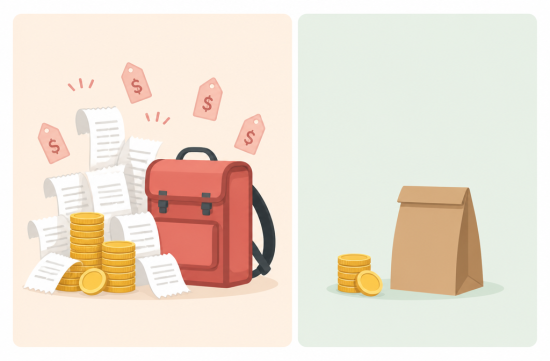
As soon as you open a delivery app after work and get home, the game is pretty much over. You might not realize it when looking at the menu, but once you get to the payment screen, delivery fees, service charges, and tips all add up, making the total much higher than you initially thought. Many of you have probably hesitated in front of the payment button at least once.
In fact, research shows that this isn't just a feeling. According to a consumer survey, ordering the same menu item for delivery is, on average, 79.5 percent more expensive than buying it directly from the store, which means you're paying an extra $9.30 each time you order. A lunch that costs $10 can turn into a $17 or $18 meal just by going through a delivery app.
The markup varies by platform. DoorDash adds an average of 83 percent to the store price, Grubhub adds 80 percent, and Uber Eats is relatively lower at around 69 percent. The reason for these different prices is that restaurants pay a commission to the platform that ranges from 15 to 30 percent of the order amount, which is then added to the menu prices. Additionally, DoorDash takes a separate 15 percent service fee from the subtotal and starts delivery fees at an average of $4, while Uber Eats charges an average delivery fee of about $5.79, which is not a small amount.
If this doesn't quite resonate, let's consider a $30 dinner menu as an example. If you order through DoorDash, you'll incur a delivery fee of $3.99 and a service fee of $2.10, while ordering through Uber Eats will cost you a delivery fee of $2.49 and a service fee of $3.50, bringing the total to around $36 for both. Isn't it surprising that the amount before tips is already this high? A dinner that would cost $30 if picked up ends up costing an extra $6 just by going through an app.
So, how much does this add up over a month? According to an example calculated by a media outlet, a household that orders $25 worth of food three times a week ends up paying an extra $30 a month in fees, which totals $360 a year. This means that simply switching to pickup for the same menu would leave that money in your bank account.
There's one important point to clarify here: suggesting to reduce delivery doesn't mean we want to cut the earnings of delivery drivers. Data from New York shows that the average tip for DoorDash has dropped to 76 cents, which ultimately reflects how the platform's complex fee structure squeezes both customers and workers. A healthier consumption method might be to give some of the money saved from pickup directly as tips to store employees or to only order delivery when absolutely necessary, and when you do, to tip generously.
Changing habits is simpler than you might think. By ordering in advance through the app and timing your pickup to arrive at the store, you'll have almost no wait time, and many credit card companies or apps offer exclusive discounts for pickups, so be sure to check those out. Committing to pickup just once a week is enough to start. It's also a good idea to review your delivery app receipts weekly and add up the fee items separately. Once you start seeing the numbers, your hand will naturally gravitate towards the pickup button the next time you order.
Once you realize that the cost of delivery fees quietly adds up to the price of a few cups of coffee each month, anyone would feel a bit unfair about it. This month, try to fit in a few pickups instead of deliveries and see the difference in your bank account for yourself.


 Anna Life |
 JESIKYEOALBA BLOG |
 Dad's Tribute TC |
 Glow Yo |
 U.S. Retirement Pension Information |
 Skyline |

 Information on All Regions of the United States |


 ness 6 |
  Montgomery Mom |
  SteelOrbit |
  Puddle Puddle |
  Arizona Cowboy |
  macaronpop |
  marydock |
  peachpanda |
  U.S. College Admission Information |
  Fruitop |
  Exploring American Life Information |
  sing sing |
  ORAVEZIN Oppa |
  Lego My Ego |
  logger |
  Conflite Teacher |
  summita |
  Ari Songhan American Immigration Life |
  marketbox |