

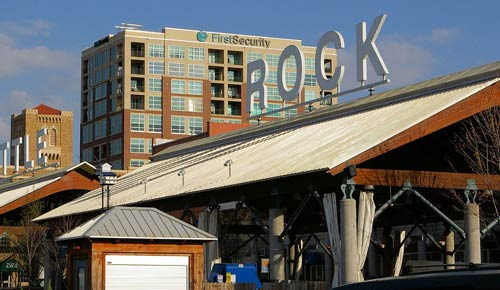
The cost of living index in Little Rock, the capital of Arkansas, is estimated to be around 86 compared to the national average of 100.
Having observed the real estate market in the American South for decades, I have come to realize that the region's affordable cost of living is not merely a result of "low prices in an underdeveloped area," but rather a structural low-cost system stemming from the logistics network of the Mississippi River basin and the large retail infrastructure represented by Walmart. The supply chain of Walmart, headquartered in Bentonville, Arkansas, appears to have a downward effect on prices throughout the state.
Looking at housing costs, the monthly rent for a one-bedroom apartment in downtown Little Rock is around $1,050. This is about half the national average of $1,500 to $2,200, while the median sale price for single-family homes is observed to be in the range of $200,000 to $240,000. Suburban areas like North Little Rock and Bryant have a steady supply of new developments, providing a wide range of options. Arkansas has one of the lowest property tax rates in the nation (effective tax rate around 0.5% to 0.6%), making it favorable in terms of housing costs.
Grocery costs are considered one of Little Rock's strengths. The estimated monthly grocery bill for a family of four is around $980, and the accessibility to large discount stores like Walmart and Sam's Club helps keep actual purchase prices low. Although Arkansas has a relatively high sales tax rate (state sales tax of 6.5%), a separate lower rate (about 0.125%) applies to groceries, resulting in a limited burden on the shopping cart.
Transportation costs are also centered around personal vehicles. Little Rock is a transportation hub where Interstates 30 and 40 intersect, making it convenient to travel to surrounding cities, while public transportation in the city is limited. Monthly transportation expenses are estimated to be around $500. Utilities (electricity, gas, water) are in the range of $200 per month, which is lower than the national average, although air conditioning costs can temporarily spike during the hot summer months.
Compared to nearby cities, Little Rock (86) is slightly higher than Fort Smith, Arkansas (estimated at about 82), and similar to Memphis, TN (about 90) or Oklahoma City, OK (about 88). Compared to Dallas, TX (about 100 to 105) or Kansas City (88), Little Rock remains relatively affordable. The local economy is primarily driven by state government, healthcare, and agriculture, with UAMS (University of Arkansas for Medical Sciences) playing a significant role in the healthcare job market.
The Korean community in Little Rock operates on a small scale, primarily consisting of individuals working in healthcare, education, and retail. Based on my long-term observation of this market, moving to Little Rock offers significantly favorable conditions in terms of securing living space relative to costs.
In summary, Little Rock is a city where you can enjoy the infrastructure of the state capital of Arkansas with a cost of living approximately 14% lower than the national average. The competitive pricing of consumer goods stemming from Walmart's logistics network, low property taxes, and affordable housing costs appear to be structural factors supporting the economic appeal of this city.
 RoundSun
 Wavo
Wavo
 CrispyDetect





 prixon74 |
 Balancework |
 Make My Day |
 viroma |
 eatontown blog |
 US Home Buying Information Home Insurance |
 Esther 1983 |
 Arkansas Kim |
 Augusta Univ |
  B.I.G. Victor |
  Victory 1988 |
  Swift Falcon |
  venture |
  SPAM 101 |
  choi family |
  zoryan |
  cloud0 |
  SKy Face |
  wonder |
  Dragon Lee |
  productionblog |
  What can make money? |
  Oklahoma Hoya OK |
  Roman Pan |
  USALATU BLOG |
  Sunshine Blog |
  Minnesota Small Business |