
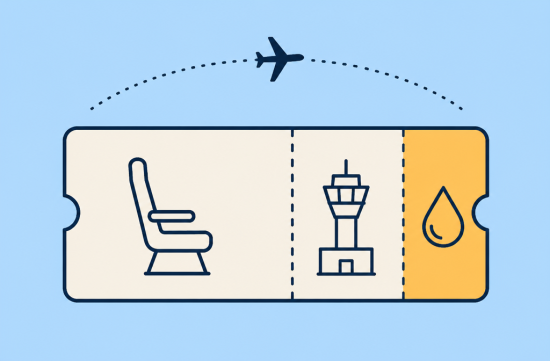
The air has changed dramatically in the mornings and evenings. I grabbed a coffee while putting on a cardigan over my t-shirt and suddenly remembered that I haven't bought my winter vacation ticket to Korea yet.
These days, the most common thing I hear from people around me is, "The fuel surcharge has gone up again, buy your ticket quickly." Before I rushed to make a purchase, I decided to do some thorough research this time since we're talking about several hundred dollars.
To get straight to the point, the numbers we're hearing in the news don't apply to us directly. The structure is a bit different than expected.
First, let's look at the numbers reported in the news. Korean Air's international fuel surcharge for October is at level 23, which is an increase of two levels from September's 21.
For routes to the East Coast and Midwest, like New York, Dallas, and Boston, the one-way fare is 362,600 won. For West Coast routes like LA, it's 322,000 won.
In September, the East Coast fare was 354,000 won, so that's an increase of 8,600 won in just a month. This means that the surcharge alone for a round trip exceeds 700,000 won, which honestly surprised me when I saw the numbers.
However, there's a catch here. This amount in won is based on tickets departing from Korea, meaning it's for tickets issued in Korea.
If a family member in Korea is purchasing the ticket for you or if the ticket is being issued from Korea, then these numbers are relevant. I initially didn't know this and felt rushed after only looking at Korean news.
For round-trip tickets to Korea departing from the U.S., a separate fuel surcharge applies, which is calculated in dollars. It's not the same system where the levels change every month like in Korea.
According to local Korean media reports, Korean Air raised the U.S. fuel surcharge by $50 for one-way tickets once at the end of March and again for purchases made from May 6.
At that time, the economy fare increased from $305 to $355 for one-way tickets. Business and first-class tickets were around $455.
I couldn't find reliable data on how the U.S. fare has changed since then. So, I won't assert what the current fare is. It would be irresponsible to use numbers from a few months ago as if they were current.
However, the method to check is simple. By entering the date on the airline's website and opening the detailed fare information just before payment, you can see the breakdown of taxes and fees.
The items marked as YQ or YR usually represent the fuel surcharge. The fare, airport tax, and surcharge are listed separately, allowing for direct comparison of the numbers. When getting quotes from travel agencies, asking for this item separately makes it much easier to compare.
So, will the surcharge increase for departures from Korea in November? No one knows yet.
The surcharge for departures from Korea is determined based on the average price of Singapore jet fuel from the 16th of the month before last to the 15th of the previous month. The October level was set based on the average price of $158.57 per barrel from August 16 to September 15, which was a 6.22% increase from the previous month.
The November level is usually announced around mid-October. Before that, any statement saying it will "definitely increase" is just speculation. It's not uncommon for oil prices to change direction within a month.
And there's one more thing to remember. The surcharge is based on the ticketing date, not the departure date.
This means that even if you're flying in December, if you purchase the ticket in October, the October rate applies. This is the real reason behind the saying, "Buy before it goes up."
However, rushing just because of the surcharge might be a regrettable choice. The basic fare usually has a more significant impact on the total round-trip amount. Often, the difference in fare class can be greater than the fluctuation of the surcharge.
Winter vacation, especially for departures in mid-December, is typically a peak season with high demand. If you miss out on a good fare class just to save a few dozen dollars on the surcharge, you might end up losing more. Once the cheaper seats are gone, the price for the same flight can jump significantly.
This is how I approach it. I compare total amounts by shifting the dates a few days back and forth and set price alerts. Once set up on platforms like Google Flights, they notify me via email, so I don't have to check every day.
Just changing the day of the week can sometimes lead to a significant difference in the total amount. Moving the departure date up by a day or two or delaying the return can also have a surprisingly large effect.
If you have mileage, check for bonus tickets as well. Keep in mind that mileage tickets also require separate payment for fuel surcharges and taxes, so it's wise to consider that amount when making a decision.
Also, be sure to check the refund policy. If you buy early but your schedule might change, a fare with no change fees, even if it's a bit more expensive, can provide peace of mind. This is especially true if your child's school schedule is not yet confirmed.
If it were me, I would buy the ticket in October if the fare for my desired dates looks reasonable.
If it still seems expensive, I would set a price alert and wait while keeping an eye on the announcement of the November surcharge and any changes in the U.S. fare.
No one can predict oil prices accurately. So, rather than being swayed by the surcharge, it seems like the best way to make a decision is to focus on the total amount and align it with my schedule to minimize regrets.
For those traveling to Korea this winter, have you already bought your tickets, or are you still waiting to see?
 JapchaeRadar


 cherrydino |
 victoria 68 |
 American Man in a Mask |
 kuku 100 |
 novent |
 savannah choi |
 bravo777 |

 Let's Be Like a Salt-like City Person |
 InJung Gu |
 Atlanta Business Information |
  vale vale |
  yentra |
  Golden life |
  andrew park |
  Peter Pan Pet |
  Balan |
  Cali M Law Group |
  neroyo |
  Dreams Come True as Desired |
  Khan Film Blog Production |
  coloradoman |
  Living Economy Information Blog |
  rustley |
  Shim Ramen |
  Cool Beach Freeway |
  Exploring American Life Information |
  Mental Health Psychiatrist |
  element |
  Koreab Date |
  CA Real Estate |