
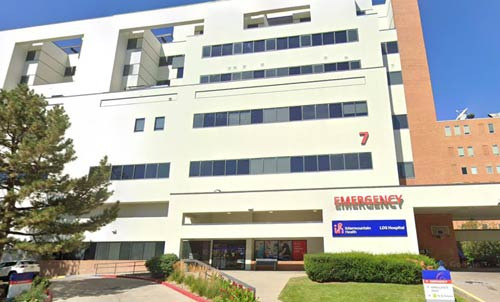
When looking for hospitals in Salt Lake City, you will often come across the name LDS Hospital.
Because of its name, you might think it is a small hospital run by a religious organization, but LDS Hospital is actually a general hospital that is part of Intermountain Health, a large healthcare system in Utah.
Its location in the northeast part of downtown Salt Lake City is a significant advantage for accessibility.
If you live in downtown areas like The Avenues or Capitol Hill, it is a large hospital that is quite close. It is reassuring for residents that they can receive comprehensive medical services without having to drive far to reach a hospital in the suburbs.
LDS Hospital has a long history, having opened in 1905, and has been responsible for healthcare in the Salt Lake City area for over a century. It became part of the Intermountain Health system and now operates as a significant part of a vast healthcare network that connects local hospitals, specialists, and testing facilities.
The range of medical services is diverse. You can receive emergency care, general inpatient treatment, and surgeries, as well as specialized care for heart and vascular diseases, women's health, orthopedics, and neurological disorders. Rather than solving all severe illnesses at LDS Hospital alone, patients can be connected to specialized medical institutions within the same network, such as Intermountain Medical Center, when necessary.
This is quite important when living in the U.S. Typically, you would see a nearby primary care physician or clinic for routine care, then go to a specialist if tests are needed, and move to a general hospital for major surgeries or admissions. If this process is connected within a single healthcare network, it becomes relatively convenient to share medical records and test results and receive the next stage of treatment.
Overall, the healthcare environment in Salt Lake City seems to be quite well-balanced.
University of Utah Hospital serves as a teaching hospital, playing a central role in advanced treatments, research, and education. The presence of specialized medical facilities, including the Huntsman Cancer Institute, is a significant advantage.
To the south in Murray, there is Intermountain Medical Center. As a core large hospital of Intermountain Health, it provides a wide range of medical services, including heart and vascular care, surgeries, and critical patient treatment.
And in the downtown area, there is LDS Hospital. Together, these three locations form an important healthcare axis in the Salt Lake City area, each with different locations and roles. When you add in the specialized centers and neighborhood clinics operated by each healthcare system, the options for medical care available in daily life become quite extensive.
When choosing a city while young and healthy, not many people prioritize hospitals. Factors like jobs, housing prices, schools, transportation, and weather tend to take precedence.
However, when you start a family, your parents age, or you enter your 40s and 50s, the conversation changes. You might suddenly face heart issues or need major surgery, or you may find yourself in a situation where you need cancer screenings.
In such cases, having a university hospital, a large general hospital, and specialized medical centers within your local area provides significant peace of mind.
One reason Salt Lake City, which continues to grow in population, feels like a place where you can live for a long time, beyond just being a city with a beautiful natural environment, may be due to this healthcare infrastructure.
 HotSeatDrum
 joyfulmomentmaker1979
 BurningTruck





 Diana Blues |

 Dragon Lee |
 Churros Train Conductor |

 Tora Tora |

 neroyo |
 Utah, the Most Livable State |

 Tan Sol |

 morvex37 |
 AliAluAlo Blog |

 loran |
 The Gelaton |
 Twist Kim |
 berlon93 |
 Physical Laws and Science |
 good thinking |
 Solo Yolo |
 Mr Oh |
 laro90 |
 San Diego TOP Idol |
 Round and Round Children's Song Kingdom |
 American Golf Course Travelogue |
 MEDBIO American Doctor Blog |
 bryvexi |
 koala organic farm |
 riverstone |
 My Antonio |
 California Information News |
 chilli chilli |
 Moon Su San |