

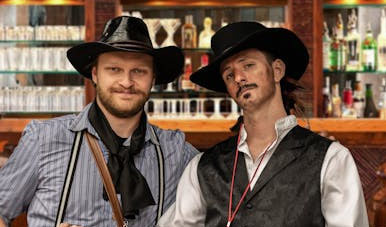
The history of American cowboys is actually closely connected to Mexico. The cowboy culture we know today has been heavily influenced by the traditional Mexican herding culture known as "Vaquero." The iconic features of cowboys, such as horseback riding, cattle herding, cowboy boots, and hats, actually originated in Mexico.
The origins of cowboy culture trace back to Spain and Mexico. In the 16th century, Spanish conquistadors brought cattle and horses to the Americas, and they developed the herding culture known as "Vaquero" in northern Mexico. Vaqueros wore leather chaps and mastered the technique of roping cattle (lariat). They are the direct ancestors of cowboys.
In the early 19th century, as the United States annexed Texas and the westward expansion era began, the skills of Mexican vaqueros spread to the southern United States. The period from 1860 to 1880 was particularly the heyday of cowboys. After the Civil War, when the southern economy collapsed, the number of cattle in Texas surged to over ten million, and these cattle had to be driven to the northern cities of Chicago and Kansas, connected by railroads. It was during this time that the term "cowboy" became widely used. It is a combination of "cow" + "boy," but in reality, it was mostly skilled adult men who made up the ranks.
While cowboys in movies ride magnificent horses and shoot guns while fighting villains, the real life was one of extreme labor. They rode horses for over 15 hours a day and had to endure blizzards to protect the ranches even in the cold winter. Their wages were only $25 to $40, which was half the average laborer's pay at the time. Moreover, racial diversity was also a characteristic of cowboys. Historians estimate that one-quarter of cowboys were Black and one-eighth were Mexican. Although white supremacy was prevalent at the time, skill was the ultimate ruler in the wilderness.
The essential gear for cowboys included ropes (lasso), cotton shirts, cowboy boots, and Stetson hats. The hats protected against sunlight and rain, while the boots had high heels to prevent slipping from the horse's back. Their diet mainly consisted of simple canned beans, hardtack, and coffee. Folk music and oral stories were their only solace.
The Birth of Westerns and Mythology
In the late 1880s, the era of cowboys came to an end due to railroad expansion and the fence laws. The "long drives" that moved cattle from Texas to the north disappeared, and ranches began to be enclosed with barbed wire. However, cowboy culture began to emerge as a symbol of American identity from this time. In the early 20th century, Hollywood westerns gained explosive popularity. Films like John Ford's Stagecoach (1939) and Clint Eastwood's The Good, the Bad and the Ugly (1964) mythologized cowboys as brave pioneers and guardians of law and justice.
This image continued into country music and rodeos. Singers like Hank Williams and Johnny Cash sang about the loneliness and freedom of cowboys, while rodeo competitions elevated cowboy skills into a sport. Even fashion was influenced. Levi's jeans were originally developed as workwear for cowboys, and cowboy boots and belt buckles remain beloved items worldwide.
Modern Cowboys
Today, cowboys remain a commercialized cultural code and a regional identity. In Texas and Wyoming, large-scale ranches are still in operation, and modern cowboys manage cattle using helicopters and drones. Annual rodeo competitions have become a part of the tourism industry, and the term "urban cowboy" has emerged, indicating that cowboy hats have become trendy items even in cities.
However, the true cowboy spirit lies in self-reliance, community, and harmony with nature. To survive in the wilderness, they had to rely on each other, and cattle and horses were their companions in survival. These values are being reinterpreted today in environmental movements and cooperative cultures.
Being a cowboy is not just a job; it is an allegory of the American spirit. It symbolizes pioneering, freedom, and adventure, but it also carries the history of labor pains and racial conflicts. The cowboy of the Hollywood myth differs from the reality, but the cultural legacy they left behind is still alive among us. The next time you wear a cowboy hat or watch a western film, why not take a moment to reflect on the 150 years of stories hidden behind it?







 Baguette Blog |
 Khan Film Blog Production |
 dermoon |
 hoosierdaddy |
 sun walker |
 xylora |
 Gorama Round |
 wendra |
 ultron78 |
 There Are Such Things in the World |
  round1 |
  Way to easy |
  musicque |
  road98 |
  Churros Train Conductor |
  gleeful |
  Burbank Lee |
  Olivia's Blog |
  Bushing Around Life |
  Active |
  Cherokee Rose |
  Kor. Master |
  Holey Moley |
  Conflite Teacher |
  Hodong Prince Over Flex |
  Mist inn |
  citrus pop |
  Onion Ring |
  phoenixia |
  viewtop |