

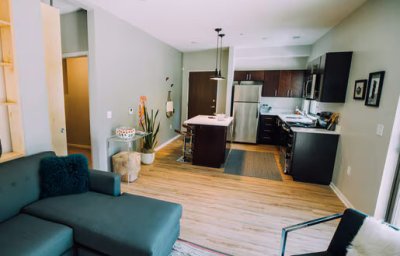
For those preparing to move to Tucson, the first question they often ask is how much rent varies based on the number of bedrooms. The second most common inquiry is about square footage, and the third is which units are most commonly available. We will address these three questions in order and summarize the unit composition in Tucson.
First, looking at the rent, studios average $862, 1-bedroom units are $961, 2-bedroom units are $1,275, and 3-bedroom units are around $1,751. Overall, rents are lower compared to Phoenix, another major city in Arizona, making it an attractive market for households looking to budget more comfortably.
The square footage is confirmed as 407 square feet for studios, 581 square feet for 1-bedrooms, 877 square feet for 2-bedrooms, and 1,114 square feet for 3-bedrooms. Each additional bedroom tends to increase the square footage by about 200 square feet, indicating that rent and square footage generally increase in proportion.
- Studio: $862 / 407 square feet
- 1-bedroom: $961 / 581 square feet
- 2-bedroom: $1,275 / 877 square feet
- 3-bedroom: $1,751 / 1,114 square feet
Looking at the supply distribution, Tucson has a relatively high number of 1-bedroom and 2-bedroom listings due to the influence of the University of Arizona and nearby college areas. It is common for students and young professionals to find roommates and share 2-bedroom units, and recent new developments tend to focus on 1 and 2-bedroom configurations.
When breaking down the demand by unit type, studios are popular among students and short-term visitors, while 1-bedrooms attract young professionals and seniors considering downsizing after retirement. 2-bedrooms are sought after by young families with roommates or small children, and 3-bedrooms are of interest to families with multiple children or Korean households looking to live together.
The rent gap shows that the increase from 1-bedroom to 2-bedroom units is the largest, exceeding $300. The jump from 2-bedroom to 3-bedroom units also rises by over $470, which can be interpreted as a result of the relatively low supply of 3-bedrooms in Tucson, leading to higher prices compared to demand.
When Korean households choose units in Tucson, it is advisable to consider the overall cost of living. While rents may be lower, many areas require car usage, so transportation costs and travel times should also be factored in to gauge actual living satisfaction. Families that prioritize school districts should look into 2-bedrooms or larger in advance, but they might also consider timing their entry into a 3-bedroom during periods of lower market prices.
Before signing a lease, it is recommended to check the latest data on sites like rentcafe.com and zumper.com, and to keep in mind that the unit composition ratios can vary by complex.
 WildHorse






 moo moo |
 ultron78 |
 garlic bread |

 urbanmint |
 Arizona Cowboy |

 Project Tomorrow |

 AZ Road Master |
  heeve |
  leman |
  corner kick |
  treasure |
  strawberry |
  Augusta Univ |
  B.I.G. Victor |
  Victory 1988 |
  Swift Falcon |
  venture |
  SPAM 101 |
  choi family |
  zoryan |
  cloud0 |
  SKy Face |
  wonder |
  Dragon Lee |
  productionblog |
  What can make money? |
  Oklahoma Hoya OK |