
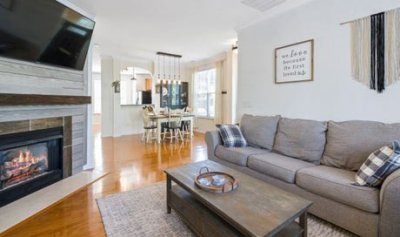
When consulting families moving to Rochester from other states, the process tends to follow a similar pattern. First, they rent for a few months to get a feel for the neighborhood, and then they decide whether to purchase a home. The issue is that many people see the name New York and think of prices in California or New Jersey, which can be intimidating. Rochester is different.
There are three main things to check in order. The first is the level of home prices. According to Zillow, the average home value in Rochester is $252,192. It has increased by 4.3 percent over the past year. Other surveys have reported that the median price of recently sold homes can be as low as $180,000. Compared to the New York metropolitan area, this is definitely a lower price range.
The second is the rental market. According to Zumper, as of August 2026, the average rent in Rochester is $1,350 per month. For a one-bedroom, it is around $1,230 per month, which is actually lower than last year. Home prices are rising while rents are falling. This kind of discrepancy is a rare combination worth noting.
The third is the price-to-rent ratio, which calculates the relationship between home prices and rents. Dividing $252,192 by the annual rent of a one-bedroom at $14,760 gives a ratio of about 17.1. A ratio between 15 and 20 indicates that it is difficult to say whether buying or renting is clearly more advantageous.
However, in a market like Rochester where absolute prices are low, it should be considered that the burden of down payments is also reduced. For a home priced around $250,000, a 20 percent down payment would be about $50,000. For families moving from New York City or Westchester, this amount may not feel overly burdensome.
A point that those coming from other states often overlook is property taxes. New York State does not have a low property tax rate compared to home values. Just because home prices are affordable does not mean that ownership costs are low. Be sure to check the annual property tax bill when viewing listings.
The fourth thing to check is the actual monthly burden. Assuming a purchase of a $252,192 home with a 20 percent down payment, the loan principal would be about $200,000. When you add property taxes and insurance to calculate the actual monthly payment, it may not differ significantly from the $1,230 rent for a one-bedroom. However, the exact monthly payment will vary based on interest rates and loan terms, so it is best to get a quote directly from a lender.
The fifth consideration is the age of the home. Rochester has a high proportion of older homes, so it is important to carefully check during inspections whether major repairs, such as boilers or roofs, are imminent. Even if the sale price seems low, repair costs can change the actual burden.
The sixth point to consider is the length of residence. If you plan to move again within a few years, there is a risk of not recovering closing costs and real estate agent fees when selling. Conversely, if you plan to stay long-term, the low home prices can be advantageous in the long run. By checking each point in order, you can make a more stable judgment. In a market like Rochester, where both home prices and rents are relatively low, it is okay to take your time comparing listings rather than rushing.
If you prioritize school districts, it can also be helpful to look at areas with good school reputations nearby. However, school district boundaries change frequently, so it is necessary to verify the assigned school for the specific address before purchasing.
In the past, upstate New York was often perceived as a region with declining populations. However, the situation has changed. The steady demand for relocation to Rochester is confirmed by various indicators. By checking down payment capacity, long-term residence plans, and property taxes in order, your judgment becomes much clearer. This article is not investment or legal advice, and it is recommended to consult with a professional before making any actual contracts.
 midnightvalleybuilder1940
 goldenforestcreator1929






 Sugar Cream Door Bulletproof Noodles |
 urbanmint |
 |
| 
 Premium Gas Camp |
 CA Real Estate |
 Misstic M |
 flexible |
 Delicious Food Finder |
 Yoyma |
 molten |
  UCLA Captain |
  lattecu |
  dynamite |
  frostingline |
  Hakuna Matata |
  Your Curiosity Resolved |
  Way to easy |
  Chino Min |
  nexabyte |
  moonshine 7 |
  Sunset Oregon |
  victoria 68 |
  golfmaster |
  Montgomery Mom |
  squidogame |
  Noodle Noodle |
  Rhode Island Good People |
  Big North |
  Famous Attractions in the United States |
  Jin Soo V |