
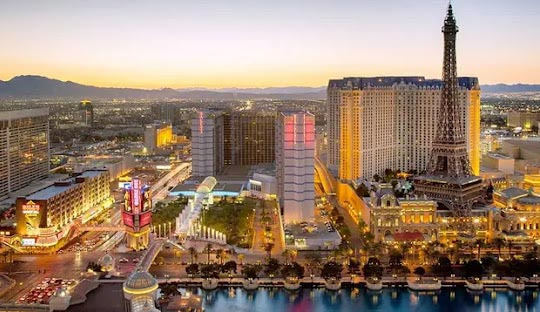
Las Vegas is the representative city of Nevada, USA, well-known worldwide as a center of glamorous casinos and entertainment. However, Las Vegas has gone through a long history to reach its current form. In this article, we will look at the major history of Las Vegas from its early settlement to modern times.
1. Early History: Nature and Native Americans
Early Inhabitants
Native Americans have inhabited the Las Vegas area for about 10,000 years. The Paiute tribe was the main resident group in this area, surviving in the desert while searching for water and food.Origin of the Name "Las Vegas"
In 1829, Spanish explorer Rafael Rivera discovered this area and named it Las Vegas, which means "the meadows" in Spanish. This name was given due to the natural springs that existed rarely in the area at that time.
2. Westward Expansion and Early Development (Mid-1800s)
Mormon Settlement
In 1855, Mormon missionaries established a settlement in Las Vegas. However, due to agricultural failures and conflicts with local residents, they withdrew two years later.Railroad Development and Growth
In the late 1860s, Las Vegas developed as a key midpoint on the major trade route connecting California and Utah. In 1905, the completion of the Union Pacific Railroad from Utah to California marked the beginning of significant urban development.
3. The Birth of Nevada and the Establishment of Las Vegas (1905-1930s)
Official Birth of Las Vegas
On May 15, 1905, Las Vegas was officially established as a city. At that time, the population was only about 800, and the railroad and mining industries were the main economic foundations.Construction of Hoover Dam (1931)
One of the most significant events that impacted the development of Las Vegas was the construction of Hoover Dam. The Hoover Dam project attracted thousands of workers to the area, greatly contributing to the local economy and population growth.Legalization of Gambling (1931)
With the legalization of gambling to stimulate the economy, Nevada laid the groundwork for Las Vegas to emerge as a center of casinos and entertainment.
4. The Birth of Casinos and the Strip (1940-1950s)
Early Casinos
In 1941, the first casino in Las Vegas, El Rancho Vegas, opened on the Strip. The Flamingo Hotel opened in 1946, marking the beginning of Las Vegas's transformation into a symbolic city of casinos and resorts.The Mafia and Casinos
During the 1940s and 1950s, the Mafia was deeply involved in the Las Vegas casino industry. Famous gangsters like Bugsy Siegel invested in the development of early casinos, bringing glamorous hotels and entertainment to the city.
5. Golden Age and Expansion (1960-1980s)
Growth of the Las Vegas Strip
In the 1960s, large-scale resorts and hotels began to emerge. Famous casinos like Sands, Sahara, and Riviera opened during this period, further enhancing the Strip's reputation.Major Performances and Stars
Top entertainers of the time, such as Frank Sinatra, Dean Martin, and Sammy Davis Jr., became the center of Las Vegas performances, significantly increasing the city's popularity.Nuclear Test Tourism
In the 1950s and 1960s, nuclear tests conducted in the Nevada desert were promoted as tourist attractions, showcasing a unique trend in tourism at the time.
6. The Rebirth of Modern Las Vegas (1990s and Beyond)
Emergence of Large Resorts
Since the 1990s, Las Vegas has developed large family-friendly and theme-based resorts to move beyond its casino-centric image.- Excalibur: A hotel based on a medieval theme
- Bellagio: Famous for its luxurious fountain shows and art exhibitions
- The Venetian: A hotel that recreates the canals of Venice
Diversification of Entertainment
Las Vegas has established itself as a center for various performances, shows, and sports events, moving beyond just a gambling city. Global stars like Celine Dion and Elton John began residency performances, earning Las Vegas the title of "Mecca of Live Performances."Major Sports Events
Recently, Las Vegas has also grown as a sports city. With the NFL team Las Vegas Raiders and the NHL team Las Vegas Golden Knights playing home games, it has become an attractive city for sports fans.
7. Present and Future
Economic Diversification
Las Vegas is making efforts to diversify its economy beyond gambling and entertainment into healthcare, technology, and renewable energy sectors.Eco-Friendly City
Projects for renewable energy and the development of eco-friendly resorts are underway with the goal of becoming a sustainable city.Tourism Hub
Today, Las Vegas has established itself as a global tourist destination, attracting over 40 million visitors annually. Various elements such as casinos, performances, sports, and gourmet experiences draw tourists in.
The Charm of Las Vegas
Las Vegas is a city that captivates people worldwide with its dazzling lights, unique culture, and constant innovation. Starting as a small settlement in the middle of the desert, Las Vegas has grown into the "Entertainment Capital of the World," symbolizing the connection between the past, present, and future. This city will continue to expand its charm and remain beloved by people around the globe.



 neroyo |
 Folding Instructions |
 Say IT Now |
 celion78 |
 Tonky |
  viroma |
  cookie |
  Live and that's it |
  Alright Twain |
  eatontown blog |
  HAWAII Korean Church News |
  Amore |
  linex |
  Balancework |
  laro90 |
  MEDBIO American Doctor Blog |
  SWAT TEAM BLK |
  DREAM BIG |
  frostbite |
  330 Forever My Love |
  El Dorado |
  dralix58 |
  Gorama Round |
  Skydiving |