
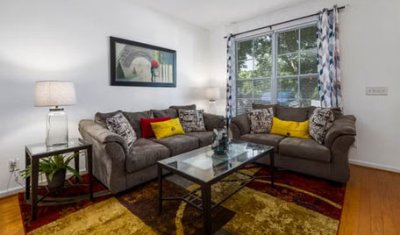
I heard a story about a family nearing retirement who is contemplating selling their old single-family home in Queens Village and moving to a rental. The house is already paid off. Selling it would provide a lump sum that could be used for retirement funds. However, the key question is how much they would need to pay in rent each month.
According to Zillow, the average home value in Queens County is $737,362. It has increased by 5.5 percent over the past year. Given that Queens Village has many small single-family homes, it is reasonable to assume that its average is similar to or slightly lower than the county average.
Rental data varies significantly. RentCafe reports that the average rent for a one-bedroom in Queens Village is $3,554 per month, while the same source indicates that older buildings can have lower listings at around $1,200 per month. Apartments.com estimates the average for a one-bedroom to be around $1,500. This suggests that actual rent can vary greatly depending on the age and size of the building.
Calculating the price-to-rent ratio reveals the trend. This ratio shows how many times the home price is compared to a year's worth of rent. Dividing the annual rent of $42,648 by $737,362 gives a ratio of about 17.3. A ratio between 15 and 20 makes it difficult to determine a clear advantage for either buying or renting. However, if calculated with the lower rent, the ratio increases significantly, potentially favoring renting.
At this point, there are both advantages and disadvantages for retirees. Selling the house and moving to a rental would provide a lump sum and relieve them from concerns about home maintenance or property taxes, which is a clear benefit. On the other hand, renting means a fixed monthly expense that continues indefinitely. This burden cannot be taken lightly, especially during retirement when income may decrease.
If they choose to stay in their home, they would only need to manage property taxes and insurance, and they might be able to take advantage of New York State's property tax exemption for seniors. However, the conditions for such programs can vary by county, so it's essential to check directly.
Comparing Queens Village to neighboring Bellerose and Floral Park clarifies its position. Both neighborhoods are centered around single-family homes and have good school reputations, making them popular among Korean families. The sale prices and rental levels often move within a similar range as those in Queens Village. When considering nearby neighborhoods, the options expand.
It can also be helpful to write down the monthly expenses for both scenarios: converting to a mortgage versus moving to a rental. If the house is fully paid off, the only monthly expenses would be property taxes and insurance. In contrast, moving to a rental would mean that the entire rent amount becomes a fixed expense. By writing down the numbers and comparing them, vague concerns can turn into concrete decisions.
After retirement, income often shifts from regular salaries to pensions or withdrawals from savings. During this time, the consistency of monthly expenses becomes crucial. Maintaining a home may lead to gradually increasing property taxes each year, while moving to a rental means facing potential rent increases with each lease renewal. Neither option is entirely fixed, and it's important to consider this. However, property taxes tend to rise more slowly than rent, so retirees who value predictability may want to pay attention to this difference.
Queens Village is also a neighborhood where Korean families have long established roots. With well-developed school districts and amenities, if there are plans to pass the property down to the next generation, maintaining ownership may be favored. Conversely, if the goal is to liquidate assets and move elsewhere, transitioning to renting could be a reasonable choice.
Ultimately, there is no single answer. It's essential to first consider whether a lump sum is needed and if there is the capacity to handle fixed monthly expenses. This article does not provide investment or legal advice, and it is recommended to consult real estate and financial experts before making any decisions.
 GingerKart
 HotteokStlth






 Sugar Cream Door Bulletproof Noodles |
 urbanmint |
 |
| 
 Premium Gas Camp |
 CA Real Estate |
 Tomato Health Club blog |
 Open Flex Mind |
 Bushing Around Life |
 Chili Boy Club |
 skykong |
  UCLA Captain |
  lattecu |
  dynamite |
  frostingline |
  Hakuna Matata |
  Your Curiosity Resolved |
  Way to easy |
  Chino Min |
  nexabyte |
  moonshine 7 |
  Sunset Oregon |
  victoria 68 |
  golfmaster |
  Montgomery Mom |
  squidogame |
  Noodle Noodle |
  Rhode Island Good People |
  Big North |
  Famous Attractions in the United States |
  Jin Soo V |