

I worked in the fruit wholesale business in the New York area for over 30 years. Looking back on the years spent going to the market every dawn, loading fruits, and trading with wholesalers, it was hard work, but it was a business that moved with the seasons and had a somewhat predictable flow, which allowed me to endure. A few years ago, as my stamina began to wane and my clients started to dwindle, I felt it was time to take a break.
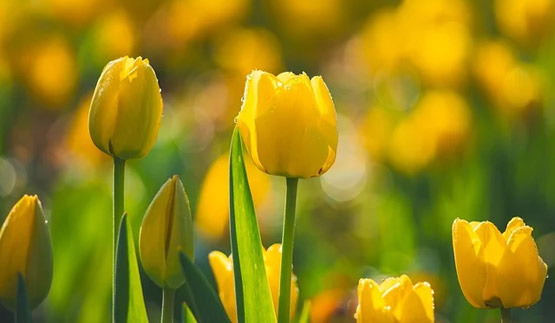
So, I left the fruit business and purchased a flower farm, a long-held dream. I started a new life growing roses, tulips, and lilies. At first, I enjoyed working with the soil, and seeing the flowers blooming in the greenhouse warmed my heart. I thought, 'I can embrace retirement beautifully this way.'
However, reality was different.
New Jersey, where I am, is one of the top flower-producing regions in the United States. As of 2023, it ranks fifth in national sales, with total sales exceeding $300 million. The market is quite large, cultivating over 4,000 acres of flowers and horticultural seedlings combined. But for someone like me, who entered based on such figures, the truly important reality was different.
First of all, flowers are not sold year-round. There are certainly peak times like Valentine's Day, Mother's Day, and graduation season, but during the rest of the year, sales drop sharply. In contrast, fruit wholesale had consistent sales throughout the seasons, making it a different comparison.
Another significant factor is the impact of imported flowers. The New Jersey flower market has to compete with cheap imported flowers from Colombia, Ecuador, and other countries. This is not a quality issue but a matter of price. When flowers grown with care domestically cannot fetch their worth, I look at my carefully tended greenhouse and feel disheartened.
Labor and logistics costs are also a significant burden. Flowers require delicate work as beautiful as they are, but finding the right workforce is difficult and costly. Transporting them is not as simple as regular goods; maintaining a refrigerated state is essential. For someone like me running a small farm, that alone is a burden.
Above all, marketing capabilities are crucial. Unlike fruit sold wholesale, flowers are hard to sell without direct connections to consumers. If one is not familiar with digital methods like social media, websites, and online reservations, attracting customers is not easy. Now, simply 'growing well' is not enough for flowers. The ability to 'sell well' is more important.
There are a few successful flower farms in New Jersey. For example, Barlow's Flower Farm in Wall Township has established itself as a local attraction through greenhouse technology and its own brand, while b.a.r.e. flower farm in Neshanic Station has gained recognition by targeting the high-end market with special varieties. These farms actively utilize experiences, subscription-based CSA models, and social media marketing beyond simple sales.
Lately, I have been considering transitioning to a flower experience farm. In fact, it feels quite unfamiliar and burdensome for me, who has only sold fruit for 30 years, to post on social media and plan events to attract customers. However, if this path is the only way to fulfill my desire to conclude my retirement with flowers, I feel I must learn and learn again.
I have been realizing a lot lately that retirement is not just about resting, but redesigning the life I want.
Flowers are beautiful even when they are still, but the life of growing them is more intense and realistic than I thought.
But even within that, I believe I can bloom a flower of hope. After all, I still have seeds that I can sow.





 vibranto |
 sparkling |
 oh my salami |
 saffronroute |
 You Only Live Once |
 Tomato Health Club blog |
 Open Flex Mind |

 Moo Tang Clan |
 skykong |
  Tonky |
  viroma |
  cookie |
  Live and that's it |
  Alright Twain |
  eatontown blog |
  HAWAII Korean Church News |
  Amore |
  linex |
  Balancework |
  laro90 |
  MEDBIO American Doctor Blog |
  SWAT TEAM BLK |
  DREAM BIG |
  frostbite |
  330 Forever My Love |
  El Dorado |
  dralix58 |
  Gorama Round |
  Skydiving |