

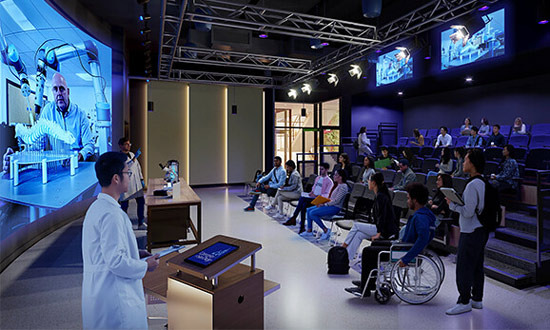
It is rare to find someone living in San Diego who does not know about the University of California, San Diego.
UC San Diego, or UCSD, is a public research university in the United States that plays a key role in shaping the economic and knowledge ecosystem of the local community.
Founded in 1960, UCSD is relatively new within the University of California system, but it is recognized as a case that has secured both research competitiveness and international reputation in a short period. The campus is located on the cliffs of La Jolla, covering approximately 2,178 acres.
Academically, UCSD has accumulated significant achievements in the fields of biomedical sciences, oceanography, computer science, engineering, and natural sciences.
In particular, its collaboration with the Scripps Institution of Oceanography has established a global influence in marine and climate research, while cooperation with the adjacent Salk Institute contributes to advancements in life sciences research.
This research foundation is also evidenced by its high ranking in securing research funding from the National Institutes of Health (NIH). Additionally, the network of researchers associated with numerous Nobel laureates enhances the academic credibility of the university.
In terms of educational structure, UCSD adopts a unique college system.
The six colleges—Revelle, Muir, Marshall, Warren, Roosevelt, and Sixth—each operate independent liberal arts curricula, allowing students to experience a dual structure by choosing both their college and major department.
This design aims to alleviate the anonymity that can occur in large comprehensive universities and provide a learning environment based on small communities.
As a result, students can maintain a balance between major specialization and liberal education while forming a sense of belonging to a specific college.

The combination of research and clinical education is also a significant feature of UCSD.
UC San Diego Health integrates medical education and clinical research as a teaching hospital, providing students with practical research experience and access to medical settings. This structure is particularly valuable for students aspiring to enter the medical and bio industries.
The campus infrastructure is designed to enhance learning efficiency.
Notably, Geisel Library is an architectural landmark that embodies both functionality and symbolism, serving as a cultural icon beyond just a study space. Essential living infrastructure, including dormitories, dining facilities, sports facilities, and medical services, is concentrated on campus,
allowing students to reduce external dependencies and lead autonomous lives. Additionally, the presence of cultural communities, such as the Korean Student Association, contributes to maintaining identity and networks in a multicultural environment.
Admission competitiveness has been steadily increasing. Due to the nature of the UC system, California residents benefit from relatively lower tuition fees, but the total cost of education, including living expenses and housing, is still significant.
Tuition at the University of California, San Diego is relatively high among public universities in the U.S., but it is still considered competitive when taking into account the research infrastructure and educational quality. For California resident undergraduates, annual tuition and basic fees are around $15,000, and when including dormitory, meal, insurance, and textbook costs, the total annual cost is estimated to be around $38,000 to $45,000.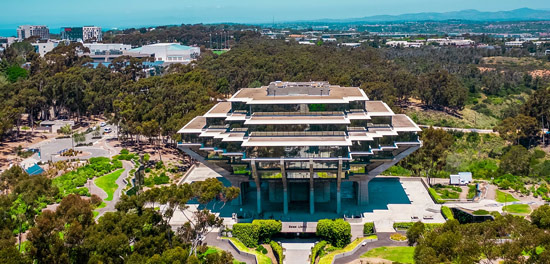
On the other hand, international students and out-of-state students incur additional nonresident supplemental tuition, significantly increasing the total cost.
In fact, for international students, the combined annual tuition and various fees often reach around $70,000 to $85,000. The high rent and cost of living in San Diego also contribute to the financial burden. Living expenses are quite high among major cities in the western U.S.
Particularly, the La Jolla area where UCSD is located has a strong image as an affluent neighborhood within San Diego.
Rent for studio apartments near the school often exceeds $2,000 per month, and students frequently share apartments with roommates to save costs.
Dining prices are also high, but there are many Korean restaurants and Asian markets around the school, making it relatively easier for Korean students to adapt to life. In fact, many Korean students often visit the Convoy area or the Clairemont Mesa area.
The proportion of international students is also quite high. According to recent data, the number of international students at UCSD is around 8,000, accounting for over 18% of the total student population. This is considered a high level of internationalization among public research universities in the U.S.
Students from China and India make up a significant portion, and there are also many Korean international students and Korean Americans.
The Korean Student Association (KSA) is quite active.
Regular events include networking for freshmen, Korean cultural events, and career mentoring.
Another characteristic of UCSD is that the city of San Diego itself has a large Korean population and well-established infrastructure such as restaurants and churches for Koreans.
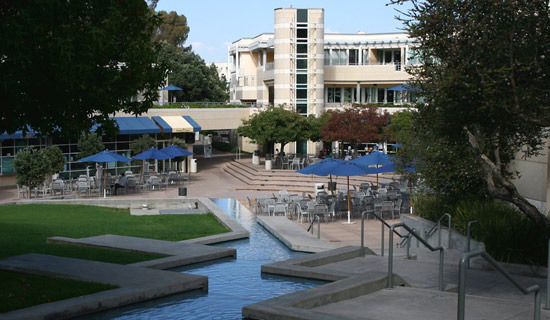
Notable alumni are also quite impressive. For instance, Marc Andreessen, the founder of the internet browser Netscape, is well-known as a UCSD graduate.
Additionally, Steve Chen, co-founder of YouTube, is another prominent figure associated with UCSD.
In the fields of life sciences and engineering, the university consistently produces world-class researchers and entrepreneurs, and the industry-academia network connected to Qualcomm and the biotech industry is strong.
In sports, Bill Walton, a former NBA player, is often mentioned as a person related to UCSD.
Furthermore, UCSD is ranked among the top institutions in the U.S. for biomedical sciences, life sciences, oceanography, computer engineering, and data science.
The Scripps Institution of Oceanography is considered one of the best in the world for marine and climate research, and there are many research outcomes in life sciences that are directly linked to the biotech industry.
In the medical field, the UC San Diego School of Medicine is highly regarded as a research-oriented medical school, particularly strong in neuroscience and public health.
Moreover, UCSD actively engages in interdisciplinary research in public policy and international relations.
Recently, graduates working in AI, semiconductor, and biotech startups have had a significant impact on the Silicon Valley and San Diego industrial ecosystem.
UCSD is not just a "school for good students"; it plays a crucial role as a key research hub driving the entire science, technology, medical, and biotech industries in San Diego. It is particularly regarded as a strong option for students considering STEM fields in the western U.S.
 AnchovyDive
 DakotaThanx
 Chase60Plates
 CowTimesCow



 Ari Songhan American Immigration Life |
 Bearded Strawberry Smoothie |
 Heart Ticker |
 Duck Duck Go |
 Arong and Darong |
 Learn English Accurately |
 Karina's Blog |

 Tainami American Travel Story |
 Sandiego Auntie |
  Valley Bang |
  pravix22 |
  Cohesive Kong |
  werehere |
  problemo |
  galaxy88 |
  breezelove |
  Minnesota Sonata N |
  hazelnut |
  Korean News American Blog |
  AH LALA |
  Savion |
  pintos |
  Good Good |
  oh my salami |
  Lemonade Cider Planning Director |
  Way to easy |
  American Hardcore Band |
  Dala Dala |