
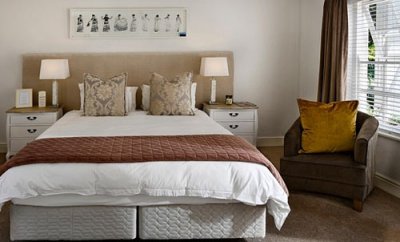
When looking for apartments in Monterey, one thing stands out: the average size of three-bedroom units is 825 square feet, which is actually smaller than the average for two-bedroom units at 922 square feet. From my long-term observation of the market, this is not a statistical error but rather a phenomenon caused by the very limited supply.
First, let's look at the basic figures. Studios are around $1,971 per month, one-bedrooms are $2,544 for 672 square feet, and two-bedrooms are $3,126 for 922 square feet. For three-bedrooms, only about 15 listings are recorded on RentCafe, averaging 825 square feet, but due to the small sample size, the actual market price is estimated to be around $3,600, and the exact average value is not disclosed.
Studios are primarily sought after by single-person households who have settled after retirement or by those working in the tourism industry in the Monterey Peninsula. One-bedrooms attract workers near military facilities or the Monterey Bay Aquarium, as well as short-term contract workers. Two-bedrooms are typically targeted by retired couples or families with one child.
Three-bedrooms are in such short supply that the waiting period tends to be long. Even when families with two or more children or Korean households looking to accommodate parents inquire, they often hear that it is difficult to find listings that match their desired timing due to the scarcity of available units. Monterey is not a city where new developments are active, as the land available for development along the coastline is limited.
Looking at the supply structure, one-bedrooms and two-bedrooms make up the majority of the inventory, while studios and three-bedrooms are in short supply at both ends. New construction projects often focus on small-scale remodeling rather than large community developments, leading to a trend where the number of rooms remains largely unchanged.
- Studio approximately $1,971
- One-bedroom 672 sqft, $2,544
- Two-bedroom 922 sqft, $3,126
- Three-bedroom sample limited, estimated around $3,600
When looking at the rent gap, moving from a one-bedroom to a two-bedroom increases the rent by $582. While there is no exact average for moving from a two-bedroom to a three-bedroom, it is expected to increase by around $500, indicating that there is little room for negotiation due to the limited supply.
If a Korean household is looking for a three-bedroom in Monterey, it is advisable to be ready to act as soon as a listing becomes available. Starting with a two-bedroom for one child and then expanding to a three-bedroom single-family home for rent in nearby Pacific Grove or Salinas when the opportunity arises is also considered a realistic alternative.
The overall average rent in Monterey is $2,795, which is a 0.34 percent increase from the previous year. While this is not a significant change, the geographical constraints of the peninsula make it difficult for supply to suddenly increase, resulting in a more gradual price movement for different room types compared to other Southern California cities.
Ultimately, Monterey should be viewed as a city with a narrow selection of units. Studios and one-bedrooms are relatively easier to find, but two-bedrooms require waiting, and three-bedrooms necessitate a combination of effort, connections, and timing. It is realistic to approach the market with this understanding.
From my long-term observation of the local market, demand, which used to be primarily from retirees, has noticeably increased in recent years with the addition of remote workers competing for one-bedrooms. In contrast, two-bedrooms and three-bedrooms still cater mainly to retired couples and a small number of family units, resulting in a clear temperature difference between unit types.
Korean households contemplating the transition from renting to buying should note that Monterey is a market where listings are scarce, and it is often more advantageous in the long run to switch to purchasing when suitable properties become available rather than enduring long-term renting.
To summarize the demand segments: studios are sought by single retirees and tourism workers, one-bedrooms by military personnel and short-term contractors, two-bedrooms by retired couples and small families, and three-bedrooms by larger families and three-generation Korean households. In cities with limited supply, these demand distinctions become even more pronounced.
 HairyPoppins
 RobNeighbor







 moo moo |
 ultron78 |
 garlic bread |
 Sugar Cream Door Bulletproof Noodles |
 urbanmint |
 Until the Day It Gets Better |
 Experiences Living in America |
 UCLA Captain |
 Roman Pan |
 Helpful Life Stories |
  Kitchen Ideas |
  Diana Blues |
  Agenda Center |
  Community Cross |
  journey |
  heeve |
  leman |
  corner kick |
  treasure |
  strawberry |
  Augusta Univ |
  B.I.G. Victor |
  Victory 1988 |
  Swift Falcon |
  venture |
  SPAM 101 |
  choi family |
  zoryan |