

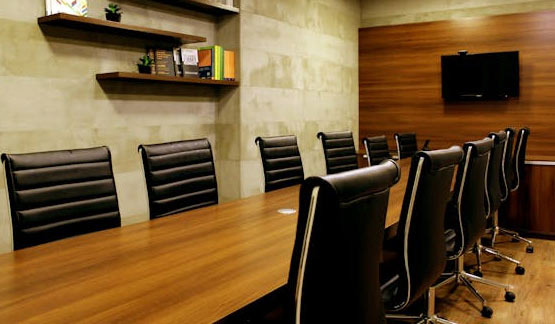
In the U.S., a 'meeting room' has evolved from a simple space for people to gather into a core infrastructure that has transformed corporate decision-making and collaboration. Let's trace its history.
In the early 18th century, the term 'boardroom' emerged, creating a space where corporate boards regularly met to make important decisions. Initially, it was more about gathering around a large wooden table for conversation, but the few decisions made here often influenced the company significantly.
In the early 19th century, the importance of meeting rooms was formalized as states mandated corporations to hold regular board meetings. This established the 'boardroom' as a key stage for corporate governance, rather than just a space for conversation.
As the Industrial Revolution gained momentum in the late 19th century, the development of railway transport led upscale hotels near major cities to start renting out separate meeting rooms by the hour for corporate clients. Executives on business trips rented meeting rooms along with hotel amenities to conduct discussions and negotiations, which marked the beginning of the meeting room rental business.
During the same period, Robert's Rules of Order were introduced, systematizing the procedures for conducting meetings and voting. Consequently, meeting rooms began to follow established processes for agenda setting, exchanging opinions, voting, and recording, going beyond mere conversation.
By the mid-20th century, conference calls became common, and in 1964, the 'Picturephone,' which can be considered the precursor to video calls, was introduced, showcasing the potential for video conferencing. By the 1990s, the advent of PowerPoint made it essential to install projectors and AV equipment in meeting rooms, establishing a culture of sharing visual materials through slide shows.
Recently, smart meeting rooms have emerged, featuring built-in power and data ports at tables, and allowing control of lighting and sound through touchscreens. Particularly, with the rise of remote work, 'hybrid meeting rooms' that combine physical spaces with digital meeting solutions are becoming the new standard.
Thus, meeting rooms continue to evolve in form and function in line with the times, playing a central role in corporate communication. As you plan your next important collaboration, I hope you remember this history and create a more meaningful gathering.







 Moscow Kim |
 coloradoman |
 Montgomery Mom |
 GOGO SING |
 Hajiwon Blog Hair Salon |
 frostingline |
 Deep South Mississippi |

 Certified Authentication Blog Page |
 Finding Superfoods |
  lightyear |
  song bang |
  vexomo |
  Indiana Jones |
  meloncat |
  novapixel |
  mortrix |
  Esther 1983 |
  fortbliss |
  My Two Way |
  toastyfox |
  FLORIDA Acus |
  tracker |
  TONTON COFFEE |
  sunrise |
  ultron78 |
  uplifted |
  Folding Instructions |