
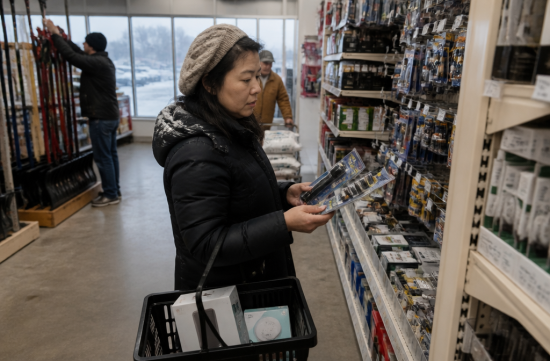
When the power goes out on a blizzard night, it feels like your home has turned into a spaceship with no power. The silence is heavy as even the sound of the refrigerator disappears.
If you start fumbling around trying to remember where the flashlight is in some drawer, it's already too late. That's why, when November rolls around, I check my emergency supplies like a flight attendant preparing for a trip.
Does that sound excessive? The numbers might change your mind. The snowfall for Syracuse in the 2025-26 season was 143.1 inches based on Hancock Airport.
That's 15.3 inches more than the average of 127.8 inches reported by local media. On December 30, 2025, 24.2 inches fell in just one day, which is still hard to believe.
Power outages are not just someone else's problem. On March 17 of this year, it was reported that 33,563 National Grid customers in the Upstate region lost power at one point, with most of the impact felt in the Capital Region.
So, what should you prepare? I've taken the basic list from the federal disaster guidance site Ready.gov and rearranged it for winter.
The first item is light. Ready.gov advises having a flashlight for each family member, not just one for the house.
This is surprisingly important. If one person takes the flashlight down to the basement, the others are left in complete darkness.
Make sure to have extra batteries as well. While candles create a nice atmosphere, they pose a fire risk, so National Grid recommends using flashlights instead.
The second item is a backup battery. These days, your phone serves as a flashlight, radio, and map, making it the last communication device of your spaceship.
When a storm is forecasted, charge your phone and backup battery the night before. There's nothing more disappointing than finding them dead when you need them.
Store them indoors rather than in the garage or car. Lithium batteries are sensitive to cold, and the stated capacity may not fully transfer to your phone, so choose a generous option.
The third item is a radio. The Ready.gov list includes battery-operated or hand-crank radios, as well as NOAA Weather Radio.
Even if the stations are glitchy, the signals keep coming through. Hearing weather broadcasts in the dark can feel like receiving signals from a distant star.
The fourth item is water and food. The guideline is one gallon of water per person per day for several days, which includes both drinking and washing water.
For food, non-perishable items like canned goods or cereal bars are convenient. Don't forget a manual can opener. If you only have an electric can opener, you might find yourself staring at cans without a way to open them.
Try to avoid opening the refrigerator door. According to CDC guidelines, food will stay safe for 4 hours in a closed refrigerator, 48 hours in a full freezer, and 24 hours in a half-full freezer.
Food that has been above 40 degrees Fahrenheit for more than 2 hours should be discarded, according to Ready.gov. It's unfortunate, but you can't afford to be sentimental here. Having a refrigerator thermometer can help reduce uncertainty.
The fifth item, while the most boring, is the most important: a carbon monoxide detector. It's a colorless, odorless gas, so there's no way for people to detect it.
Ready.gov recommends installing battery-backed devices centrally on each floor. A detector that goes out with the power is useless.
Generators should never be run inside a garage, even with the door open. They must be placed outdoors at least 20 feet away from windows, doors, and vents.
Using a gas stove or oven to heat your home is also a no-go. Charcoal grills and camping stoves should not be brought indoors either. I understand the urge to light a fire when it's cold, but this is one compromise you cannot make.
If you have medications that require refrigeration, there are some things to consider. If the power is out for more than a day, the official guidance is to discard them and get new ones unless the label states otherwise. Consult with your doctor or pharmacist in advance about which medications can withstand outages.
If the power goes out, you can report it to National Grid at 1-800-867-5222 or through their website, and you can check the recovery status on the Outage Map. Save this number in your phone now.
If you see downed power lines, treat them as live wires and stay away. You can call 911 or National Grid immediately.
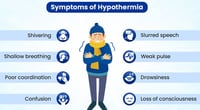
If your home gets too cold, enduring it is not the solution. The CDC advises moving to a friend's house or a local shelter, and if your body temperature drops below 95 degrees Fahrenheit, seek medical attention immediately.
If it were me, I would prioritize buying flashlights for each family member, fully charged backup batteries, and battery-operated detectors over an expensive generator. This combination can help you get through the scariest hours without spending a lot of money.
If the power is still out after the snow stops, take a moment to look outside. You might see stars that are usually hidden in the sky where all the neighborhood lights are off. That's a luxury only those who are prepared can enjoy.
 GymForPhotos

 DO Main TODAY |

 Caribbean |
 tredolo |

 Anjollinya Blog |

 Kitchen Ideas |

 namico |


 dynamic |
 Waiting for Godot |
 Sunny Mom |
 Blondee |
 El Dorado |
 passive |
 gardener 007 |
 zanero |
 Arlington house |
 Cali M Law Group |
 Delicious Food Finder |
 ultron78 |
 pet dog |
 networky |
 Sandiego Auntie |
 Macon Boy |
 Moscow Kim |
 zoryan |
 Noodle Noodle |
 Texas Migration Story |