
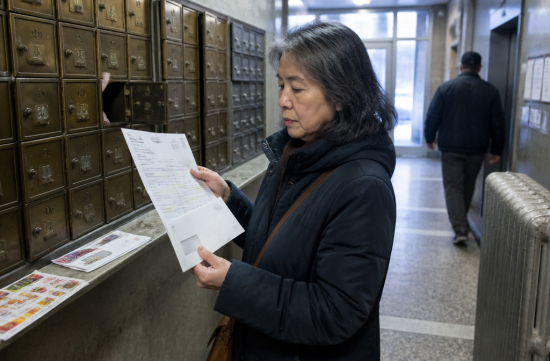
Every year around this time, there's an envelope from the insurance company in my mailbox. That envelope, which makes me sigh before I even open it, is probably familiar to many of you.
This year, however, the numbers in New York are a bit less frightening. The Department of Financial Services (DFS) approved an average increase of 6.0% for individual insurance premiums on September 4.
The insurance companies requested an average increase of 20.6%. They cut 71% off the requested increase, which is quite a feat even for seasoned negotiators in the market.
The small business plan requested a 23.7% increase, but only 8.0% was approved. Those running stores or small companies should pay attention to this number.
DFS announced that the reduced premiums will save $324 million in the individual market and $1.25 billion in the small group market. There are 860,000 enrollees in these two markets.
However, it's important not to just applaud and close the envelope. The average is a number that doesn't really relate to our individual bills.
When looking at individual insurance companies, the differences can be significant. According to a table compiled by healthinsurance.org from DFS data, Anthem HP actually decreased by 3.1%.
MetroPlus, Emblem, CDPHP, and IHBC are frozen at 0%. Oscar increased by 3.9%, and Healthfirst by 5.1%.
Fidelis is at 8%, and UnitedHealthcare is at 8.1%. MVP is at 10.7%, while Excellus and Highmark go up to 12.2%.
The difference between the lowest and highest rates in the same state is 15.3 percentage points. However, since each insurance company sells in different regions, you need to check which plans are available for your zip code.
There's a real catch here. The 6% increase is based on prices before subsidies.
If you receive tax credits, the actual amount you pay can vary significantly. This is because the subsidy is calculated based on the benchmark, which is the second cheapest silver plan in your area.
In simple terms, even if my plan stays the same, if the price of my neighbor's plan changes, my costs can change too. It's a system that is influenced by others' situations.
The subsidies themselves are not what they used to be. The more generous enhanced tax credits ended in late 2025, and Congress did not extend them.
New York State is also reducing its assistance. The state support that used to reduce out-of-pocket costs up to 400% of the federal poverty line, along with support for diabetes, pregnancy, and postpartum services, will end in late 2026, leaving only federal support in 2027.
This means that even if premiums remain the same, the out-of-pocket costs at the hospital can increase. So, don't feel secure just by looking at the monthly premium.
If you were using the Essential Plan, you need to be even more careful. Starting in July of this year, the income limit dropped from 250% to 200% of the federal poverty line, which is $31,920 for a single-person household.
If you fall within this limit, your premium will be $0, and you can apply at any time during the year. If your income has decreased this year, check this first. There's nothing more frustrating than paying for a plan when you could have had it for free.
Those who moved to a regular plan from the 200-250% range still have access to federal cost-sharing assistance, which reduces out-of-pocket hospital expenses. This benefit applies to silver plans, so you should consider this when choosing a tier.
There are also changes that our Korean community should not overlook. According to HealthCare.gov, starting January 1, 2027, the eligibility for tax credits will be limited to green card holders, entrants from Cuba and Haiti, and COFA migrants.
This means that while others can enroll, they may not be eligible for subsidies. If you have a legal status other than a green card, don't rely on last year's amounts; make sure to check again.
The review process can be done in this order. First, check the new premium in the insurance company's notice.
Next, adjust your expected income for next year. Then log in to NY State of Health to get a new quote.
Comparisons should be made within the same tier. New York requires insurance companies to offer one standard plan per tier for each county, so comparing standards allows for an apples-to-apples comparison.
Non-standard plans have varying out-of-pocket conditions among insurance companies. Don't just jump at a low premium; check the deductible first.
Finally, consider your doctors and medications. You need to see if your regular doctor is in the network and if your medications are on the list. Saving a few dollars only to lose your doctor isn't really saving.
This enrollment period runs from November 1, 2026, to January 31, 2027. The coverage start date may vary depending on when you enroll, so if you're worried about gaps, it's best to finish early.
If you feel overwhelmed doing this alone, call NY State of Health at 855-355-5777. They are available from 8 AM to 8 PM on weekdays and from 9 AM to 1 PM on Saturdays.
In this decision, insurance companies might argue that they are being cut too much while medical costs are rising, and enrollees might feel that even a 6% increase is burdensome. Both sides have valid points, but I believe it's commendable to have reduced the requested amount to less than a third.
Still, I wouldn't feel secure just closing the envelope with the 6% figure. It only takes the time to drink a cup of coffee to get a quote, and that amount can cover a year's worth of premiums.
 CliffDiabeto
 CoffeeTime









 Carolina border |

 Que Buena |
 juicylol |

 Mr Song Song |
 newyorker 101 |

 Encyclopedia of New York and Surrounding Areas |


 Things to Do to Buy a House |

 Moving Waterfall |
 Arlington house |
 Cali M Law Group |
 Delicious Food Finder |
 ultron78 |
 pet dog |
 networky |
 Sandiego Auntie |
 Macon Boy |
 Moscow Kim |
 zoryan |
 Noodle Noodle |
 Anjollinya Blog |
 Texas Migration Story |
 Elastico |
 peltra |
 banleaf |
 humpday sonata |
 silver |
 Queens Blues |
 Christopher |