
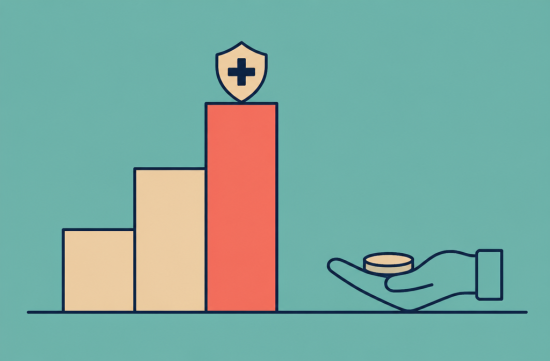
Last week, the owner of my local fruit shop sighed heavily in front of the cash register. He received the renewal notice for next year's health insurance, and the premiums have gone up again.
When self-employed people meet these days, the greeting is often, "How much did your insurance go up?" I can relate, so it didn't feel like someone else's problem.
So, I decided to look up the numbers myself. The Maryland Insurance Administration (MIA) approved an average increase of 14.6% for individual ACA plan premiums on September 25 for 2027.
Interestingly, the insurance companies initially requested an average increase of 13.7% in June. Since the approval was higher than the request, it honestly felt a bit absurd.
Moreover, premiums already increased by 13.4% in 2026. This marks two consecutive years of double-digit increases.
In the same announcement, small group plans saw an average increase of 10.2%, and marketplace dental plans were approved for an average increase of 3%. Business owners with a few employees are also feeling the burden.
However, the 14.6% is just an average and is the price before any subsidies are deducted. There is quite a bit of variation between plans.
According to an example provided by the insurance administration, a certain CareFirst bronze plan for a family of four will increase by 17.2%, while another bronze plan will only see a 3.5% increase. Even among bronze plans, the differences are significant.
Curious about the reasons for these increases, I also looked at the insurance administration's explanations. Hospital costs have risen by 7.8%, medical service costs by 8.6%, and prescription drug costs by 14.8%.
Mary Grant, the insurance commissioner, cited changes under federal law H.R.1, along with rising hospital and drug costs, as the causes. The increase in drug prices stands out the most.
Additionally, the enhanced federal premium tax credits expired at the end of 2025 because Congress did not extend them.
To fill that gap, Maryland created the Maryland Premium Assistance program, which went into effect on January 1, 2026.
The structure is as follows: if household income is at or below 200% of the federal poverty line, it will cover the entire reduced federal support amount.
If income is between 200% and 400% of the poverty line, it will cover half of the reduced amount. Those with incomes above 400% will not receive this state support.
Furthermore, this support will continue at the same level in 2027 as it was in 2026. This means that while premiums will rise by 14.6%, the structure of state support remains unchanged.
Of course, it is fortunate that the support has not decreased. However, this program was originally designed for the 2026 and 2027 plans, and funding beyond that has not yet been confirmed.
Young adults aged 18 to 37 will receive additional youth assistance. If children have separate insurance, it's advisable to check on that as well.
Still, Maryland is considered one of the states with the lowest bronze and gold tier premiums in the nation. Even with the increases, the situation is better than in other states.
The problem is that some people are already struggling to cope with the burden. Reports indicate that 8% of enrollees had their insurance canceled from January to March this year due to non-payment of premiums.
Therefore, this open enrollment period should not be overlooked. Enrollment for the 2027 plans starts on November 1 and runs until January 15 of next year.
If you register by December 31, coverage will begin on January 1. If you register between January 1 and 15, coverage will start on February 1.
If you rely solely on automatic renewal, you'll end up paying the increased price for the entire year. I plan to log into Maryland Health Connection this time and compare plans again.
This year, the insurers are CareFirst, Kaiser Permanente, Wellpoint, and UnitedHealthcare. Since the rate increases vary by company, there's no reason to stick with last year's provider.
You will also need to re-enter your income estimates. The amount of assistance you can receive varies significantly based on what percentage of the poverty line you fall under.
When switching to a cheaper plan, there are points to be cautious about. You should first check whether your current hospital is in the network and if your medications are included in the prescription drug list.
Especially if you take medications regularly, such as for blood pressure or diabetes, it's wise to consult with your doctor or pharmacist about alternative medications or out-of-pocket costs before changing plans.
Saving a few dozen dollars on premiums is pointless if it leads to higher hospital costs. You need to calculate both the monthly premium and the deductible together.
In summary, next year's premiums will definitely rise, while state support remains at this year's level. Ultimately, everyone will have to reassess their plans.
I also advised the fruit shop owner to compare plans before January 15. Saving even the cost of a box of peaches is a worthwhile endeavor.
 TootButler
 SilverSummit72



 zestorbit |

 hihihi |
 fruitflash |

 Anjollinya Blog |

 United States Army |

 milkbear |

 frostpup |

 maryland park |



 Shining Our Own World |
 Raymond K. |
 gravity |
 714 Success Era Real Estate |
 Investment Beginner Company Information Encyclopedia |
 musicque |
 The Gelaton |
 ovelion |
 Chicagonian |
 Freedom Yea |
 AZ Road Master |
 glenix39 |
 Something is popping in the situation |
 orvella |
 vella |
 comets |
 Banana |
 Yes Dorian |
 zentar |