
A friend who recently visited Korea proudly showed me their health check-up results. They mentioned they had a smooth experience with a sedation endoscopy.
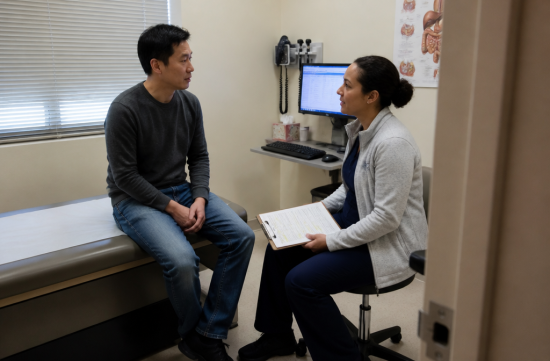
Hearing that, I told my primary care doctor that I wanted to get an endoscopy too. The response was very American: unless there are specific symptoms, it's not really necessary.
I felt a bit unfair. In Korea, everyone over 40 gets one every two years, so why not here?
So, I did some research. To cut to the chase, it's not that American doctors are lazy; the numbers that both countries are looking at are simply different.
First, let's look at Korea. The Korean National Cancer Screening Program offers stomach cancer screenings every two years for adults aged 40 and older. The primary method is endoscopy, and it's available to the entire population regardless of individual risk.
This is possible because Korea has one of the highest stomach cancer rates in the world. With so many patients, it makes sense to screen everyone.
So, Korea's biennial screenings are a strategy to detect and treat stomach cancer early in a country where it's common. Early detection allows for treatments that can even remove cancerous tissue via endoscopy, making it a win for the country.
What about the U.S.? The American Cancer Society estimates that in 2026, there will be 31,510 new stomach cancer cases and 10,740 deaths.
The average age of diagnosis is 68. With a population of over 300 million, this indicates that it's not a common cancer.
As a result, the U.S. Preventive Services Task Force (USPSTF) does not issue specific recommendations for stomach cancer screenings for the general population. Unlike colorectal or breast cancer, there are no official guidelines on when to start screenings.
Without guidelines, insurance companies find it tricky to cover endoscopies as preventive screenings for asymptomatic individuals. This is a practical reason why doctors are hesitant to recommend them.
In simple terms, the American healthcare system is designed around the average American. The problem is that we may not fit that average.
Here's a twist: the American Gastroenterological Association (AGA) included our situation in their clinical update on stomach cancer screenings released at the end of 2024.
It states that there are high-risk groups for stomach cancer in the U.S. who should consider screening. The first group mentioned is first-generation immigrants from regions with high stomach cancer rates.
Yes, people like us who were born in Korea fall into that category. Those with a family history of stomach cancer or certain hereditary syndromes are also considered high-risk.
The AGA views endoscopy as the best option for screening because it allows direct visualization and immediate biopsy of suspicious areas.
The discussion also includes Helicobacter pylori. High-risk individuals should consider testing for this bacterium, and if positive, treatment is important.
They also recommend that adult family members living with someone who tests positive should consider getting tested. Given our communal dining culture, this is something to think about.
However, the intervals for screenings are not as strictly defined as in Korea. For those with severe atrophic gastritis or extensive intestinal metaplasia, follow-up screenings every three years are suggested.
If no abnormalities are found in the first test, the next screening should be determined based on risk factors and personal preference. They honestly note that the optimal interval is still uncertain.
Let's talk about costs. A cost-effectiveness analysis targeting Asian Americans found that combining endoscopy with colonoscopy is cost-effective.
Particularly, it showed the best efficiency among Korean, Chinese, and Japanese populations. Since you're already under anesthesia, it makes sense to check both ends at once—like a buy one, get one deal.
So, what should we do? Personally, I wouldn't just ask my doctor for an endoscopy.
Instead, I would say this: I'm a first-generation immigrant from Korea, and I belong to the high-risk group identified by the AGA.
If there's a family history, that should be mentioned too. Doctors need a solid reason to refer you to a gastroenterologist.
Insurance coverage varies by plan, so be sure to check with your insurer about coverage and out-of-pocket costs before the test. The billing can differ significantly depending on whether it's classified as a preventive or diagnostic test.
If you have the chance to go to Korea, utilizing local health screenings is also a practical option. Just make sure to bring back the results and share them with your primary care doctor in the U.S.
Of course, this article is just a summary of information, and whether a screening is necessary depends on individual circumstances. Always consult with a doctor or pharmacist who knows your medical history and medications.
Personally, I hope these high-risk criteria are better reflected in insurance systems. A fair system should allow those who deviate from the average to get timely screenings.
Until then, we have to be the ones to bring it up. Our stomachs can't speak, so we have to advocate for ourselves.
 PuddingLover








 squidogame |

 daddyyo |

 Top Beaches |

 Diana Blues |

 Dragon Lee |

 Another Eden Channel BLOG |

 El Dorado |

 Everything Students Can Do |


 Eldorado 88 |
 sunnyvale |
 Podongi Dad Blog |
 nexium |
 Washington Monument |
 dynamic |
 Key spots |
 berrypup |
 Yo Lock Me Up |
 Oh my Julia |
 bibigoo |
 silents |
 Team Korea Psychoanalysis Research |
 North Dakota Ragdoll Cat Owner |
 Cap Com |
 Trot King News |
 Blondee |
 some fame |
 rapidfire |
 walnutbo |