

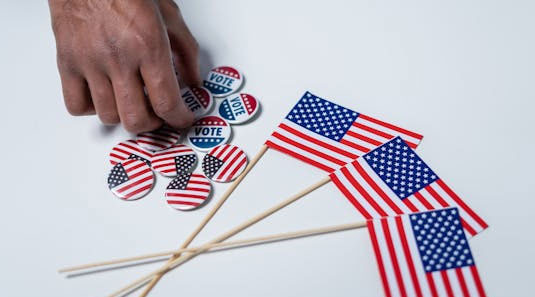
I would like to briefly introduce the various types of elections held in the United States. Since the U.S. is a federal country, elections are conducted in various forms, from federal (national) level elections to state and local government levels. The timing, methods, and positions elected can vary, which may seem a bit complicated at first, but if you look at the big picture, it can be surprisingly easy to understand.
Presidential Election
This is the most prominent and largest scale election in the United States. It is held every four years and takes place across the country. The President of the United States is elected through the Electoral College system, where electors chosen from each state cast their votes for the candidate who received the most votes in that state (winner-takes-all, with some exceptions). Given the high level of global interest, the election activities are extensive and varied.
Midterm Election
This election is held at the midpoint of the presidential term (the second year) and is conducted separately from the presidential election. It primarily elects all members of the House of Representatives and about one-third of the Senate, as well as several governors and local officials. While it may not attract as much attention as the presidential election, the results of the midterm elections can significantly influence the direction of the President's governance, making it politically very important.
Gubernatorial Election
This election is for selecting the governor, the head of the state government. It is usually held every four years, but not all states hold it at the same time. Some states hold it during the presidential election, others during the midterm election, and some at different times. Governors have significant powers, such as signing state laws, budgeting, and administrative oversight, making them elected officials who directly impact local residents.
Congressional Election
The U.S. Congress is composed of the Senate and the House of Representatives. Senators serve six-year terms, with one-third elected every two years. House members serve two-year terms and are all elected. In practice, these elections are often held simultaneously with presidential and midterm elections, resulting in formats like "presidential election + congressional election" or "midterm election + congressional election."
Primary Election
This election determines the candidates who will run in the general election for each political party. Major parties like the Democratic and Republican parties select their candidates, so the results of the primary elections effectively set the stage for the general election candidates. Each state has slightly different primary election systems, with various methods determining whether independent voters can participate or if only party members can.
Local Election
These elections are held at the county or city level, electing positions closely related to community life, such as mayors, city council members, county sheriffs, and school board members. They are as important as federal elections because many policies that directly affect residents' daily lives are decided at the local government level.
Special Election
This election is held in special circumstances, such as when a vacancy occurs during a term or when a referendum on a specific issue needs to be conducted. For example, if a senator dies or resigns during their term, the governor of that state appoints an interim replacement, and then a special election is held to elect a representative to complete the remaining term.
The United States has a variety of elected positions and election systems based on federalism. Understanding the presidential election, congressional elections, gubernatorial elections, midterm elections, various local elections, and primary elections will provide a more comprehensive view of American politics. While it may be difficult to grasp everything at once, understanding the characteristics of the most representative presidential and midterm elections, as well as state and local elections, will greatly help in understanding the overall U.S. election system.





 Moscow Kim |
 coloradoman |
 Montgomery Mom |
 GOGO SING |
 Hajiwon Blog Hair Salon |
 Eldorado 88 |

 Washington Monument |
 heartbreaker |
  Korean Mom |
  My NYC |
  moo moo |
  Mr Oh |
  forevergee |
  festival |
  manchester |
  constant |
  Leapfrog Move |
  vibranto |
  Tora Tora |
  yellowbutter |
  Dolly |
  US Embassy |
  NYC saladbar |
  Finding Superfoods |
  lightyear |
  song bang |
  vexomo |
  Indiana Jones |