
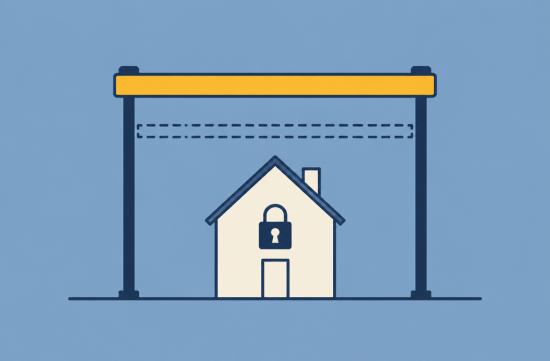
On the November 3 ballot in Louisiana, there are ten proposed amendments to the state constitution. Among them, five are directly related to property taxes.
Early voting ended today, October 27, at 6 PM, and now only the main voting remains. If you haven't had a chance to review the ballot closely, I recommend reading these five amendments beforehand.
For homeowners, the first question is likely, "Will my taxes go up or down?" To put it simply, none of these amendments will automatically change the numbers on your tax bill.
Most of them expand eligibility requirements or give local governments more options. Therefore, even if they pass, the actual benefits often depend on subsequent decisions made by the parish and city.
Let's start with Amendment 9. I believe this is the most practical item for the Korean retirement community.
In Louisiana, there is a special assessment program that freezes the assessed value of homes for homeowners aged 65 and older who meet certain conditions. Currently, household income must be below $100,000 to qualify for this freeze.
If Amendment 9 passes, this income limit will increase to $150,000. The effective date will be January 1, 2027.
Many retirees may have income from rental properties, pensions, or retirement account withdrawals that slightly exceed $100,000. If they have been unable to receive the freeze due to being just over that threshold, this change is worth considering.
However, it's important to remember that the freeze only locks in the assessed value; it does not eliminate taxes. If the tax rate increases, your bill may also go up.
Amendment 6 complements Amendment 9. It allows parishes and cities to provide additional exemptions for homeowners aged 65 and older who qualify for the special assessment.
The key word here is "allow." This does not automatically apply statewide; each local government can choose to implement it when they wish.
Different reports present varying exemption amounts and implementation years based on age, so I won't specify exact numbers here. For accurate information, it's best to check the original bill on the state legislature's website or the amendment guide from the public policy research organization PAR.
Amendment 1 pertains to the spouses of veterans who have been declared disabled. Currently, the surviving spouse must continue living in the home to maintain the additional exemption.
If passed, the spouse will be able to transfer that exemption when moving to a different home. The exemption amount will be limited to the level received from the previous home.
While the scope is narrow, this change could be significant for those who want to downsize but have been unable to do so due to the exemption. This bill passed both the state Senate and House without any opposition.
Amendment 2 is somewhat technical and may be the most misunderstood. It allows local taxing authorities to retain the authority to revert to previously approved maximum tax rates for a longer period if they set rates below the maximum.
Currently, if they lower the rate, they may lose that authority when the next reassessment cycle occurs. This creates an incentive for authorities to keep rates at the maximum.
Proponents argue that this amendment does not automatically raise taxes but rather gives them the flexibility to lower rates. Conversely, opponents point out that it extends the possibility of raising rates again without a vote.
I believe both sides have valid points. Ultimately, it comes down to trust in how our parish taxing authority will use that power.
Amendment 10 allows for property tax exemptions when renovating or repurposing abandoned or dilapidated buildings. This is also not mandatory; local governments can choose to implement it, and the qualifications and duration will be defined by state law.
From an investment perspective, this is something to watch for those looking to buy and renovate vacant homes in older neighborhoods. However, since specific regulations have not yet been released, it would be premature to base purchasing decisions on this exemption.
In summary, Amendments 9 and 1 have relatively clear eligibility changes. Amendments 6 and 10 require action from local governments to be effective, while Amendment 2 pertains to how tax rates are managed.
Therefore, just as important as voting is what happens afterward. We need to watch whether the East Baton Rouge Parish Council or city actually implements Amendments 6 and 10.
If you currently receive a freeze or exemption, I recommend checking your eligibility with the parish assessor's office. Asking when and how to submit income documentation will make things less cumbersome next year.
Given the complexity of the conditions and the varying situations for each household, please do not rely solely on my explanation; be sure to confirm with the assessor's office or a tax professional. You can view polling locations and sample ballots on the Louisiana Secretary of State's website.
Main voting will take place on November 3 from 6 AM to 8 PM. If you are in line by 8 PM, you will be allowed to vote.
Personally, I think Amendments 9 and 1 are straightforward enough to make a decision, while I will take a bit more time to read through Amendment 2. Regardless of which option you choose, property tax issues are as enduring as home values, so it's worth taking a careful look at them.
 LouisvilleZ






 neapolis |

 moo moo |

 ultron78 |

 garlic bread |

 Sugar Cream Door Bulletproof Noodles |

 mochifox |

 berrypup |

 ORAVEZIN Oppa |

 AUTO OK |

 dynamic |
 Key spots |
 Yo Lock Me Up |
 Oh my Julia |
 bibigoo |
 silents |
 Team Korea Psychoanalysis Research |
 North Dakota Ragdoll Cat Owner |
 El Dorado |
 Cap Com |
 Trot King News |
 Blondee |
 some fame |
 rapidfire |
 walnutbo |
 Shinbaram Dr. Blog |
 breaddough |
 Michigan Enthusiast |
 Only Dentalbay |