
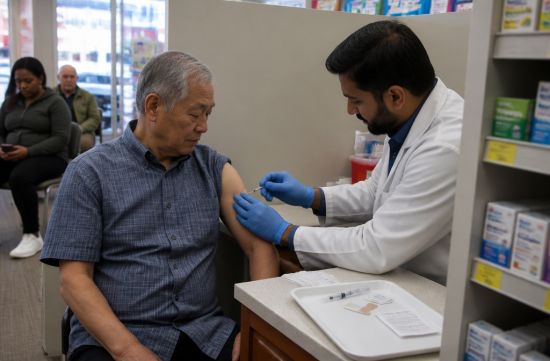
Last week, after church, I was having coffee when an elderly person asked me if they could just go to the pharmacy and get any flu shot.
I used to think that way too. But when I got home and looked it up, I found out that it's a different story for those over 65. The difference is more significant than I expected.
The CDC has specific flu vaccines that are prioritized for those aged 65 and older. This will remain the same for the 2026-2027 season.
Today, I want to summarize that information. If you know anyone who falls into this category, please share it with them. It's easy to miss these details just by looking at the English guidelines.
First, why do the vaccines need to be different as we age? As we get older, our immune response weakens. This means our bodies don't respond to the vaccine as effectively as they used to.
Even if older adults receive the same standard vaccine, they don't produce antibodies as well as younger people. However, the risk of flu complications is actually higher. It can lead to pneumonia or hospitalization, so it's not something to take lightly.
That's why the CDC and ACIP have been recommending three specific vaccines for those over 65 since 2022.
The first is the high-dose vaccine, Fluzone High-Dose. As the name suggests, it contains a significantly increased amount of antigens.
According to the FDA product description, it contains 60 micrograms per strain for a single dose. That's about four times the amount of a standard vaccine.
The second is Fluad, which contains an adjuvant. Instead of increasing the antigen amount, it adds a component to boost the body's response. This approach is completely different from the high-dose method.
The third is the recombinant vaccine, Flublok. It's made without using eggs, so it's categorized separately. The names are quite similar, so I was confused at first too.
One thing to clarify is that many people think only the high-dose vaccine is the right choice, but in fact, all three are equally recommended.
There aren't many studies directly comparing the five vaccines, and none have definitively proven that one is better than the others. So, you can get any of the available options at the pharmacy.
And what if all three are out of stock? The CDC's position is that in that case, you should just get any other flu vaccine.
It's more detrimental to miss the season while searching for the recommended vaccines at different pharmacies. I really resonate with that. Getting vaccinated on time is more important than making the perfect choice.
This year's vaccine is a trivalent vaccine that includes three strains: H1N1, H3N2, and the B Victoria lineage.
Fluzone High-Dose has also been updated to the 2026-2027 formula, reflecting this season's strains. Since it's an inactivated vaccine, you won't get the flu from the shot.
These days, there's a lot of buzz about vaccines. The ACIP has had some changes in members and various votes, but those votes are currently on hold due to a court order.
So, the flu recommendations for this season are still based on the July 2025 schedule. The priority recommendations for those over 65 remain unchanged.
Personally, I believe that these basic recommendations should remain stable regardless of politics. If seniors get confused, they may end up not getting vaccinated.
By the way, in August, the FDA approved the first mRNA flu vaccine for those over 50. This adds another option. From an IT perspective, it's noticeable how quickly technology is changing in healthcare as well.
Now, let's talk about costs. If you have Medicare Part B, the flu shot is covered at $0 out-of-pocket once per season.
There are no deductibles or coinsurance. The high-dose or adjuvanted vaccines are covered the same way. The key point is that you don't pay more just because it's a more expensive option.
There's one condition: you must get vaccinated at a pharmacy or hospital that accepts Medicare assignment. Since it can vary by pharmacy, it's a good idea to call ahead to confirm.
If you get vaccinated without insurance, the high-dose vaccine can be quite expensive compared to the standard vaccine. If you have Medicare, there's no reason to pay out of pocket.
When you go to the pharmacy, it's simple. Just ask if they have the senior flu shot for those over 65, and if they have the high-dose or Fluad options, they'll understand right away. If you're not comfortable with English, just memorizing this sentence will be enough.
However, if you have allergies, chronic conditions, or are on medication, be sure to consult with a doctor or pharmacist before getting vaccinated. The right vaccine can vary from person to person.
It's generally recommended to get vaccinated in September or October. This is the perfect timing. If you get vaccinated too early, there's a chance the effectiveness may decrease by late winter, so aiming to get vaccinated by October seems reasonable.
If it were me, I would schedule an appointment through the pharmacy app this week and go with someone to ensure I get vaccinated. That's the most reliable approach.
Have you asked the seniors around you if they've already gotten their flu shot this year, or if they received the high-dose vaccine?
 MorningGlow92








 nixxon |
 LIZ Legal Information Blog |
 Karina's Blog |
 Jimbeam 88 |
 Taco Bell Candy Note Blog |
 AH LALA |
 Montgomery Mom |
 Samsung My My |
 US Home Buying Information Home Insurance |
  Pirate Ship Popcorn Maker |
  USA Business News |
  bubblo |
  tartbear |
  Washington Monument |
  Forever Young |
  crystalx |
  Spaghetti Flying Religion |
  lunarpath |
  Another Eden Channel BLOG |
  sprinkletop |
  bongo |
  savannah choi |
  Successful Manager Kim's Team |
  crystalo |
  Canvas Pro Blog |
  Time Management Enthusiast |
  Cap Com |