
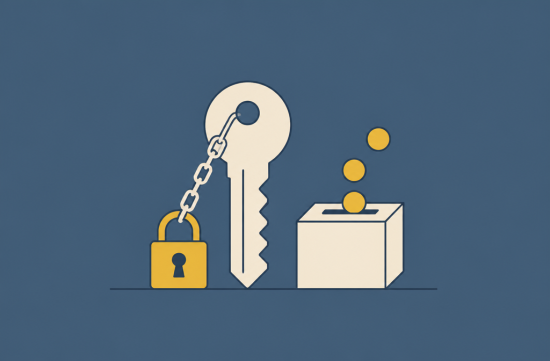
These days, when touring apartments, you often hear this from leasing offices: if you sign up for a guarantee product that requires only a small monthly fee instead of a security deposit, you won't need a large sum of money when moving in.
At first glance, it sounds like an enticing offer. Since moving costs, first month's rent, and furniture expenses all hit at once, the idea of saving cash is appealing.
So today, I want to break it down starting with the numbers. Is this product truly beneficial for tenants, or does it just add another cost?
First, let's look at the Alabama security deposit regulations. The state law Ala. Code 35-9A-201 limits the general security deposit to one month's rent.
For example, if the rent is $1,200, that means the basic security deposit cannot exceed $1,200. However, additional amounts can be charged for pets, requested modifications by the tenant, or increased liability risks.
The rules for getting the deposit back are also clear. The landlord must send the remaining deposit and a deduction statement within 60 days after the tenant vacates, provided the tenant has given their new address.
If this deadline is missed, there is a provision allowing the tenant to claim double the deposit. Since interpretations can vary, be sure to check the original legal text in case of an actual dispute.
In summary, a cash security deposit is money that is generally fully refundable if the tenant leaves the property in good condition. This is the most important starting point when comparing it to a guarantee product.
Now, let's look at guarantee products. Common names in the market include companies like Rhino, LeaseLock, and Obligo.
The structure is generally similar. The tenant pays a fee monthly or in one lump sum, and the company promises to guarantee the amount of the security deposit to the landlord.
However, many people overlook an important aspect. Most of these fees are non-refundable. This means that no matter how well the tenant maintains the property, they won't get any money back.
More importantly, even though the term 'insurance' is included in the name, it often isn't insurance for the tenant. Many operate under a surety bond structure.
In this structure, if the landlord claims damages or unpaid rent, the company pays first and then later bills the tenant for that amount.
This means that paying the fee does not eliminate liability. This is why many tenants find themselves surprised by unexpected bills after moving out.
Some companies also include arbitration clauses in their contracts. It's important to note that even if you believe a charge is unfair, it may be difficult to contest it in court.
So when is it beneficial? The clearest case is when you currently lack cash and cannot move in due to the security deposit.
If keeping an emergency fund for the first few months after moving is more urgent, then opting for a small fee to delay a large cash burden makes sense.
On the other hand, if you plan to stay for more than 1-2 years and can afford the security deposit, the calculations change. The fees accumulate over time, while the cash deposit remains the same.
You can easily calculate this. Multiply the monthly fee by the number of months you plan to stay to see what percentage of the security deposit that represents, revealing how much of a non-refundable cost you are incurring.
Also, check if there are any sign-up fees or annual renewal fees. Often, the total cost isn't clear from just the leasing office's information.
Before signing a contract, here are a few questions to ask. First, confirm whether the fees are refundable.
Ask if the company will bill you for the amount paid to the landlord. It's also important to know if there is a cap on the billed amount and how to dispute charges.
Check if there is an arbitration clause and whether you have the option to choose between a cash deposit and this product. If the structure is mandatory without choice, it may be worth reconsidering.
Regardless of the option you choose, make sure to take photos and videos on the first day of moving in. Documenting the condition of the walls, floors, and appliances with dates will provide strong evidence in case of future disputes.
To be honest, I believe guarantee products are more about spreading out the cost rather than eliminating the security deposit. Despite the marketing that sounds free, the responsibilities for tenants remain unchanged.
So if I have any cash available, I would choose to pay the security deposit. Alabama has a one-month cap and a 60-day return regulation, making the cash deposit relatively secure.
However, if moving funds are tight right now, a guarantee product could provide some relief. The key is to understand that this money will not be returned.
Before deciding between a security deposit or a guarantee product, calculate the total costs based on your situation. That single number can clarify a lot more than you might expect.
 PentiumX
 Stephanos







 B.I.G. Victor |

 Amber H |
 uplifted |

 Dr. Kelso |

 silents |

 Hakuna Matata |

 Information on All Regions of the United States |

 Samsung My My |
 GOGO SING |

 Alabama Bang |
 action blog 101 |
 athome blog |
 calvor |
 Haha and Bomi Blog |
 Lee Ton |
 viba viba |
 Olivia's Blog |
 208 Master |
 crumb |
 blanke |
 Burbank Lee |
 tervox95 |
 silverado |
 Grow Your Gut Bacteria Well |
 Kim You Shin |
 Squid Q |
 gelatonew |
 river9 |
 ttano |
 Eagle in America for Five Years |