

Many people say they want to retire in Florida.
Living in a warm place seems like it would reduce worries about colds or pneumonia, but when talking to older individuals, I often hear about hospitalizations due to pneumonia.
Why do we need to be cautious about pneumonia as we age, even after moving to warm Florida?
First of all, pneumonia is not just a severe cold. It is an infectious disease caused by pathogens like bacteria or viruses entering the lungs and causing inflammation.
Inside the lungs, there are small alveoli that exchange oxygen and carbon dioxide, and when inflammation and secretions accumulate here, it becomes difficult to exchange oxygen. Some people may only experience coughing, fever, and chest pain, but if it worsens, they may have shortness of breath and require hospitalization or oxygen therapy. (CDC)
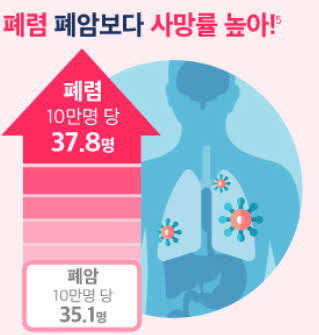
Especially after the age of 65, the situation changes. The CDC reports that those over 65 are at high risk for pneumonia, and the risk increases with age. Those over 65 are at greater risk than those over 80, and as one gets older, the body's ability to withstand infections decreases. (CDC)
When we are younger, we can cough forcefully to expel mucus, and our immune system reacts quickly. However, as we age, our coughing strength may weaken, and our overall physical reserve decreases. If chronic conditions like heart disease, diabetes, or COPD, or weakened immunity are present, pneumonia becomes much more dangerous. Smokers are also at increased risk. (CDC)
The reason pneumonia can be fatal is also found here. If the lungs cannot properly absorb oxygen, it can lead to respiratory failure, and bacteria can enter the bloodstream, causing bacteremia or sepsis. If other organs like the heart or kidneys are stressed, it can quickly become a dangerous situation for older adults. The CDC explains that among infected adults, up to about 1 in 20 may die from pneumococcal pneumonia. (CDC)
So, wouldn't living in a warm place like Florida be okay? This is a common misconception. Cold weather itself does not cause pneumonia. Pneumonia is an infection. Living in Florida does not eliminate viruses and bacteria, and people still go to grocery stores, churches, restaurants, and meet their grandchildren. Moreover, according to the CDC, pneumonia is more common in the fall and winter, but it can occur at any time of the year. (CDC)
So, it's not that retiring to Florida is meaningless. The warm winters certainly provide advantages for walking and outdoor activities. However, thinking that "living in a warm place means you won't get pneumonia in old age" is misleading. Factors like age, pre-existing conditions, immune status, and smoking are much more important than the weather when it comes to pneumonia risk.
Prevention is also important. In the U.S., the CDC currently recommends pneumococcal vaccination for adults over 50. The type of vaccine needed may vary based on past vaccination records, so it's best to check with your primary care physician. Vaccinations for viral infections like influenza or COVID-19 are also important as they can lead to pneumonia. (CDC)
And older adults should not assume that pneumonia will only present typical symptoms like younger people. Sudden confusion can also be one of the symptoms of pneumonia. If you experience shortness of breath, chest pain, persistent high fever, and chills, it's best not to delay seeking medical attention. (CDC)
Ultimately, while the sunshine in Florida can make retirement life comfortable, it does not prevent pneumonia.
As we age, pneumonia is not an illness to be brushed off as "just a bad cold." If you want to live healthily for a long time in a warm place after retirement, it's much more realistic to focus on exercise, good nutrition, getting vaccinations, quitting smoking if you smoke, and seeking medical attention promptly when unusual symptoms arise.
 GeumjaHome
 PuddingBuddy







 LIZ Legal Information Blog |
 Karina's Blog |
 Jimbeam 88 |
 Taco Bell Candy Note Blog |
 Splendid Mission |
  You Only Live Once |
 Sunshine Blog |

 Lando Mao |
  Cap Com |
  nixxon |
  kevin Kim |
  beerdreamer |
  Kims Spring |
  White bunny |
  Kansas City Representative Singer |
  shadow 007 |
  sun walker |
  Choco Choco Star |
  midnight blue |
  honeypot |
  summer |
  adventure77 |
  flexible |
  Shintongbangtong Shin Naerin James Park |
  truepixel |
  Kathy's Blog |
  Hae Naem |
  quatspace |