

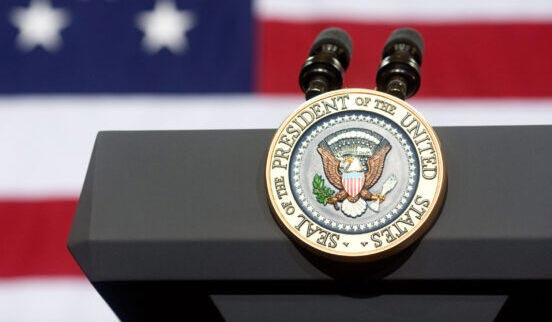
When the topic of the next presidential candidates comes up in the U.S., even those who seem uninterested in politics can suddenly act like experts.
The question, "Who will be the next president?" grabs everyone's attention because it can affect daily life, taxes, housing prices, immigration, and healthcare costs. Especially now, the U.S. is so dynamic that elections feel like a matter of survival.
It seems that the atmosphere of the area I live in, the company culture, and even investment directions can change depending on who gets elected.
Currently, California Governor Gavin Newsom appears to be relatively prominent. In a survey, about 55% of Democratic-leaning voters said they could consider him as a candidate for the 2028 presidential election, and about 23% identified him as an ideal candidate. Former Vice President Kamala Harris is also mentioned as a potential candidate, but her ideal candidate percentage is lower than Newsom's.On the Republican side, Senator J. D. Vance from Ohio is currently evaluated as the most likely candidate for the next presidential election. In one poll, about 65% of Republican and Republican-leaning independent voters said they could consider Vance as a candidate.
However, there is also a high possibility that someone completely unexpected, like Trump, could suddenly emerge. It seems we are in an era where people are more interested in storytelling than in well-crafted resumes. As a result, the phenomenon of billionaire CEOs, popular TV hosts, and YouTube stars stepping into the presidential race is increasing, and if they have strong messaging, they could bypass traditional parties and gain popularity quickly.
Looking at this trend, it seems that the future of American politics will solidify into a structure where traditional politicians and popular celebrity politicians compete on the same stage. Additionally, there is one more element that is particularly noteworthy in this election: generational conflict.
The voices of young voters from the MZ generation have become stronger in American politics, and the issues that directly affect their lives, such as climate change, student loans, healthcare, and housing costs, are changing who they choose to vote for. Instead of voting based on political affiliation as in the past, they are now selecting candidates based on who will impact their salaries and rent.
Meanwhile, the immigrant community and the proportion of multi-ethnic voters continue to grow, so even the words used in speeches must be chosen carefully.
If a specific group is provoked, a storm of criticism on social media can ensue, and approval ratings can plummet overnight. Ultimately, the battle for the next presidential candidate seems to be a fight where 'likability + economic messaging + crisis response performance' will have a cumulative effect.
It is no longer enough to just speak well, nor is it a time when solid policies alone will get someone elected. Candidates who lack likability, boastful popular figures, and those relying solely on impressive resumes will all be filtered out in the process, and the ones who truly survive will be those who can deliver a consistent message in front of the public, demonstrate leadership in times of crisis, and make realistic promises from the perspective of ordinary people.
Ironically, anyone who gets elected will still face criticism afterward. But that might be the charm of American politics.
No matter how the results turn out, I think the process of electing the next president is like an exciting drama.







 fortbliss |
 Folding Instructions |
 yentra |
 Cali M Law Group |
 quanta7 |
 Rainbow Bridge to the Sky |
 Taco Bell Candy Note Blog |

 Splendid Mission |
 Korean Mom |
  My NYC |
  moo moo |
  Mr Oh |
  forevergee |
  festival |
  manchester |
  constant |
  Leapfrog Move |
  vibranto |
  Tora Tora |
  yellowbutter |
  Dolly |
  US Embassy |
  NYC saladbar |
  Finding Superfoods |
  lightyear |
  song bang |
  vexomo |
  Indiana Jones |