

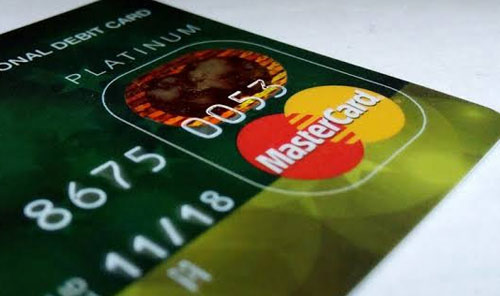
You may have seen the screen at a convenience store or gas station ATM asking, "Do you agree to a fee of $3.50?" when withdrawing $100 in cash.
I also thought that these fees were just set by the ATM owner.
However, the recent class action lawsuit against Visa and MasterCard reveals that the issue isn't just about high ATM fees.
A U.S. federal court recently granted preliminary approval for a settlement of $167.5 million, with Visa responsible for $88.775 million and MasterCard for $78.725 million.
However, both companies deny the plaintiffs' claims of legal violations, and this settlement does not imply an admission of wrongdoing.
So what exactly was the problem?
The $3 to $4 fee we pay at convenience store ATMs is mostly collected by the ATM operating companies.
However, there is a separate payment network that connects the transaction to the bank. This could be a Visa or MasterCard network or another network.
This is where the cost difference arises. For example, if using Network A costs $1 to process, but using Network B only costs 50 cents.
In a normal competitive environment, ATM operators could charge customers 50 cents or $1 less for transactions using Network B.
However, due to the network rules of Visa and MasterCard, independent ATM operators were unable to apply lower fees.
Ultimately, consumers did not benefit from price competition even when transactions could have used a cheaper payment network.
This raises a question.
"Is it permissible to create such regulations in the U.S.?"
This is precisely what has been the subject of antitrust litigation for over a decade.
The issue isn't that a $3 fee is illegal, but whether the network rules that make it difficult for market participants to lower prices restrict competition.
Given that companies like Visa and MasterCard are massive global entities, their legal teams must be formidable.
When creating such regulations, they likely considered the potential antitrust issues.
They probably believed that these rules were necessary for the operation of their networks, and they still do not admit to any wrongdoing.
Conversely, the plaintiffs argue that this ultimately prevented competitors from offering lower prices and kept consumer fees high.
And this led to the $167.5 million settlement.
What's even more surprising is the time frame involved. It spans nearly 19 years, from October 24, 2007, to August 14, 2026.
If you withdrew cash from independent ATMs not owned by banks during this period and did not receive a full refund of those fees from the bank, you may be eligible for the settlement.
The official claims site is currently accepting applications until February 10, 2027.
While you don't have to submit proof like receipts when applying, additional documentation may be requested during the eligibility verification process.
The individual payout amounts have not yet been determined and will vary based on the number of valid claims, raising questions about whether it will exceed $10, and the final approval hearing is scheduled for February 17, 2027.
In the end, a $3 or $4 ATM fee may seem insignificant.
But if millions of people across the U.S. have paid it repeatedly for nearly 20 years, the story changes completely.
This is what makes this case interesting. In the U.S., it is practically difficult for a single consumer to fight Visa and MasterCard over a claim of "I paid 50 cents more."
However, if that 50 cents is multiplied by millions, it enters the realm of class action lawsuits and antitrust law.
So what large companies in the U.S. may truly fear is not an individual's $3 complaint, but the numbers that arise when that $3 is multiplied by millions.
 WinterZone
 OceanHarbor79
 RoundSun
 ShareDonkey




 U.S. Retirement Pension Information |
 California Dreamer |
 NEXT ROUND |
 US Economic Financial News |
 There Are Such Things in the World |
 Investment Campus Home Ownership |
 Sunny's Travel in America |
 Superman Cat Blog |
 yentra |
  donut33 |
  gravity |
  American Golf Course Travelogue |
  Agenda Center |
  digital |
  timemachine |
  Starry Eyes |
  Desert King |
  Texas Real Estate Blog |
  Seattle - Emerald City |
  Texas Migration Story |
  Unknown Dog Walk blog |
  Bearded Strawberry Smoothie |
  Heart Ticker |
  JESIKYEOALBA BLOG |