
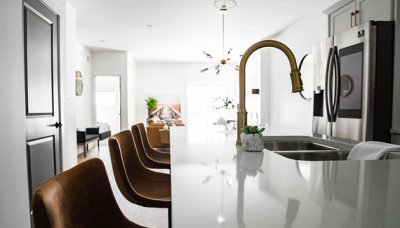
Augusta, the capital of Maine, has maintained significantly lower housing prices compared to metropolitan areas, with state government and related agency employment being a major pillar of the local economy. The quiet atmosphere typical of small towns along the Kennebec River, combined with a cost of living that is about half that of southern Maine cities like Portland, has recently attracted the interest of remote-working households. The area near downtown Augusta, the western West Augusta region, and the border area with the adjacent Hallowell are small neighborhoods, each with its own unique character.
The area near downtown Augusta features many old New England-style homes, with median prices ranging from $180,000 to $240,000, while West Augusta has a larger number of single-family homes on relatively spacious lots, with transactions commonly occurring in the $220,000 to $290,000 range. Near the Hallowell border, properties with river views are observed in the $250,000 to $340,000 range. All three areas have price points that are only about one-third of those in metropolitan areas like D.C. and Boston. Compared to the average median price in Maine, Augusta is also considered to be somewhat lower.
Recent trends show that while West Augusta continues a gradual upward trend, the area near downtown tends to remain stable due to a high proportion of older homes. The Hallowell border area, being a small market, tends to exhibit significant price fluctuations whenever properties become available.
From an investment perspective, there are discussions about small-scale redevelopment efforts in downtown Augusta. Local government support for revitalizing the local business district suggests potential for long-term improvement in housing demand, but given the slow population growth in the area, it seems reasonable to maintain conservative expectations. Small infrastructure improvements, such as the renovation of waterfront walkways, are also gradually contributing to the area's image. It is worth noting that there is a steady demand for quiet small towns among remote workers.
In terms of rental yield, Augusta as a whole is considered an attractive area for investors due to relatively good rental rates compared to low purchase prices. Particularly, small homes near downtown tend to have higher cap rates, making them appealing to buyers focused on pure rental income.
Risk factors include a low population growth rate and a limited economic base, which may make it difficult to expect long-term capital gains, as well as the low liquidity of properties in a small market, making it challenging to time sales. Additionally, winter heating costs and other maintenance expenses should be considered. Given the number of older homes, it is advisable to check the insulation and heating system conditions before purchasing.
Augusta has a high proportion of employees working for state government agencies, leading to relatively stable employment; however, being a small town with a limited population, it may take time to find buyers or sellers for transactions.
For Korean households, Augusta offers a chance to start homeownership or small rental investments with much lower initial capital compared to metropolitan areas. However, since the Korean community is not large in the area, it is advisable to thoroughly check the living infrastructure and community accessibility before making a decision.
The price ranges discussed above are based on recently published property data, and actual transaction prices may vary depending on the property's view and management condition. If you are considering a purchase or investment, it is recommended to check the latest market prices and winter maintenance costs as well.
 MagicHarbor78





 garlic bread |

 urbanmint |
 |
| 
 Premium Gas Camp |
 milkyotter |
 US Regional Information Blog |
  cookiefox |
 U.S. Weather Bureau News |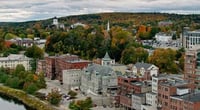
 novapixel |
  mortrix |
  ollege Mom |
  Esther 1983 |
  Arizona AZ Cowboy |
  fortbliss |
  Moscow Kim |
  My Two Way |
  toastyfox |
  FLORIDA Acus |
  tracker |
  TONTON COFFEE |
  sunrise |
  ultron78 |
  uplifted |
  Folding Instructions |
  same same life |
  USA Hyundai Kia |
  morvex37 |
  BOL SA RAM |