
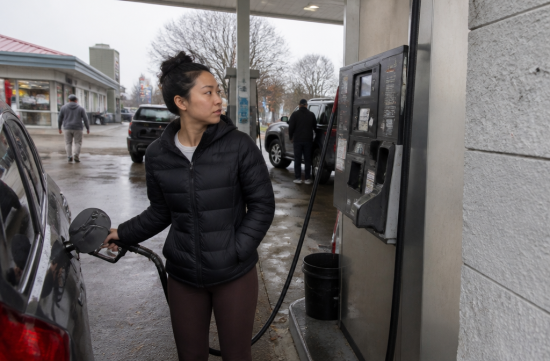
At the end of last month, I passed by a gas station and had to double-check the price board. Just a few days earlier, the price was in the $3 range, and suddenly it was well over $4.
It wasn't just my imagination. According to GasBuddy, as of October 26, the average gas price in Ohio was $4.40 per gallon, which was a 36-cent increase from the previous week.
AAA also reported the same average of $4.40. Since both sources matched, you can consider this a fact.
In Columbus, the price was even higher. On the same day, the average in Columbus was $4.43, which was a 32.3-cent increase in just a week.
So why did it spike like this? GasBuddy's Patrick De Haan explained that it was due to regional supply issues at refineries in the Great Lakes area.
With disruptions at the refineries supplying Ohio, the supply tightened. Michigan and Pennsylvania were also affected. During the same period, De Haan noted that the situation was starting to improve.
Interestingly, the national average that week was $4.24, which remained relatively stable. It was just our local area that saw a significant price increase that week.
What's even more frustrating is the timing. Ohio is currently in a gas tax holiday, where the gas tax of 38.5 cents is suspended for 90 days.
Even with the tax relief, the refinery issues nearly negated the benefits. De Haan specifically stated that the tax holiday doesn't freeze prices.
On the bright side, thanks to the tax holiday, Ohio's prices were lower than those in neighboring states. As of mid-October, Michigan's average was $4.46 per gallon, about 40 cents higher than Ohio.
There's good news too. Prices have been dropping for two consecutive weeks.
In the week of November 2, prices fell by more than 30 cents, and on November 9, GasBuddy reported that the average in Columbus dropped to $3.79. That's a decrease of 32.9 cents in just a week.
That's 12.8 cents lower than a month ago. However, it's still 75.9 cents higher than this time last year, so we're not out of the woods yet.
The national average that week was $3.96. The speed of the drop is relatively quick, considering how sharply prices rose.
The number that surprised me the most was that on the same day, the cheapest gas in Columbus was $3.35, while the most expensive was $4.49.
That's a $1.14 difference per gallon within the same city. Filling up 15 gallons could mean a difference of over $17.
So what can you do? Here are some methods I actually use.
First, check your app before filling up. Using GasBuddy or a map app to compare nearby prices takes just a minute. Since the prices are reported by actual drivers, they can sometimes be a few hours late, so also check the update time.
Second, when news of price spikes comes out, only fill up halfway. Prices that spike due to local refinery issues usually drop again once supply stabilizes. This time, prices fell more than 60 cents within two weeks from the peak, so it's best to fill up only what you need and wait it out.
Third, when prices are falling, it might be better to fill up gradually rather than topping off. This is especially true during periods when prices are dropping by several cents each week.
Fourth, identify two or three affordable gas stations along your commute. This makes it easier to develop a habit without having to search every time. Sometimes, gas stations just a block inside from a major store or right off the highway exit can be cheaper.
Fifth, don't forget about grocery store memberships or gas reward cards. Even a few cents per gallon can add up over a month. However, if you drive out of your way just to earn rewards, you might end up spending more on gas, so stick to your usual routes.
And there's one date you should definitely mark on your calendar. The Ohio gas tax holiday lasts until January 2, 2027.
Analysts predict that once the tax is reinstated, prices will rise again within 2-3 days. Since the 38.5 cents will be added back, the impact will be significant. For those filling up 15 gallons a week, that means over $5 more just from the tax.
So if you have long-distance driving plans for the end of the year, it's best to fill up before the first week of the new year. This is definitely the timing I recommend.
Personally, I believe that stabilizing the supply chain is much more important than short-term measures like tax relief. The Great Lakes region has experienced several spikes like this just this year.
However, we can't fix the refineries. What we can do is compare prices, choose the right timing, and combine trips when possible. Just handling grocery shopping and banking on the same day can significantly reduce the number of times you need to fill up.
Right now, since prices are dropping, consider filling up gradually while keeping an eye on the situation, and plan for a larger fill-up at the end of the year.
What are gas prices like at your local stations right now? If you find a good deal, please share it in the comments.
 ShabuBattle
 coastalvibemaker1994








 choi family |
 content |

 Carolina border |

 Que Buena |
 juicylol |

 steadyo |

 Real Estate Investment Korean American |

 strongman |


 strawberry |
 US Regional Information Local News |
 USA Business News |
 Blondee |
 E whisper |
 Potato House |
 freshmint |
 Ansaso |
 Golado |
 babybay |
 honeycom |
 French Macarons |
 Exploring American Life Information |
 Sunshine Blog |
 Community Cross |
 Sayonara H |
 What can make money? |
 Information Search LifeMAN |
 morvex37 |
 neontrail |