
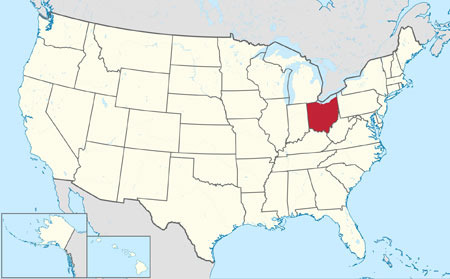
Ohio (OH) is an important state located in the Midwestern United States, boasting a rich history, diverse population, and a strong economic foundation. Below, we will provide detailed information about Ohio's history, population status, and median income.
Early History and Native Americans The Ohio region has been inhabited by various Native American tribes long before the arrival of Europeans. Notably, the Ojibwe, Cherokee, and Seminole tribes lived here, engaging in agriculture, hunting, and fishing for their livelihoods.
European Settlement and Colonial Era From the late 17th century, the French and British began to explore and trade in the Ohio region. Trade relations with Native Americans were particularly active, and after the French ceded Ohio to Britain following the Seven Years' War in 1763, Ohio became a British colony, leading to frequent conflicts between the British and Native Americans.
Independence and Territorial Period After the American Revolutionary War, Ohio played a significant role as a western frontier. It was incorporated into the United States through the Louisiana Purchase in 1803, and on March 1, 1803, Ohio officially became the 17th state of the United States. By the mid-19th century, the development of railroads and canals helped it grow into a transportation hub.
Industrialization and Economic Development From the late 19th century to the early 20th century, Ohio emerged as one of the major manufacturing centers in the United States. The automotive, steel, and machinery industries flourished, establishing cities like Cleveland, Cincinnati, and Columbus as economic centers. During this period, many immigrants flocked to Ohio, leading to a rapid increase in population.
Modern History Since the mid-20th century, Ohio's economy has shifted due to the decline of manufacturing and the rise of the service industry. From the 1970s onward, high-tech industries and healthcare have grown, diversifying the economy. Additionally, Ohio plays a crucial role as a politically significant 'Swing State' in U.S. presidential elections.
Population Status
Total Population According to the 2020 U.S. Census, Ohio's population is approximately 11.8 million, making it the 7th most populous state in the United States.
Population Composition and Racial Breakdown
- White: about 78%
- African American: about 12%
- Hispanic/Latino: about 4%
- Asian: about 2%
- Mixed Race: about 4%
Ohio is a state where diverse races and cultures coexist, with the African American community particularly prominent in major cities like Cleveland, Cincinnati, and Columbus.
Major Cities
- Columbus: The capital and largest city, with a population of about 9 million. It is a center for education, technology, and finance.
- Cleveland: With a population of about 3 million, it is a city known for its healthcare and manufacturing industries.
- Cincinnati: A city with a population of about 3 million, where finance and manufacturing are the main industries.
- Toledo, Akron, and Camden are also significant cities with concentrated populations.
Population Trends Since the mid-20th century, Ohio has experienced a trend of population decline. This is attributed to the decline of manufacturing and an increase in people moving to other states in search of better economic opportunities. In recent years, some cities have seen population recovery and redevelopment efforts, but the overall population decline remains a challenge.
Ohio's Median Income
Median Household Income Ohio's median household income is approximately $56,000 to $60,000, which is lower than the national average of about $70,000. This is related to the economic disparity between urban and rural areas within the state.
Key Economic Factors
- Manufacturing: Still a vital industry, with automotive, steel, and machinery having a significant impact on median income.
- Service Industry: Education, healthcare, and financial services support the economy, contributing to median income.
- Technology and Healthcare: In recent years, the growth of technology and healthcare industries has contributed to improving state income levels.
Regional Income Disparities There are income disparities between regions within Ohio. Major cities like Columbus record relatively high incomes, while some rural areas have lower income levels. This is due to differences in the economic structure and employment opportunities within the state.
Cost of Living Ohio has a lower cost of living compared to other states in the U.S. Housing costs, groceries, and healthcare are cheaper than the national average, allowing households with median income to maintain a higher standard of living.
Ohio plays a significant role in the United States based on its rich history, diverse population, and median income levels. The traditional manufacturing sector is evolving alongside the growth of the service industry, technology, and healthcare, while efforts to address economic disparities between regions continue. Although challenges such as population decline and economic diversification remain, Ohio firmly establishes itself as an important economic and cultural center in the Midwestern United States.








 fixed |
 Ohio Ohayoung Hello |
  MACCITON Real Estate |
 manchester |
  constant |
  Leapfrog Move |
  vibranto |
  Tora Tora |
  yellowbutter |
  Dolly |
  US Embassy |
  NYC saladbar |
  Finding Superfoods |
  lightyear |
  song bang |
  vexomo |
  Indiana Jones |
  meloncat |
  novapixel |
  mortrix |
  Esther 1983 |
  fortbliss |
  Moscow Kim |