

I am a housewife in my 50s living in LA, and in the past, I thought shingles was just a skin disease that caused blisters on the skin.
However, after seeing my aunt and cousins in Korea suffer from shingles one by one, my perspective completely changed.
Strangely, most of the women in my family have suffered from shingles in their mid to late 50s. Now that I am approaching that age, I am starting to feel a bit scared.
My aunt said that at first, her side felt prickly, and it hurt just to have clothes brush against it. Since nothing was visible on the outside, she thought it might be a muscle strain, but then red spots and small blisters appeared in a band-like pattern. My cousin described the pain as feeling like "a hot iron pressed against the skin." She said it hurt even when her pajamas touched her, and she had trouble covering herself with a blanket, causing her to toss and turn all night.
Shingles is not just a simple skin disease. It is caused by the virus that caused chickenpox in childhood hiding in the nerve ganglia and reactivating when a person ages or their immune system weakens.
Therefore, before blisters appear, symptoms like burning skin, sharp pain like being pricked by needles, itching, and tingling can occur. Usually, rashes and blisters appear on one side of the body or face, and the blisters typically crust over after 7 to 10 days, with the overall symptoms lasting about 2 to 4 weeks.
What's scarier is what happens after the blisters disappear. If the virus damages the nerves, burning or stabbing pain can persist for months, or in severe cases, for years after the rash has healed. This is known as postherpetic neuralgia, and some people find even light contact with clothing painful and have trouble sleeping. If it occurs on the face or around the eyes, it can lead to vision problems, making early treatment crucial.
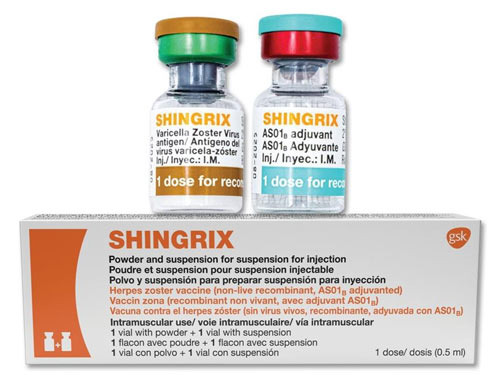
The vaccine recommended in the U.S. is Shingrix. This vaccine does not use live virus but instead trains the immune system to recognize the shingles virus by using parts of the virus's proteins.
It essentially reawakens the weakened immune memory as we age. This helps the immune cells respond quickly when the dormant virus tries to reactivate.
The reason American doctors strongly recommend the shingles vaccine for adults aged 50 and older is that the incidence of shingles sharply increases after age 50, and the existing vaccine (Shingrix) shows the best immune prevention effect (over 97%) when administered at this age.
The CDC recommends that adults over 50 receive two doses of Shingrix. The second dose is usually given 2 to 6 months after the first. Even those who have had shingles in the past can get it again, so it is advisable to consult a doctor about vaccination after recovery.
After getting the shot, you may experience soreness in your arm, fatigue similar to having the flu, or a fever. I have heard people say they felt "sick for a day or two" afterward. However, these reactions often occur as the immune system responds to the vaccine and generally improve within 2 to 3 days. Compared to suffering for weeks from shingles or having lingering nerve pain, I think it's a manageable risk.
In LA, you can also make an appointment to get vaccinated at pharmacies like CVS and Walgreens. Most private insurance plans may cover the recommended vaccinations with no out-of-pocket costs within their network, and Medicare Part D enrollees can receive the shingles vaccine at no cost.
If you don't have insurance, the cash price before discounts can be over $250 for one dose, so getting both doses could exceed $500. Prices vary by pharmacy, so it's a good idea to check insurance coverage and the cost of both doses before making an appointment.
Seeing the women in my family suffer at similar ages makes me no longer think, "I'll be fine." I believe shingles is not a disease to endure once contracted, but rather a disease that should be prevented in advance while healthy. If you've turned 50, it's a good idea to ask your doctor about it during your next health check-up or check with a nearby pharmacy about insurance coverage.
 PigFootDream
 LimeRider
 RainbowCitrus







 choi family |
 What can make money? |
 road98 |
 Baguette Blog |
 Khan Film Blog Production |
 Weekend Movie Blog |
 Superman Cat Blog |
 Victory 1988 |
 Beauty, Health, Lifestyle Blog |
 coloradoman |
  The Gelaton |
  Twist Kim |
  berlon93 |
  Physical Laws and Science |
  good thinking |
  Solo Yolo |
  Mr Oh |
  laro90 |
  San Diego TOP Idol |
  Round and Round Children's Song Kingdom |
  American Golf Course Travelogue |
  MEDBIO American Doctor Blog |
  Hot Seat Driver |
  bryvexi |
  koala organic farm |
  riverstone |
  My Antonio |
  California Information News |
  chilli chilli |
  Moon Su San |