
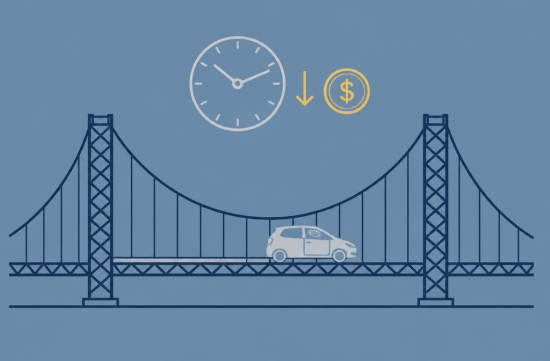
Last week, I had a meeting in Manhattan, so I crossed the bridge in the morning for the first time in a while. After the meeting, I checked my E-ZPass statement and realized that the cost of three cups of coffee had vanished with just one bridge crossing.
Everyone knows that the GWB toll has gone up again this year, right? So this time, I've organized the information properly.
The Port Authority raised bridge and tunnel tolls by 3% starting January 4, 2026. As a result, the peak E-ZPass rate for passenger vehicles is now $16.79.
Seeing that number left me momentarily stunned. For those who commute daily, that adds up to quite a bit over a month.
The good news is that the GWB toll only applies when heading toward New York, meaning it's free when returning to New Jersey.
So, the round-trip cost is essentially just that one fee you pay in the morning.
Now, where can you save? The first thing to look at is the difference between peak and off-peak times.
Weekday peak hours are from 6 AM to 10 AM and 4 PM to 8 PM. On weekends, peak hours are set from 11 AM to 9 PM.
If you cross with E-ZPass outside of these times, it's $2 cheaper than the peak rate. It may not seem like much, but when you multiply it by the number of workdays in a month, it adds up.
For example, if you cross 20 times a month, that's a $40 difference. That's enough for a dinner for two at a local pasta place.
Extend that over a year, and it's $480. At this point, doesn't it make you seriously consider shifting your commute time by 30 minutes?
As a freelancer, I tend to schedule my meetings for after 11 AM. It might be tough for those with fixed hours, but if you have a mix of remote work, it's worth adjusting your commute days.
However, this off-peak discount won't last forever. According to the plan approved by the Port Authority, the discount will decrease by 50 cents each year starting January 2027.
The current $2 discount will be phased out over four years. Honestly, this part is a bit disappointing.
The Port Authority explains that this increase and reduction in discounts are funding a $45 billion capital plan that will run from 2026 to 2035. While fixing aging infrastructure is necessary, it's understandable that those who cross daily feel the burden first.
The second tip is to make sure you use E-ZPass. The GWB doesn't have cash toll booths, so if you don't have a tag, you'll receive a bill by mail based on your license plate.
This Tolls by Mail fee is definitely more expensive than E-ZPass. Be especially careful when renting a car or borrowing a family vehicle.
Also, check that your tag is properly affixed to your windshield. If the tag isn't recognized, it could be processed as a mail fee.
Make sure the license plate registered to your account matches the car you're currently driving. Surprisingly, many people forget to update their license plate after changing cars. Also, check your payment method to ensure that your registered card hasn't expired, which could cause automatic recharges to fail.
Some of you might remember the GWB carpool discount that used to exist. This discount disappeared when the tolling method changed to cashless.
So, the only discount available now is essentially the off-peak one. Be wary of outdated carpool information floating around online.
The third option is to simply not cross the bridge every day. If you switch to taking the bus one or two days a week, you'll save on both tolls and parking fees.
The bus from Fort Lee to Manhattan does get congested during rush hour. Still, I found that it's surprisingly nice to travel without the stress of driving while looking at my phone. Considering Midtown parking fees, bus days can actually be more relaxing.
Lastly, make sure to check your E-ZPass statement at least once a month. By looking at how many days you crossed during peak hours, you can see your patterns clearly.
I was surprised when I first organized my data. I had crossed during peak hours more often than I thought. There were several days when I got on the bridge around 9:50 AM, and that 10-minute difference cost me an extra $2.
These may seem like minor details, but they add up over time. Since then, I've set an alarm on my phone to remind me of the off-peak start times.
The toll rates change every year, so it's safest to check the exact amounts directly on the Port Authority's website. Many blog posts or unofficial sites may have outdated figures from last year.
To summarize, here's what you can do: cross during off-peak hours, keep your E-ZPass and license plate information updated, and occasionally take the bus.
There aren't any grand secrets. However, just doing these three things can noticeably reduce your monthly toll expenses. Especially since the off-peak discount applies automatically without needing to sign up, it's the easiest option.
If I were you, I'd start getting into the off-peak habit before the discounts begin to decrease next January. Even after the discounts are gone, avoiding congested times is still a win.
With the tolls I save, I plan to treat myself to a delicious plate of pasta in the neighborhood this weekend. I hope there are more days like that than days I have to cross the bridge.
 MelonRap
 LAVoice

 choi family |
 content |
 Carolina border |

 Que Buena |
 juicylol |

 clouds 09 |


 The Yellow |

 vanilla |

 strawberry |
 US Regional Information Local News |
 USA Business News |
 Blondee |
 E whisper |
 Potato House |
 freshmint |
 Ansaso |
 Golado |
 babybay |
 honeycom |
 French Macarons |
 Exploring American Life Information |
 Sunshine Blog |
 Community Cross |
 Sayonara H |
 What can make money? |
 Information Search LifeMAN |
 morvex37 |
 neontrail |