
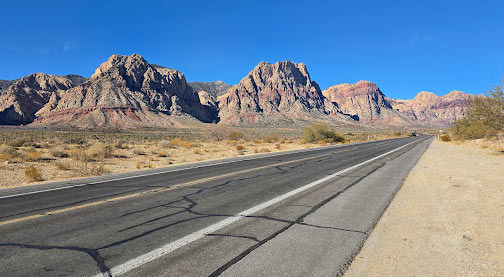
Nevada is the driest state in the United States, with over 80% of the state consisting of desert terrain.
This area boasts a unique ecosystem, diverse landscapes, and vast nature reserves. Here are the main deserts and their features.
Mojave Desert
- Location:
A desert that includes southern Nevada and parts of California, Arizona, and Utah. - Features:
- One of the hottest deserts in the United States, with summer temperatures soaring above 100°F (37°C).
- Most of Las Vegas and its surrounding areas are part of the Mojave Desert.
- The Joshua Tree is a representative plant of this region.
- Main Attractions:
- Valley of Fire State Park: Famous for its red sandstone formations and natural sculptures.
- Red Rock Canyon: A popular spot for hiking and rock climbing.
Great Basin Desert
- Location:
Includes northern and eastern Nevada, western Utah, and eastern Oregon. - Features:
- The largest cold desert in the United States.
- It has a unique climate that is warm in summer but can drop to snowy conditions in winter.
- High salinity dry lakes are widely distributed.
- Main Attractions:
- Great Basin National Park: Offers mountain scenery and cave exploration.
- Black Rock Desert: The site of the Burning Man festival.
Sonoran Desert
- Location:
Includes southeastern Nevada, Arizona, and Mexico. - Features:
- The most biologically diverse desert in North America.
- Characterized by the giant saguaro cactus.
- Only a small part is included in Nevada, but it showcases a unique ecosystem.
Desert Ecosystem
- Flora:
- Main plants include Joshua trees, cacti, and agave.
- There are many shrubs and small grasses adapted to dry environments.
- Fauna:
- Diverse wildlife such as scorpions, snakes, coyotes, and desert tortoises inhabit the area.
- Many animals are particularly active at night.
Key Features
- Climate:
- Average annual precipitation is less than 10 inches (about 25 cm), making it the driest region in the United States.
- While winters can be cold in many areas, most regions record high temperatures in summer.
- Geological Features:
- Salt flats and dry lakes are found throughout the desert.
- A mix of extensive valleys and highlands offers a variety of landscapes to enjoy.
Tourism Tips
- Best Time to Visit:
- Summer can be extremely hot, so fall or spring is the optimal time.
- What to Bring:
- Plenty of water, sunscreen, a hat, and sturdy shoes.
- Precautions:
- Desert areas can have extreme temperature changes, and there may be toxic animals and plants, so caution is necessary.
The deserts of Nevada are not just dry and barren lands; they are special places where one can experience the wonders of nature and the unique culture created by humans.








 celion78 |
 Say IT Now |
 neroyo |
 zanero |
 korvix |
  meloncat |
  novapixel |
  mortrix |
  Esther 1983 |
  fortbliss |
  Moscow Kim |
  My Two Way |
  toastyfox |
  FLORIDA Acus |
  tracker |
  TONTON COFFEE |
  sunrise |
  ultron78 |
  uplifted |
  Folding Instructions |
  same same life |
  USA Hyundai Kia |
  morvex37 |
  BOL SA RAM |
  TOUCHE NEWS |