

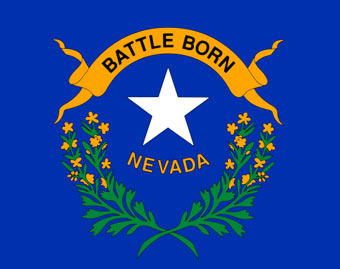
It is often referred to as a swing state, meaning it can change its voting results in each election, making it a 'hard-to-read state.' To put it in Korean terms, it is a region that does not lean definitively to one side, and its voters' preferences shift based on the situation. This is why candidates always make a point to visit during presidential election seasons.
Looking back, the atmosphere was somewhat different from now. From the early 20th century until the 1980s, it was a region where the Republican Party was strong. There were many conservative voters, and Republican candidates often won presidential elections. At that time, Nevada was not as urbanized as it is now, and the population was small, so there were not many political changes.
The shift began in the 1990s. With a rapid increase in population centered around Las Vegas, the atmosphere changed. The growth of the casino, tourism, and service industries brought in many outside residents, particularly increasing the percentage of Hispanic voters significantly. This change greatly influenced the expansion of the Democratic Party's support base. Now, Hispanic voters make up about 30% of the total, giving them considerable influence over election outcomes.
Recent elections highlight this characteristic even more. In presidential elections, the Democratic Party has shown a relatively strong trend. In the 2020 presidential election, the Democratic candidate won. However, the margin is not large. Results often vary by just a few percentage points, so it remains a competitive area. Conversely, in gubernatorial elections, Republican candidates can win. In fact, in 2022, a Republican governor was elected. This means that voters are making different choices in each election.
To understand this, we need to look at Nevada's regional structure. Urban areas like Las Vegas and Reno tend to strongly support the Democratic Party. Labor unions, service industry workers, and diverse racial compositions influence this. In contrast, the rural northern areas traditionally lean Republican. They often maintain conservative positions on issues like gun control, taxes, and the role of government. Ultimately, the urban and rural areas exhibit completely different political tendencies.
Another important point is the percentage of independent voters. About 30% of voters in Nevada are not registered with a specific party, which is quite high. The direction these voters lean in each election can change the results. This is why candidates campaign and advertise up until the last minute, targeting these votes.
The key issues also differ somewhat from other states. Nevada's high dependence on tourism and the casino industry means that economic conditions directly affect voter sentiment. Realistic issues like jobs, economic recovery, and prices play a very important role. Immigration policy is also a significant variable. Given the high percentage of Hispanic residents, positions on immigration-related policies have a direct impact on election outcomes.
In the end, Nevada is not so much a politically 'middle' state, but rather a state with a structure that is constantly shifting due to various factors. This makes it difficult to predict election outcomes, and it often plays a casting vote role in national elections. The growth of the city of Las Vegas, changes in population structure, and economic conditions all combine to create the current swing state of Nevada.





 Moscow Kim |
 coloradoman |
 Montgomery Mom |
 GOGO SING |
 Hajiwon Blog Hair Salon |
 neroyo |
 Say IT Now |
 celion78 |
 US Legal Consultation on Trials |
 zanero |
  Korean Mom |
  My NYC |
  moo moo |
  Mr Oh |
  forevergee |
  festival |
  manchester |
  constant |
  Leapfrog Move |
  vibranto |
  Tora Tora |
  yellowbutter |
  Dolly |
  US Embassy |
  NYC saladbar |
  Finding Superfoods |
  lightyear |
  song bang |
  vexomo |
  Indiana Jones |