

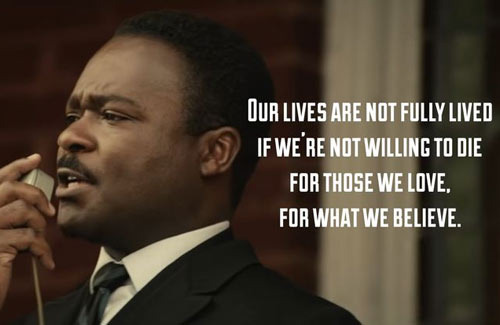
Montgomery seems like a truly special place.
It's a real stage where significant events that changed the course of modern American history come alive. I believe the power of film played a huge role in bringing this heavy reality back to the world.
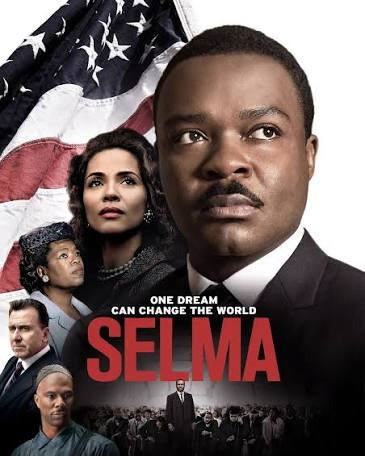
The most representative work is the movie
The film depicts the intense voting rights march from Selma to Montgomery in 1965, and the 'Edmund Pettus Bridge' and 'Alabama State Capitol' shown on screen are not sets but actual historical locations.
The fact that it was filmed on the actual historical sites rather than on a fake set greatly enhanced the immersion while watching the movie.
What struck me while watching the film was the feeling that Montgomery seemed like a 'city where time has stopped.' If you visit downtown, there are many old buildings that still retain the scenery of the 1960s. Thanks to this, without forced computer graphics (CG), the cool and intense atmosphere of that era could be captured, allowing the audience to feel as if they were stepping into that historical time.
The impact of this film went beyond just box office success.
As viewers were moved by the film and began to visit the actual filming locations, civil rights-related tours noticeably increased. I can understand why officials from the Alabama Tourism Department said, "This film is the best history lesson and the greatest promotional material." A well-made film has completely elevated the status of the city.
Additionally, the film
Starring Michael B. Jordan and Jamie Foxx, it is based on the true story of civil rights attorney Bryan Stevenson and the Equal Justice Initiative (EJI). Rather than remaining in the past, it directly addresses the issues of judicial justice and human rights that we face today, prompting a lot of reflection.
After the film's release, the number of visitors to the EJI Legacy Museum and the National Memorial for Peace and Justice significantly increased. Previously, it was a place quietly visited only by those particularly interested in history, but now it feels like a must-visit destination for anyone planning a trip to the U.S. It's not just about the emotional impact of the film; many people are eager to visit and experience history firsthand.
Upon reflection, I think the power of 'story' that resonates deeply creates the image of a city, rather than obvious advertising. A well-made film can completely rewrite a city's identity, attract visitors, and create a virtuous cycle that revitalizes the local economy. Just as New Zealand became a global tourist destination through the film
The strong filming support policy from the Alabama Film Office also plays a significant role.
By carefully providing incentives for production companies to film at historical sites without hassle, the film industry and local tourism are growing together.
In Korea, it's said that the success of the film
When you walk the streets of Montgomery, the scenes from the screen feel familiar. Looking up at the grand steps of the State Capitol, the intense final scene of the Selma march vividly overlaps in my mind, and when quietly exploring the EJI Memorial, the deep resonance left by
Therefore, I believe Montgomery is a truly special and valuable place that continues to whisper living history through film.
 QUODUO
 ThreeChicken




 Day by day |
 Kitchen Ideas |
 Iowa Egen Aunt |
 Beauty, Health, Lifestyle Blog |
 Always Atlanta |
 GOGO SING |
 Samsung My My |
 Montgomery Mom |
 Alabama Bang |
 US Embassy |
  Korean Mom |
  My NYC |
  moo moo |
  Mr Oh |
  forevergee |
  festival |
  manchester |
  constant |
  Leapfrog Move |
  vibranto |
  Tora Tora |
  yellowbutter |
  Dolly |
  NYC saladbar |
  Finding Superfoods |
  lightyear |
  song bang |
  vexomo |
  Indiana Jones |