
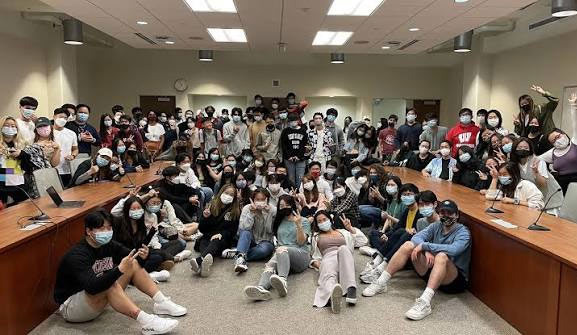
At first, I honestly had low expectations. When I thought of Wisconsin, it was a city I had never even heard of. However, after hearing stories from people who have lived here for a few years, my perspective changed quite a bit. Madison may not be flashy, but it turns out to be a surprisingly good city for Koreans to live in.
This is mainly due to three factors: UW-Madison, safety, and community.
Above all, the heart of this city is UW-Madison. It is one of the top research universities in the U.S., with annual research funding exceeding $1 billion.
The presence of a single university drives the city's economy and culture, leading to a steady influx of researchers, professors, graduate students, and international students. Naturally, a strong Korean network has formed. Student organizations like KASA, KSSA, KUSA, and KBSA are actively involved, and at the start of each semester, meetings for new international students are frequently held.
For those coming to the U.S. for the first time, such networks can be surprisingly powerful. Information flows quickly, and there are people to turn to for help. Those who have just arrived from Korea tend to feel this value even more acutely.
The religious community is also stable. Korean churches like the Korean Presbyterian Church of Madison and Madison Immanuel Church are consistently active, serving not just as places of worship but also as venues where life information, job opportunities, parenting, and settlement experiences are naturally shared. The APIDA Student Center and Asian American Studies Program on campus also provide solid support for Asian students.
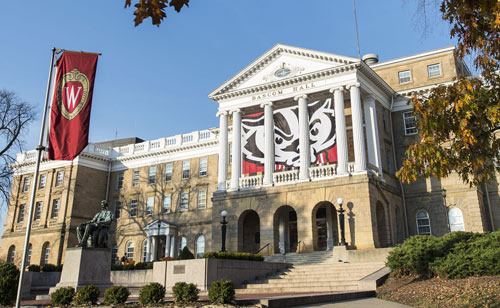
The good safety record is also quite satisfying. Madison's crime rate is evaluated to be about 23% lower than the national average, and most residential areas receive safety ratings of A or B. Particularly around UW-Madison, safety is relatively stable, leading to high satisfaction among students and families. Walking around campus late at night feels less tense compared to larger cities. Of course, crime exists in any city, but compared to the national average, Madison is definitely on the safer side.
The economic foundation is also quite stable. The unemployment rate is around 2.8%, which is lower than the national average, with state government agencies, universities, and large medical institutions like UW Health serving as major employers. Unlike cities that rely on a single industry, Madison's economy is centered around education and healthcare, making it relatively stable even during economic fluctuations. This is why it continues to be a popular choice for those considering local employment after graduation.
The living infrastructure exceeds expectations. Asian markets like A-Mart Asian Grocery and Lee's Oriental offer most Korean ingredients, and around S. Park Street, there are clusters of Korean and Asian restaurants. There are also Korean restaurants like Sol's On the Square, so cravings for Korean food can be satisfied without much hassle. While it may not have as many options as Chicago, it is sufficient for daily life. Additionally, receiving high-quality medical services centered around UW Health is another advantage.
Housing costs are relatively manageable compared to major U.S. cities. The median rent is about $1,400, which is much more realistic compared to New York, Seattle, or San Francisco. However, the median home price has surpassed $420,000, so it is no longer the affordable city it once was. Plus, the harsh winters that can drop to -20 degrees are a reality that one must adapt to.
Overall, Madison may not be a flashy city, but it is a city with solid fundamentals. It has a good university, stable jobs, a safe living environment, and a reasonably sized Korean community.
Especially for students, researchers, professors, and families connected to UW-Madison, this city is likely to become a strong base for life in the U.S., not just a place with a school. Initially thought to be a quiet and dull city, over time, one naturally comes to understand that the evaluation of it as a "great place to live" is not without reason.
 GoldenValley88
 SilverField77
 MorningSun





 fortbliss |
 Folding Instructions |
 yentra |
 Cali M Law Group |
 quanta7 |
 middlekick |
  Forest Gump |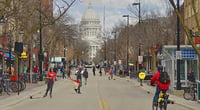

 My Love Bambino Alaview |
  manchester |
  constant |
  Leapfrog Move |
  vibranto |
  Tora Tora |
  yellowbutter |
  Dolly |
  US Embassy |
  NYC saladbar |
  Finding Superfoods |
  lightyear |
  song bang |
  vexomo |
  Indiana Jones |
  meloncat |
  novapixel |
  mortrix |
  Esther 1983 |
  Moscow Kim |