

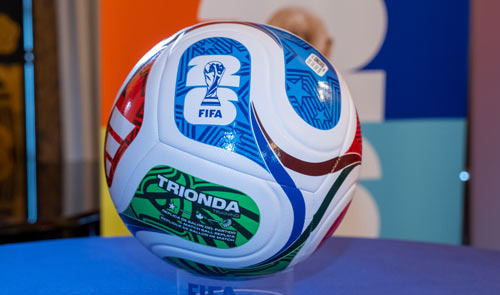
The World Cup is an international soccer tournament held every four years, making qualification a national celebration.
How thrilled was South Korea when it participated in the 1986 Mexico World Cup? The name "World Cup" carries a sense of rarity and authority.
However, FIFA has already increased the number of participating teams from 32 to 48 this year, and now they are considering expanding it to 64 teams.
After seeing the latest FIFA news, one thought immediately crossed my mind.
"Could it be that China is not qualifying for 48 teams, prompting the increase to 64?"
It's obvious that if China participates, it would generate significant revenue.
When FIFA increased the number of teams from 32 to 48, they presented the noble reasons of "providing opportunities for more countries" and "developing soccer globally."
Yet, before the first tournament with 48 teams even concluded, discussions about 64 teams have already begun.
At this point, it's hard to shake the suspicion that market expansion is taking precedence over the development of soccer.
In fact, the 48-team format has been a huge success for FIFA.
The number of matches has increased, broadcasting rights have sold for more, advertising has grown, and sponsor exposure has skyrocketed. They must have made a lot of money.
However, one thing is missing.
China, one of the largest markets in the world with a population of 1.4 billion, has not qualified for the World Cup again.
So, it's not surprising that jokes are circulating among soccer fans about whether the increase to 64 teams is to ensure China qualifies next time.
Of course, FIFA has never stated that this is the reason for the expansion.
But seeing the continuous increase in the number of participating countries makes it easy to understand why such humor arises.
In the past, just qualifying for the World Cup was a national celebration.
Many people still remember the excitement when South Korea qualified for the 1986 Mexico World Cup.
The World Cup was the ultimate stage that not everyone could reach, which made the experience even more special.
But what about now?
From 32 teams to 48 teams.
And now, 64 teams.
I wonder if we will soon be talking about 80 or even 96 teams.
At this rate, it feels like the final tournament might become easier than the qualifiers.
FIFA claims that more countries participating will lead to the development of soccer.
However, the reason African and Asian teams performed well in this tournament is not simply due to the increase in the number of participants.
It is because of investments in youth, international exposure, coaching development, and league growth.
Attributing the improvement in skill to the expansion of participating countries seems a bit forced.
What's more concerning are the players.
Top European players often play over 60 matches a year when you combine league, cup, Champions League, and national team games.
If the number of World Cup matches increases, the controversy over player burnout will only grow.
Player protection seems to be just talk, while the number of matches continues to rise.
Ultimately, this issue boils down to money.
As the number of participating countries increases, the number of matches increases, and with that, broadcasting rights fees and advertising revenue also rise.
From FIFA's perspective, it's a massive business.
However, before being a money-making tournament, the World Cup was originally the world's premier soccer event.
Its rarity gave it authority, and that authority brought emotional impact.
Just because a restaurant adds more tables doesn't mean it becomes a popular spot.
Similarly, a concert doesn't become more impactful just by increasing the number of seats.
The same goes for the World Cup.
What FIFA needs to focus on now is not increasing the number of participating countries, but addressing fundamental issues like player protection, adjusting match schedules, improving referee decisions, and maintaining the quality of the pitch.
That's how the value of the World Cup will endure.
If FIFA continues to just grow in size, there may come a day when the phrase "qualifying for the World Cup" is no longer as special as it once was.
If that day comes, they may have made a lot of money, but the authority of the World Cup will be diluted to a point that is hard to recover from.
 RiverVision
 FridgeTap
 GoldenTree
 SodaDreamer






 coloradoman |
 Montgomery Mom |
 GOGO SING |
 Hajiwon Blog Hair Salon |
 tartbear |
 Weekend Movie Blog |
 Beauty, Health, Lifestyle Blog |
 Victory 1988 |
 Superman Cat Blog |
  rustley |
  Shim Ramen |
  Cool Beach Freeway |
  Exploring American Life Information |
  Mental Health Psychiatrist |
  element |
  Koreab Date |
  CA Real Estate |
  yolanda78 |
  Round and Round Children's Song Kingdom |
  Mia Flori |
  nova nova |
  healthy |
  leaves |
  sparkling |
  maryland park |
  persiste |
  conte |
  blueman |
  Going Once |