
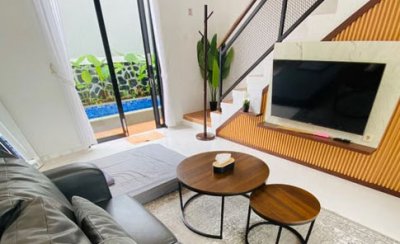
A customer living in Lynnwood mentioned that they started to feel uncertain after their long-time neighbor couple moved to an active senior community. The neighbor's comments about no longer having to mow the lawn or shovel snow stuck in their mind. It's important to consider how different these communities, which only allow residents aged 55 and older, are from single-family homes, starting with the costs.
Lynnwood is part of Snohomish County. The effective property tax rate in this county is about 0.75 percent, with a median home value of $735,800 and a median property tax of around $5,535 per year. Both the tax rate and home values are lower compared to nearby King County. Property taxes must be paid whether it's for a single-family home or a house within an active senior community. The difference lies in the additional maintenance costs.
In a single-family home, the homeowner is responsible for managing and paying for the roof, boiler, and landscaping. In an active senior community, these responsibilities are covered by the HOA fees. By paying a set monthly maintenance fee, the community takes care of the exterior and common facilities. However, HOA fees can vary significantly between communities, and the more amenities like community centers or gyms there are, the higher the maintenance costs tend to be. It's essential to check the covenants to see what is included in the maintenance fees before moving in.
Heating and cooling costs should also be considered. The average electricity rate in Washington state is 10.13 cents per kilowatt-hour, and residential natural gas costs $17.62 per 1,000 cubic feet. This area doesn't have a significant cooling burden in the summer, but there are many cloudy and humid days in winter, leading to longer heating usage. In single-family homes, the larger the area, the higher the heating costs. Homes in active senior communities are usually smaller and often single-story, which can reduce heating expenses.
Washington state offers property tax reductions for residents aged 65 and older or those with disabilities. The reduction rate varies based on income, and the criteria differ by county. You can contact the Snohomish County Assessor's Office to confirm the exact income criteria. If your income falls within the guidelines, maintaining a single-family home could reduce your property tax burden.
It's also worth noting that amenities and costs tend to move together. Active senior communities with community centers, swimming pools, and gyms generally have higher HOA fees, while simpler communities tend to have relatively lower maintenance costs. Depending on whether you frequently use such facilities or prefer a quieter lifestyle, the type of community you need may vary. If you continue living in a single-family home, you won't have these maintenance fees, but it's wise to set aside an emergency fund for unexpected expenses like roof or boiler repairs.
If you've decided to move, the timing is also something to consider. Prices and HOA fee levels can differ significantly between newly opened active senior communities and those that have been established for a long time. New developments may have lower initial prices, but the rate of increase in maintenance fees can be rapid, while older communities may have higher initial purchase prices but more gradual increases in fees. Requesting recent HOA fee changes for a few communities of interest can be helpful for comparison.
If you decide to keep your single-family home, it's also a good idea to identify the installation years of systems with a defined lifespan, like roofs or boilers. If you can estimate when replacements will be needed in the coming years, you'll be less surprised by sudden expenses. This preparation is beneficial whether you move to an active senior community or continue living in your current home.
While neighbor satisfaction can be a reference, it shouldn't be the sole criterion. It's essential to calculate your own health status, management capacity, and eligibility for property tax reductions. Property tax rates and utility costs can change annually, so be sure to verify the latest information. This article is not investment or legal advice, and it's recommended to consult with a real estate professional and a tax advisor before making any actual contracts.
 skybreezefox1950
 Castle99








 Sugar Cream Door Bulletproof Noodles |
 urbanmint |
 |
| 
 Premium Gas Camp |
 CA Real Estate |
 crystalx |
 kingdom |
 King County |
 harvest |
 UCLA Captain |
  lattecu |
  dynamite |
  frostingline |
  Hakuna Matata |
  Your Curiosity Resolved |
  Way to easy |
  Chino Min |
  nexabyte |
  moonshine 7 |
  Sunset Oregon |
  victoria 68 |
  golfmaster |
  Montgomery Mom |
  squidogame |
  Noodle Noodle |
  Rhode Island Good People |
  Big North |
  Famous Attractions in the United States |
  Jin Soo V |