
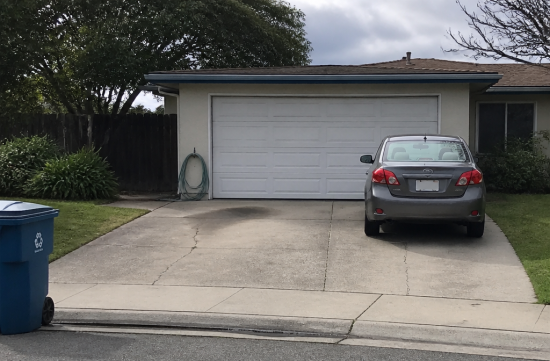
Recently, I heard a story about a friend who retired after many years at the same company, and the first thing they mentioned was quite interesting. They pondered what to cut back on for a while, and the first thing they decided to let go of was their car. As I listened to this over a cup of coffee, I found myself calculating in my head.
Many people assume that retirees will first cut back on dining out, but actual survey results show that the order is surprisingly different.
The Employee Benefit Research Institute (EBRI) in the U.S. has conducted a long-term study tracking changes in spending among retirees, and it turns out that the biggest expense reduction in the first two years of retirement was transportation costs. The decrease was a staggering 25.1 percent, which is significantly larger than other categories.
In the same study, it was found that overall household spending decreased by 5.5 percent in the first two years of retirement and by 12.5 percent in the third and fourth years.
This means that the rate at which transportation costs decrease is much faster than the overall household spending reduction.
In fact, in the early years of retirement, some households actually increase their spending. The same study found that 45.9 percent of households increased their spending in the first two years of retirement, and this percentage dropped to 33.4 percent by the sixth year.
Why transportation costs, in particular? The answer is surprisingly simple: the car that was once needed for daily commuting suddenly becomes unnecessary.
According to data from the U.S. Bureau of Labor Statistics, transportation costs for households headed by someone aged 65 and older account for about 17 percent of total spending, averaging $8,172 per year. It's money that was naturally spent while working, but seeing it in numbers was a bit surprising to me.
So, the first thing retirees often cut back on is the second car.
When both partners were working, each needed a car, but once they stop commuting, one car is often sufficient. One car can be parked while the other is used for grocery shopping or trips to the doctor.
However, when it comes time to sell, people often feel reluctant to let go. In such cases, checking the mileage over the past few months can be helpful.
When calculating the costs of maintaining a second car, insurance alone ranges from $1,200 to $2,000 per year.
Even a car that is rarely driven incurs fuel costs of about $800 to $1,500 annually, and when you add maintenance and repair costs, that can be an additional $600 to $1,200.
When you total these three items, getting rid of one car can save thousands of dollars each year.
If you only need a car occasionally, using a car-sharing service can be much cheaper.
Personally, I think once I see these numbers, I would definitely start by getting rid of the second car.
Of course, the next category that people tend to cut back on is dining out.
AARP's survey found that 62 percent of respondents aged 50 to 64 and 55 percent of those aged 65 and older reported reducing their dining out.
This means that more than half of the respondents have cut back on how often they eat out, which is not a small percentage.
The background for this is largely due to the burden of rising prices. In the same survey, 94 percent of respondents aged 50 and older felt that prices have increased recently, with 67 percent stating that they have increased significantly.
With prices feeling this high, it has become much harder to casually decide to dine out. Many people are reducing their dining out from three or four times a week to one or two times, opting instead to shop for groceries and cook at home.
The third area where people tend to cut back is subscription services.
According to a 2025 CNET survey, Americans are wasting an average of $205 per year on subscription services they don't even use.
When you look at a few streaming services, rarely used workout apps, and the occasional meal kit delivery, you might find that there are surprisingly many overlaps.
Each subscription might only cost $10 to $20 a month, which doesn't feel like much, but when several of them are set to auto-renew, it adds up quickly.
After retirement, these small subscription fees tend to feel much more significant than before.
Interestingly, this reduction in spending doesn't happen all at once. A study by T. Rowe Price found that retirees tend to reduce their spending by an average of 2 percent each year thereafter.
This means that it's not just a one-time cut; it indicates a continuous adjustment based on income.
However, I believe that not everything should be cut back indiscriminately. Keeping a visit to your favorite café once in a while can actually help sustain long-term savings.
Ultimately, what disappears first after retirement are not extravagant luxuries, but rather things we often take for granted, like the second car, frequent dining out, and unused subscription fees.
What would you choose to cut back on first?
I would recommend taking a look at your car first, as it's the item that shows the most noticeable difference in numbers.
 HappyTree


 Silent Sea |
 Pointy |
 Idaho's Sumi's House |
 holy cheese |
 Michigan Enthusiast |
 Rice Shop Uncle BLOG |


 Illinois Mom |
 Electricity Field Certification Collector |
 Illinois Park Sung-Soo Blog |
  hiddenkong |
  some fame |
  Godory Life |
  Lime Juice |
  French fries |
  Rynex |
  Caribbean |
  Let's Be Like a Salt-like City Person |
  Belgray Miscellany |
  sweetvan |
  Augusta Univ |
  Round and Round Children's Song Kingdom |
  butter 90 |
  Lando Mao |
  Washington Denzel DJ |
  LIZ Legal Information Blog |
  vegas mom |
  Sandiego Auntie |
  Premium Gas Camp |
  Things to know |