
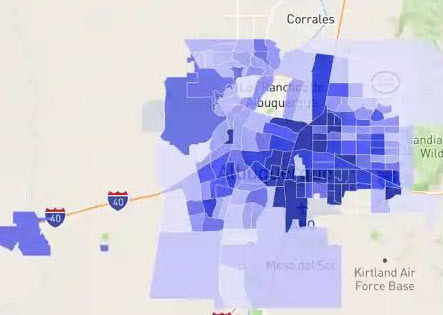
Considering the size of Albuquerque (population about 560,000, the largest city in New Mexico), it is wise for those planning to move here to be aware that crime indicators often exceed the national average.
Looking at homicide statistics, Albuquerque's annual murder count rose sharply during the COVID-19 pandemic, with 72 cases in 2019, 77 in 2020, and 117 in 2021. In 2022, the number slightly decreased to around 100, but the murder rate per 100,000 people remains significantly higher at 18-21 compared to the national average of about 6-7. Many of these homicides are reported to be linked to drug trafficking, gang conflicts, and domestic violence, with local law enforcement analyzing that they tend to occur within specific networks rather than random acts of violence. However, it is important to note that ordinary citizens are not completely unaffected, so caution is advised.
Motor vehicle theft is a prominent crime type that makes Albuquerque well-known nationwide. According to data from the National Insurance Crime Bureau (NICB), Albuquerque has consistently ranked among the top 1-3 cities for vehicle theft rates per capita for several years. As of 2023, the estimated annual number of vehicle thefts is over 10,000, which means nearly 30 incidents occur each day. Older Hyundai and Kia models are often targeted, which has been frequently reported in the news. As a result, some insurance companies charge higher premiums for residents of Albuquerque compared to other cities.
Property crime overall includes larceny-theft, burglary, and arson. Albuquerque's property crime rate is around 4,000-5,000 incidents per 100,000 people, which is about twice the national average of approximately 2,100. Burglary of commercial and residential properties tends to occur during vacant hours, and activity often spikes during the winter months when days are shorter and temperatures drop. Local residents frequently use timer lights or install security cameras (like Ring or Arlo) when leaving their homes.
In response to these high crime figures, the Albuquerque Police Department (APD) has been expanding officer recruitment and implementing focused patrols in high-crime areas. Additionally, a police reform process in collaboration with the Department of Justice (DOJ) has been ongoing for several years, continuously revising police response procedures and use-of-force guidelines. However, there is a general consensus that it will take time before these crime statistics show a significant reduction. When choosing home or vehicle insurance, it is practical to set coverage limits and deductibles generously, reflecting Albuquerque's high crime statistics.
Public resources for checking crime statistics include the official APD statistics page, the New Mexico crime data portal, and the FBI's Crime Data Explorer. Data at the level of specific addresses or neighborhoods can also be accessed through private services like NeighborhoodScout, SpotCrime, and CrimeMapping. Reviewing this data before moving can help you understand the crime trends in the neighborhoods you are considering, allowing for a more secure settling-in process.
 Ooorah
 TeacherJung







 Rice Shop Uncle BLOG |
 Baguette Blog |
 solvix18 |
 novapixel |
 UNI Lover |
 Say Yes in English |
 New Mexico Friends MAX |
 Mrs New Mex |
 frostbite |
  Springs Korea |
  nixon |
  mini hometown |
  Gleeee |
  MacMorningBlog |
  ASURA |
  Elastico |
  shaket |
  vionoo |
  chocolate |
  Whisper |
  Star Voyager |
  InDiGo |
  Rocky Mountains |
  Whoever It Is, I Don't Know |
  Why Not Me |
  Plastic Rose |
  Victory 1988 |
  Gook Rule |