
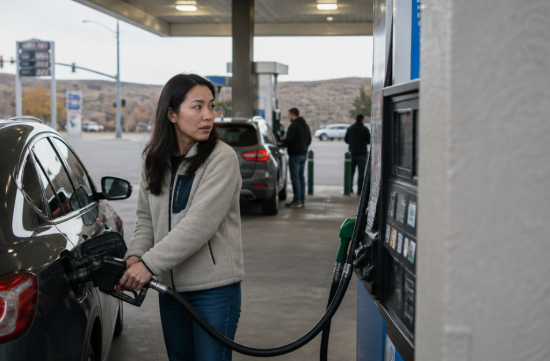
This morning, I passed by a local gas station and stopped briefly to look at the price board. Regular gas was in the high $5 range. I checked last year's receipt, and the numbers were completely different.
Curious, I looked up the weekly gas price data released by AAA on September 24. The average price for regular gasoline in Nevada was $5.36 per gallon, which had risen by 17 cents in just one week.
Compared to a month ago, that's an increase of 57 cents, and it's $1.45 more than a year ago. In reverse calculation, that means the average price last year around this time was about $3.91.
However, what caught my eye first was the city-specific numbers. The average in Reno was $5.63, while in Las Vegas, it was $5.36.
Even though they are in the same state, there's a 27-cent difference per gallon. Filling up 15 gallons means paying over $4 more at once.
In national rankings, Nevada is the fourth most expensive state after California, Hawaii, and Washington. The average in Hawaii is $5.57, which means Reno's average is even higher than Hawaii's.
The national average was $4.30. AAA believes this month is likely to surpass the September record of $3.83 set in 2023.
According to AAA, gas prices usually drop in the fall, but instability in the Strait of Hormuz and high crude oil prices continue to push prices up. This applies to the whole state of Nevada.
So why is Reno more expensive than Las Vegas? I found that there are two main reasons.
The first is that the routes for gas delivery are different. Nevada has virtually no refineries, so most gasoline is brought in via pipeline.
Las Vegas mainly receives supplies from the Calnev pipeline, which starts from refineries in the LA area, and there's also the UNEV pipeline coming down from Utah. This means there are two sources of supply.
On the other hand, Reno receives gas through Kinder Morgan's North Line from the west. This means it heavily relies on the supply networks from the San Francisco Bay Area and Sacramento.
The problem is that the refining capacity in Northern California has decreased. The Valero refinery in Benicia, located in the Bay Area, has begun the process of closing this year, and it used to produce about 9% of California's gasoline.
With only one supply line, if that line tightens, prices will inevitably respond first. Understanding this structure helped me make sense of the numbers on the price board.
The second reason is taxes. According to the Washoe County Regional Transportation Commission (RTC), the RTC-5 fuel tax approved by voters is set at 58.17 cents per gallon as of July 1, 2026.
This tax is automatically adjusted every July based on a 10-year moving average that reflects construction cost inflation. Additionally, it seems that there are no expiration dates or annual increase caps for the Washoe area.
Clark County also has a fuel tax linked to inflation, but it is set to end in late 2026, so discussions about extending it have been ongoing. The different structures in the two counties can lead to a gradual widening of the gap each year.
For reference, Nevada has its own gasoline tax, which is added to the local fuel taxes by county. So even within Nevada, the tax portion can vary depending on which county you fill up in.
Of course, taxes do not fully explain the 27-cent difference. It's likely a mix of supply routes, transportation costs, and local gas station competition.
Diesel prices are even worse. Reports indicated that Reno's diesel prices reached record levels in early September. If trucking costs rise, it will eventually affect grocery prices as well.
Those who frequently cross into California from Reno will feel this even more. The average in California is $6.23, so filling up here before crossing is the better option.
So, I'll share a few things I've been doing lately. Nothing grand, just small savings every day.
First, I always check a price comparison app before filling up. Even within the same neighborhood, prices can vary quite a bit over just a few blocks, so it helps to have a plan for the cheaper places along the way.
If you're a member of a warehouse store, using their gas station is generally cheaper. Since the lines can be long, I find that going early on weekdays is the best option.
I also take advantage of programs that allow you to convert grocery store loyalty points into gas discounts. Since I have to grocery shop anyway, accumulating points can make a noticeable difference when I fill up.
Some gas stations charge different prices for card payments and cash payments. If you see two lines on the price board, it's worth checking.
I also check my tire pressure once a month. As the weather gets cooler, tire pressure can drop, which can affect fuel efficiency.
And I try to consolidate errands into one day. Planning a route that includes the post office, grocery store, and bank can significantly reduce driving distance.
Honestly, I was hoping prices would drop in the fall, but this year, that expectation hasn't panned out. I plan to check the price board again when AAA releases its report this week.
If it were me, I would choose to fill up halfway while monitoring price trends instead of filling up completely for the time being. That's all for today's record; I hope everyone manages to keep their gas expenses in check.
 SendMeGigs





 novent |
 Silent Sea |
 Pointy |
 Idaho's Sumi's House |
 holy cheese |
 Two LaLa World |
 zoryan |
 Nevada Teppanyaki |
 Nevada Vegas UNLV |
 quatspace |
  Marisol |
  Glassroom |
  Granola |
  joyfull yang |
  Olivia's Blog |
  Living in America and Writing Essays |
  Piano Teacher Blog |
  bearcup |
  explorer |
  dictionary |
  Mr Bull Jung |
  radiant |
  Georgia 88 |
  Great TOWN NEWS |
  Open Flex Mind |
  Hartford Blog |
  unified |
  Generation X |
  ringwinds |