
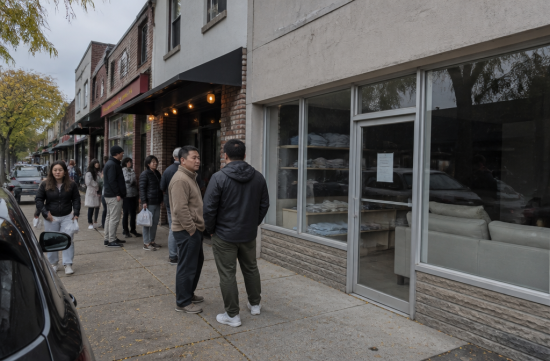
Driving through Bergen on a Sunday afternoon presents a strange scene. The parking lot of the Korean market is full, while the furniture and clothing stores next door are dark.
This is the most common question from friends who have just moved here: Why can't you buy a shirt on Sunday? The answer lies in Bergen County's Blue Laws, which restrict Sunday operations.
New Jersey state law 2A:171-5.8 is the basis for this. It prohibits the sale of clothing, building materials and lumber, furniture, household and office supplies, and appliances on Sundays.
In contrast, grocery stores and restaurants are open on Sundays. This creates a situation where shopping for food and dining out is possible, but buying clothes or sofas is not, resulting in a partially open Sunday.
The history is even more surprising. In 1959, New Jersey allowed each county to decide whether to keep this law, and ultimately, all counties abolished it except for Bergen.
There have been two referendums. In 1980 and 1993, Bergen residents voted to maintain the law, with a significant margin in 1993, about 2 to 1.
Paramus takes it a step further. They have stricter regulations than county law, allowing only essential items like food and gas to be sold on Sundays.
So, what impact does this have on the Korean community? New Jersey has the third-largest Korean population in the U.S., with more than half living in Bergen County.
Thinking of Palisades Park's Broad Avenue gives a hint. The street is mostly filled with restaurants, cafes, bakeries, and markets.
These businesses are not victims of the Blue Laws; they are more like beneficiaries. On a Sunday when malls are closed, people have to go to restaurants and cafes or grocery shopping.
If you've ever stood in line in front of a tofu house on a Sunday, you know what I mean. When customers flock in after church, that day can become crucial for weekly sales.
On the other hand, Korean stores selling clothing, furniture, and appliances face a different situation. They lose an entire day of sales, meaning they have to make up for it in the remaining six days.
However, some business owners argue that this isn't necessarily a loss. Since large chains also close, smaller stores don't have to compete alone on Sundays.
From the perspective of employees, having Sundays off is a rare benefit in today's world. As a freelancer, my weekends are often blurred, but if someone in my family works in a store, I realize how precious that day is. When scheduling shifts, Sundays are completely off the table, making it a fixed time for family meals.
However, for part-timers looking to earn more, this reduces opportunities. It's a disappointing structure for students or those with side jobs who need extra weekend hours.
The reason this law is back in the news is due to the American Dream in East Rutherford. This mall, which opened in 2019, will start Sunday operations in 2024.
Paramus filed a lawsuit in August 2025, claiming that over 120 stores in the mall are operating illegally on Sundays.
The mall's argument is different. They claim that since the site is owned by the New Jersey Sports and Exposition Authority, county Blue Laws do not apply.
Judge Greg Podbano has reportedly delayed a decision on the mall's request to dismiss the lawsuit. As far as I could find, there hasn't been a final conclusion yet.
Depending on the outcome, the calculations for Bergen's businesses may change. If only one side is allowed to open on Sundays, complaints will grow that only the law-abiding stores are suffering.
Those wanting to abolish the law have a point. If you have to cross into Hudson County or New York just to buy a piece of clothing on Sunday, that revenue is lost to Bergen. With online shopping becoming the norm, the significance of closing on Sundays is said to be weaker than before.
Those in favor of keeping it cite traffic as a primary concern. The roads in Paramus, filled with large malls, get a break for at least one day a week. Anyone who has been stuck on Route 17 on weekends can relate.
To abolish it, a new referendum or action from the state legislature is needed. The last vote was in 1993, so it's been over 30 years.
From the perspective of Korean business owners, it can be summarized like this: The food and grocery sectors benefit from the current structure, while retail is at a disadvantage but enjoys the fairness of a holiday.
If you're planning to open a new store in Bergen, check if your business type is affected by the Blue Laws. Asking the town clerk's office will give you the most accurate information.
Honestly, I'm in favor of the current system. I don't want to lose the leisurely feeling of walking down a quiet street on a Sunday afternoon and enjoying a warm bowl of soup.
Of course, my thoughts might change once the mall lawsuit results come out. Until then, Sundays in Bergen will likely remain a bit odd but cozy, with clothing stores closed and restaurants busy.
 MrCornflake


 Investment Beginner Company Information Encyclopedia |
 Always Dreaming of Big Success |
 happy 9 |
 coloradoman |
 pintos |
 Silent Sea |

 Anytime Journey |
 Glow Yo |
 Amber H |
 Living in America and Writing Essays |
  Piano Teacher Blog |
  bearcup |
  explorer |
  dictionary |
  Mr Bull Jung |
  radiant |
  Georgia 88 |
  Great TOWN NEWS |
  Open Flex Mind |
  Hartford Blog |
  unified |
  Generation X |
  ringwinds |
  American Food Information & Calories |
  Hawaii Maui Kahului |
  calvorn |
  fernando park |
  newyorker 101 |
  coffeee |