
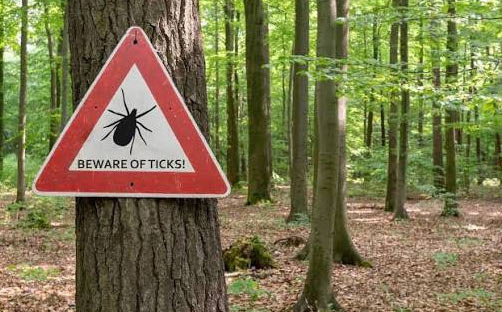
Having lived in Connecticut for a long time, I've come to be aware of a disease that I hardly ever thought about back in Korea. It's Lyme disease.
When I first heard the name, I thought, "Lyme? Is it related to the fruit lime?" But I found out that the name has a deep connection to Connecticut. In the 1970s, cases of unexplained arthritis were discovered in groups in the Lyme and Old Lyme areas of Connecticut, which is when it became widely known, leading to the name Lyme disease.
So, if you live in Connecticut, you can't say it's someone else's problem.
The main culprit that spreads Lyme disease is the black-legged tick (Ixodes scapularis). It's commonly referred to as the deer tick. The problem is that it's not the large bug we might imagine. In fact, young ticks are so small that you might not even notice them on your body.
Connecticut has many forests and deer. While it looks peaceful and beautiful to us, it's a great environment for ticks as well. You can come into contact with them not just deep in the woods, but also in grassy areas, at the edges of forests, or in places where leaves have piled up. Sometimes, you might even bring them home after walking your dog.
If you get Lyme disease, you might initially experience symptoms like fever, fatigue, headache, and muscle pain. A well-known symptom is a skin rash called erythema migrans, which spreads out in a circular pattern like a target, but it doesn't appear in the typical shape for everyone. If left untreated, it can lead to problems with joints, the nervous system, or the heart, so it's important to detect and treat it early.
What's more concerning is that Lyme disease isn't the only tick-borne illness to be cautious about in Connecticut. There are diseases like Anaplasmosis and Babesiosis, and depending on the type of tick, other diseases can also be a concern.
However, there's no need to be so scared that you stay indoors all summer. You can make a few preventive measures a habit.
I believe it's better to wear long pants when going to areas with a lot of woods or grass. Wearing light-colored clothing makes it easier to spot any ticks that might be attached. It's also a good idea to use insect repellent containing DEET on exposed skin.
And what's really important is what you do after you get home. After outdoor activities, check your body while showering. It's especially good to look in places that are hard to see, like your armpits, groin, behind your knees, around your waist, inside your hair, and behind your ears. It's best for parents to check their children, and don't forget to check your dog's fur as well.
If you find a tick attached, it's recommended to use fine-tipped tweezers to grasp it close to the skin and pull it out slowly and straight. Afterward, remember the date you were bitten and watch for any unusual rashes, fever, or body aches.
When I first came to Connecticut, I was only worried about the heavy snowfall and electricity bills, but after living here for a while, I realized I also had to be mindful of ticks. Still, Lyme disease is not something to be feared unconditionally; it's more about being informed and prepared as part of life in New England.
If you enjoy walking or camping in Connecticut from spring to fall, just remember this one thing: when you get home, shake out your clothes, take a shower, and check your body. It may seem like a small habit, but these little practices are really important for preventing Lyme disease.
 WaffleRadio
 RedCapeCrazy





 Karina's Blog |
 Jimbeam 88 |
 Taco Bell Candy Note Blog |
 Splendid Mission |
 Florida Gario |
 US Home Buying Information Home Insurance |

 Hartford Blog |
 Tilt Cicy |
 Lime Juice |
 Haha and Bomi Blog |
  glenview 89 |
  Valley Hong |
  novapixel |
  Idaho's Sumi's House |
  Mr. Midwest America |
  wildfire |
  legalway |
  postcard |
  cheesecake07 |
  My Miami Stories |
  windylotus |
  Mia Flori |
  velaro29 |
  velaro |
  foxtrot83 |
  moname |
  mapleline |
  US Legal Consultation on Trials |
  UNI Lover |