
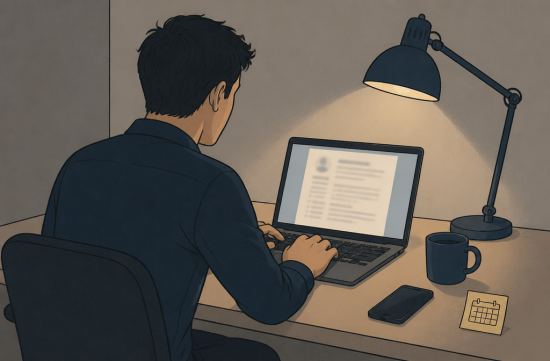
Last week, a close coworker asked me to buy him a coffee and immediately sighed. He mentioned that a position on our team has been vacant for months, but they haven't been able to post a job listing.
Originally, they should have hired someone long ago, but suddenly, a hiring freeze order came down from above. They were only told to divide the work among the remaining staff, so it's no surprise that everyone is feeling down.
I've been hearing similar stories from various places lately. As discussions about an economic downturn have started, it seems that many companies have quietly halted hiring altogether.
The numbers back this up. According to the Challenger, Gray & Christmas report, the number of layoffs announced by U.S. companies in 2025 has exceeded 1.2 million.
This is a 58 percent increase compared to 2024 and the largest figure since the pandemic in 2020. Just looking at the numbers is a bit shocking.
However, what's unusual about this trend is that instead of outright layoffs, companies are leaning towards not hiring new employees at all. As of July this year, the hiring rate has dropped to 3.2 percent, the lowest level since February.
The number of people resigning to change jobs has also significantly decreased. In the same month, the voluntary resignation rate fell to 1.9 percent, the lowest since the pandemic, indicating that everyone seems to be hunkering down and enduring the situation.
That said, it's also tricky to label the current situation as a full-blown recession. As of August, the unemployment rate is at 4.1 percent, which hasn't spiked significantly, and new jobs have increased by 162,000.
However, even if you stay at your company, you can't be too comfortable, as a large-scale layoff could happen suddenly. In such times, it's good to know about the WARN Act.
According to the law, companies with more than 100 employees must provide written notice at least 60 days in advance of mass layoffs or plant closures. A sudden notice telling employees not to come in starting next week is, in principle, illegal.
If a company fails to comply with this 60-day notice, they must pay wages and health benefits for that period, and they can incur fines for each day of non-compliance. Many people are surprisingly unaware of these regulations.
So, how should you prepare for a job change in a market that feels so uncertain? If it were me, I would focus on these five things.
The first is networking. Since job postings are scarce, referrals from acquaintances are becoming more common, so it's surprisingly important to tidy up your LinkedIn and keep in touch with industry contacts.
The second is skill updates. Recent surveys show that hiring managers highly value a willingness to learn, so obtaining a certification or mastering a new tool can make your resume stand out.
The third is to broaden your perspective. Don't insist on only full-time positions; keeping an open mind to contract or project-based work can lead to opportunities in fields like healthcare or cybersecurity, which are still hiring.
The fourth is your application strategy. Instead of applying to hundreds of companies, focusing on two or three positions that truly fit can significantly improve your chances of success.
The fifth is having an emergency fund. Setting aside enough for three to four months of living expenses can give you the flexibility to avoid hastily applying anywhere if your job becomes unstable.
Some people feel that quietly preparing for a job change while employed is a betrayal, but I don't see it that way. During times like these, isn't it natural to take care of your own position?
Rather than being shaken by a hiring freeze announcement, those who prepare a little in advance will likely navigate this period with less anxiety.








 mapsina |
 Mr. Largo |
 Victory 1988 |
 Infinite Style |
 novapixel |
 greenloop |
 Goroke Geureoke News |
  Choco Mint Creator |

 mapleline |
  US Legal Consultation on Trials |
  UNI Lover |
  Karina's Blog |
  California Dreamer |
  Chili Boy Club |
  NE Hodori Preik |
  Giant Squid and Sweet Potato Soup |
  torvik |
  charger |
  holy cheese |
  Pleasant K |
  Rolling Joy Life |
  lidus |
  French Macarons |
  Central Intelligence Agency Deputy Director |
  ATL Power 1 |
  MP Forever |
  Soy Angelino |