
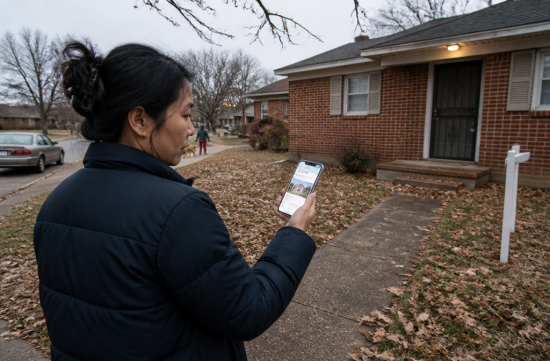
When searching for rental homes, you may come across listings with clean photos and prices that are significantly lower than the surrounding area. When you reach out, the landlord claims to be out of state or overseas and cannot show the property in person. Instead, they ask you to send a deposit first, promising to mail you the keys.
If you encounter this situation, it is almost certainly a scam. Reports of fake rental listings have been consistently documented in the Memphis area.
According to local news reports, the Mid-South BBB received 38 reports of rental scams using fake listings in Memphis during 2022. The total amount lost exceeded $45,000.
Considering this is just the number of reported cases, the actual scale is likely larger when accounting for unreported incidents due to embarrassment. Such listings tend to appear more frequently during high-demand rental periods.
The method is simpler than you might think. Scammers often take photos from actual rental listings or homes for sale and create new rental ads.
They then pressure you to make a quick decision, claiming that if you don't act fast, someone else will take it. The Mid-South BBB explains that creating this sense of urgency is a key element of the scam.
In fact, one victim in Memphis discovered that the person who posted the ad was different from the actual owner only after checking county property records. The home that was for sale had been disguised as a rental listing.
So, what should you look for to be suspicious? The first thing to examine is the method of payment.
The Federal Trade Commission (FTC) identifies requests for payment via wire transfer, gift cards, or cryptocurrency from fake landlords as typical red flags. Once money is sent this way, it is very difficult to recover.
Apps like Zelle or Cash App, which are designed for personal transactions, are similar. These services are intended for use between people who know each other, making it hard to recover funds in case of fraud.
The second red flag is not being able to view the property. The excuse may vary, such as being on a business trip or engaged in missionary work.
The FTC clearly advises against sending money to landlords who claim to be overseas. The principle is not to send any money under any pretext before seeing the property in person.
The third red flag is the price. If it is significantly lower than similar homes in the neighborhood, you should double-check.
From my experience in the market, there are rarely good homes in Memphis that are inexplicably cheap. There is usually a reason for the low price, and that reason is often fraud.
So how can you verify? With just an address, you can check a lot more than you might think.
The Shelby County Assessor of Property website allows you to search for real estate by address and see the registered owner's name. If the name of the landlord in the ad differs from the name listed here, it's best to stop.
Of course, many management companies handle rentals on behalf of owners. In such cases, check if the same listing appears on the management company's official website.
The FTC also explains that if a search for the same address yields different names or ads under different company names, it is a sign of a scam. Simply entering the address into Google can help filter out many fraudulent listings.
Running the photos through an image search is another method. If the same photos appear on a sales site, it's a strong indication of a scam.
It's also advisable to search for the landlord's name or company name along with terms like scam or review. There may be reviews from people who have already been victimized.
If you cannot visit in person, it's wise to ask a trusted friend to check the inside of the house for you. Those preparing to move from out of state often skip this step and end up getting scammed.
Receiving a lease agreement is not a reason to feel secure. Nowadays, it's not difficult to create convincing lease templates, so having paperwork does not guarantee anything.
Landlords should also be cautious. The Shelby County Register of Deeds offers a free notification service that alerts homeowners within 24 hours if someone files documents against their property.
The Register has reported that incidents of real estate document fraud have increased by 33% in a year, reaching 40 cases. There are also methods where someone takes over a property and rents it out, so both tenants and landlords need to be vigilant.
However, there have been instances of emails impersonating these notifications. If you receive a notification email, it's safer to go directly to the official Register's website rather than clicking on links.
If you have already sent money, time is of the essence. Contact the bank or app company immediately to request a transaction cancellation or hold.
Then report to the FTC's fraud reporting site (ReportFraud.ftc.gov) and the Mid-South BBB, and inform the platform where the ad was posted. Accumulating reports helps prevent others from falling for the same ad.
In summary, the principle is simple: do not send money before seeing the property in person and verifying the owner.
I completely understand the anxious feeling of potentially missing out on a good home. However, it's far more painful to lose a deposit sent in haste than to miss out on a home by a day or two.
If I were in your position, no matter how good the conditions seemed, I would first verify the owner's name and only submit an application after seeing the property or sending a friend to check it out. This level of diligence can filter out most fake listings.
 SunJourney
 redsuntraveler1991








 Choco Choco Star |

 gentle |
 neapolis |
 moo moo |
 ultron78 |

 sunnyvale |

 greenloop |

 road98 |


 Goroke Geureoke News |
 ssome |
 skykong |
 Shining Our Own World |
 gardener 007 |
 golfmaster |
 Nanana Nanana Nanana |
 Who's watching? |
 endone |
 RockStar |
 Casa Mia |
 You Only Live Once |
 Hardworking CPA |
 Joyce 77 |
 Runner Kim |
 My Town My Way Blog |
 My Miami Stories |
 Entip |
 Tony Park |
 Jean Claude Bundang Blog |
 DJ DC BLOG |