

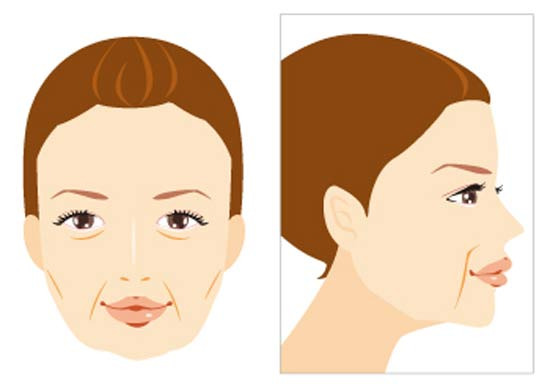
When you reach your 40s and look in the mirror, you might start to notice changes that make you think, "Huh? When did this happen?"
Your cheeks may sag, the area around your eyes may look more tired, and your once vibrant face may seem a bit dull without a filter from a photo app. Many women are shocked during this time, but the changes in the face during the 40s are actually very natural. However, knowing the reasons and managing them can slow down the process.
When we commonly say that the face is collapsing, it means that a decrease in skin elasticity, movement of fat layers, and changes in muscle usage patterns are occurring all at once. In your 20s to mid-30s, collagen production is maintained, but from the 40s onward, the production of collagen and elastin noticeably decreases.
This weakens the support for the skin, causing the cheeks to sag, the nasolabial folds to deepen, and the jawline to become less defined. If you add in habits of facial expressions, lack of sleep, and stress, the speed of these changes increases.
Another important factor is the redistribution of facial fat. As you age, the fat on the upper cheeks diminishes and accumulates lower down, creating a feeling of 'sunken cheekbones and sagging under the chin.' This can make your face appear longer or heavier than before. It starts subtly in your early 30s, but if left unmanaged, it becomes more noticeable in the later years.
So, while you can't completely prevent these changes, how can you mitigate and alleviate them? The key is to maintain skin elasticity, correct muscle usage habits, and manage overall body condition. First and foremost, hydration and moisture are essential. When your skin is dry, wrinkles appear deeper, so consistently use a moisturizing cream and always apply sunscreen during the day to reduce UV damage. UV rays are the biggest culprit in breaking down collagen.
Secondly, a diet that supports collagen is also important. Consuming vitamin C, omega-3s, and protein helps with skin regeneration. Protein builds skin and muscle, while vitamin C is necessary for collagen synthesis. Drinking plenty of water and regularly including vegetables, fruits, and nuts in your diet will definitely improve your skin texture.
The third aspect is your expression habits. Small actions like hunching over while looking at your smartphone, resting your chin on your hand, or frowning can be culprits that disrupt your facial lines. Consciously keep your chin up and maintain a long neck posture, and if you have a habit of frowning, practicing gently raising your eyebrows can help. While smiling often is good, overly scrunching your face can deepen nasolabial folds. When you smile, think of lifting your cheeks upwards!
The fourth is massage and fascia stretching. Just 5 minutes a day can make a difference. Perform lifting massages that counteract the downward pull on your cheeks, and relax your neck and trapezius muscles to reduce facial puffiness and enhance your facial lines. This helps to train your muscles to pull in the right direction.
And we can't overlook sleep and stress management. Lack of sleep can make your face look dull and show immediate signs of decreased elasticity. Stress disrupts hormonal balance, leading to skin troubles, puffiness, and dullness. Therefore, the essence of management is actually to maintain a lifestyle rhythm that doesn't wear you out.
Ultimately, changes in the face during your 30s are a natural process that everyone experiences, but how you age is a matter of choice. By consistently focusing on hydration, sun protection, nutritional management, and expression habits, the pace of change can differ, and one day when you stand in front of the mirror, you might find yourself saying, "I still look okay."





 Baguette Blog |
 Khan Film Blog Production |
 dermoon |
 hoosierdaddy |
 sun walker |
 nexabyte |
 Goroke Geureoke News |
 greenloop |

 Choco Mint Creator |
  Atlanta Mama |
  US Embassy |
  Korean Mom |
  My NYC |
  moo moo |
  Mr Oh |
  forevergee |
  festival |
  manchester |
  constant |
  Leapfrog Move |
  vibranto |
  Tora Tora |
  yellowbutter |
  Dolly |
  NYC saladbar |
  Finding Superfoods |
  lightyear |
  song bang |