

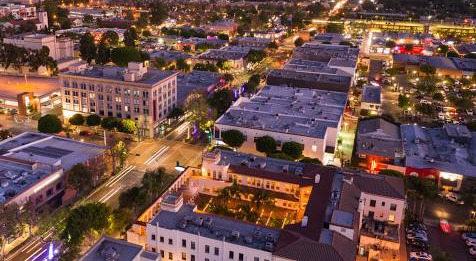
Fullerton is a city that showcases the advantages of living in Southern California, especially when it comes to its weather.
True to its location in northern Orange County, California, the city experiences a relatively mild Mediterranean climate with no extreme seasonal variations throughout the year. Summers can be hot, but the heat is dry and characterized by strong sunlight rather than high humidity. Winters are more cool than cold, with most of the rain falling between December and March. Therefore, it is not a region where one needs to worry about monsoons or heavy snowfall, but the unique dryness of California and the potential for earthquakes should always be kept in mind.
Looking at the monthly temperatures, January and December have average high temperatures around 66°F (19°C). The morning and evening lows can drop to about 45°F (7°C), but even in winter, it is not a climate where you need to wear heavy padding every day. February and March are similarly cool, and starting in April, daytime temperatures exceed 70°F, marking the beginning of a pleasant season for outdoor activities. May sees highs around 75°F, and June rises to about 79°F, with the true summer feeling becoming stronger in July and August. The average high in August is about 86°F (30°C), making it the hottest month. However, since Fullerton is slightly inland, it can be hotter than coastal cities, and during heat waves, temperatures can feel significantly higher than average.
Monthly average temperatures:
- January: High 66°F (19°C), Low 45°F (7°C)
- February: High 66°F (19°C), Low 48°F (9°C)
- March: High 68°F (20°C), Low 50°F (10°C)
- April: High 72°F (22°C), Low 53°F (12°C)
- May: High 75°F (24°C), Low 58°F (14°C)
- June: High 79°F (26°C), Low 62°F (17°C)
- July: High 84°F (29°C), Low 65°F (18°C)
- August: High 86°F (30°C), Low 66°F (19°C)
- September: High 84°F (29°C), Low 64°F (18°C)
- October: High 79°F (26°C), Low 58°F (14°C)
- November: High 73°F (23°C), Low 50°F (10°C)
- December: High 66°F (19°C), Low 45°F (7°C)
When it comes to precipitation, the character of Fullerton becomes clearer. January sees about 2.5 inches of rain, February about 2.6 inches, and March about 2.0 inches, indicating that most of the rain falls in winter. Conversely, from June to September, it can be said that there is almost no rain. The average rainfall in July is virtually 0, and August and September are also very dry. With an annual average precipitation of about 12.1 inches (308mm), those accustomed to the summer monsoons in Korea may feel that "it really doesn't rain here." As a result, issues like garden maintenance, vehicle dust, skin dryness, and wildfire risks become more tangible in daily life.
Monthly average precipitation:
- January: About 2.5 inches (63mm)
- February: About 2.6 inches (66mm)
- March: About 2.0 inches (51mm)
- April: About 0.8 inches (20mm)
- May: About 0.3 inches (8mm)
- June: About 0.1 inches (3mm)
- July: About 0.0 inches (1mm)
- August: About 0.1 inches (2mm)
- September: About 0.2 inches (5mm)
- October: About 0.5 inches (13mm)
- November: About 1.1 inches (28mm)
- December: About 1.9 inches (48mm)
The annual average precipitation is about 12.1 inches (308mm), primarily concentrated in the winter months.
The most pressing natural disaster to consider in Fullerton is earthquakes. Living in California, the risk of earthquakes is unavoidable.
It is advisable to keep supplies like water, flashlights, batteries, emergency medications, and some non-perishable food on hand. In the event of a major earthquake, roads, electricity, and communications can become unstable simultaneously, so it is also wise to establish a meeting place and communication methods with family members.
During the summer and fall, the dry weather increases the risk of wildfires. While Fullerton itself is not a mountain town, during the dry season in Southern California, it can be affected by smoke and air quality from nearby wildfires. The risk of flooding is not significant, but during heavy winter rains, temporary flooding can occur on poorly drained roads or low-lying areas.
Ultimately, the climate in Fullerton is quite livable. Winters are not harsh, and summers are not characterized by humid, oppressive heat. However, there are unique risks in California that should not be ignored just because the weather is often described as "nice." One must realistically consider dryness, strong sunlight, earthquakes, wildfire smoke, and concentrated winter rains.
Overall, Fullerton is a city with a climate that is suitable for outdoor activities, commuting, and retirement living.






 moo moo |
 ultron78 |
 garlic bread |
 Sugar Cream Door Bulletproof Noodles |
 urbanmint |
 Until the Day It Gets Better |
 Sunny Fullerton |
 Sunny Sunny with the Sun |
 Snack-like Blog Writing |
 Enjoying Samba at Home |
  dralix58 |
  Gorama Round |
  Skydiving |
  dreamport |
  Yellow Snowman |
  Toaster Pizza Magic Show |
  velvetnom |
  Anytime Journey |
  Mrs. Duluth |
  jaxter |
  Atlanta Mama |
  Baguette Blog |
  US Embassy |
  Korean Mom |
  My NYC |
  Mr Oh |
  forevergee |
  festival |
  manchester |