

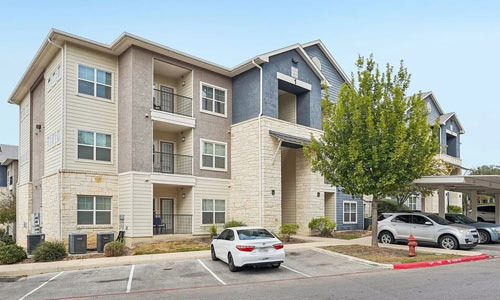
How much household income is needed to buy a home in Phoenix?
The median household income in this city is approximately $68,000 according to the Census ACS 2023 data, which is about $10,000 lower than the national median household income of $78,538.
However, if you observe the Phoenix real estate market over time, it is essential to examine what this income gap means in terms of actual living conditions.
Phoenix is the state capital of Arizona and the fifth largest city in the United States. Its population has already surpassed 1.6 million, and it has been recognized as one of the fastest-growing Sun Belt metropolitan areas in the U.S. alongside Texas over the past decade.
Key industries such as semiconductors, financial services, healthcare, and logistics have established a strong presence, with major semiconductor companies like Intel, TSMC, and Micron making significant investments in large factories, leading to a rapid increase in high-paying manufacturing jobs. It will be interesting to see how these changes in industrial structure will affect median income in the future.
When you consider the $68,000 figure in relation to the cost of living in Phoenix, a somewhat different picture emerges. Arizona has a relatively low state income tax, and the cost of living index in Phoenix is estimated to be about 5-8% lower than the national average.
This means that while the nominal income is below the national average, the gap narrows when adjusted for real purchasing power. From a long-term perspective, one reason Phoenix has consistently attracted population and businesses is this reasonable cost of living.
Looking at the housing market, the median price for single-family homes in Phoenix appears to be forming in the range of the low to mid $400,000s to around $500,000 based on recent market trends. After a sharp increase during the pandemic, prices have undergone some adjustments due to rising interest rates, but the trends of supply shortages and population influx are supporting price stability.
To manage mortgage principal and interest payments based on a household income of $68,000, significant planning is necessary. Assuming that about 28-30% of household income is spent on housing costs, this amounts to approximately $1,600 per month, which limits the range of homes that can be purchased in the current interest rate environment.
Nevertheless, the reason Phoenix continues to attract new residents is its relative appeal compared to high-cost cities like California and New York. When comparing a household earning $72,000 in Los Angeles to one earning $68,000 in Phoenix, the latter may actually have an advantage in terms of disposable income. This relative affordability has likely contributed to the steady influx of people moving from major West Coast cities to Phoenix.
It is also worth examining the income distribution. The median income of $68,000 is just that—a median—so there is considerable income variation within Phoenix. Affluent areas on the outskirts, such as Scottsdale, Chandler, and Gilbert, have median incomes well above $100,000, while some urban areas have a high percentage of low-income households earning below $40,000. Instead of lumping everything under the name Phoenix, it is much more accurate to consider the income distribution by specific regions when contemplating real estate investment or relocation.
Looking ahead, there seems to be a possibility that the median income will gradually rise as semiconductor investments expand and a highly educated engineering workforce moves in. Of course, it is difficult to predict rapid changes, as there are many external variables such as economic cycles and immigration policy changes. However, considering the growth trajectory Phoenix has shown over the past 20 years, it is hard to deny that the income base in this city is gradually strengthening.
If you are considering real estate in Phoenix, it is advisable not to view the median income of $68,000 as just a simple benchmark, but to also take into account the income structure by specific regions and industries, as well as the real cost of living burdens. A single number does not explain everything, but starting from that number can provide a clearer view of the market.
 Seoul2Austin
 NoPayBeauty







 Sugar Cream Door Bulletproof Noodles |
 urbanmint |
 |
| 
 Premium Gas Camp |
 CA Real Estate |
 Kitchen Ideas |
 Toaster Pizza Magic Show |
 The Long Shot |
 horizon |
  Nanana Nanana Nanana |
  victoria jung |
  Kkikki Ppappa Shout Out Loud |
  Lululala |
  nortrix |
  Mau Nui |
  novapixel |
  fixed |
  AL ALASKA |
  amola |
  History Repeats Itself |
  Doori Ark |
  Rainbow Bridge to the Sky |
  Sunny Fullerton |
  U.S. Weather Bureau News |
  GOGO SING |