
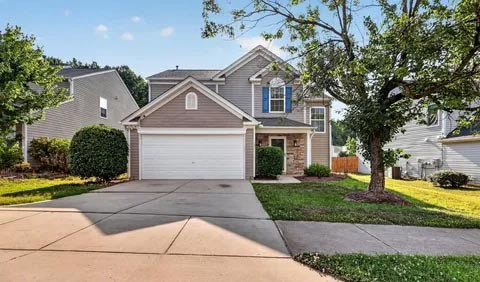
A family that had lived in Phoenix for nearly 10 years had to move to Austin, Texas due to a job transfer.
With their child in school, they had to prepare for the move in a hurry and decided to rent out their home instead of selling it right away.
However, they found themselves overwhelmed with questions about rent prices, how to find tenants, and security deposits.
This situation is surprisingly common. People often move to another state for work, inherit a family home, or choose to rent out their property instead of selling it, anticipating that home prices will rise.
The first thing to determine is the monthly rent. As of August 2026, the median rent in Phoenix, according to Zumper, is $1,682, which is about 4% lower than a year ago.
In simple terms, this means that it's not a market where landlords can demand high prices without consideration.
Instead of just looking at averages, it's advisable to check Zillow or Zumper for about five similar homes in the same ZIP code with comparable room counts and sizes.
Trying to charge $200 more in rent could lead to a situation where the home sits vacant for a month, resulting in greater losses.
Once you've set a price, you can list your home on sites like Zillow Rental Manager, Zumper, or Apartments.com.
It's best to take photos during the day and include details about parking, pet policies, and available move-in dates from the start.
One crucial aspect is tenant screening. This process, known as Tenant Screening in English, involves verifying whether the applicant has the ability and history to pay rent reliably.
This includes checking credit history, income, and past rental records.
For example, if the rent is $2,000, you might set a minimum income requirement of $6,000 per month and apply this standard uniformly to all applicants.
You can also verify pay stubs and ask previous landlords if the applicant has ever been late on rent.
The important thing is to apply the same criteria consistently for all applicants.
Once you've selected a tenant, don't rely on verbal agreements; everything should be documented in a lease agreement.
It's advisable to specify the rent amount, payment dates, lease duration, security deposit, late fees, pet and smoking policies, and repair responsibilities in detail.
A key number to remember in Arizona is 1.5 months. There are legal limits on the total amount a landlord can require for security deposits and prepaid rent. If the rent is $2,000, you must check this 1.5-month guideline when calculating the maximum amount you can legally request. Be cautious of charging excessive fees under the guise of pet or cleaning costs.
When a tenant moves out, you can't just keep their security deposit. Arizona law stipulates a critical period of 14 business days after the lease ends and the tenant vacates and returns the keys. If you deduct repair costs, you must provide an itemized list of what was deducted and return the remaining deposit. Holding onto the deposit unfairly could lead to additional liabilities for the landlord.
You also can't just throw the tenant's belongings outside if they fall behind on rent. In Arizona, there's typically a procedure that requires a written notice of 5 days for unpaid rent.
In simple terms, this is an official notice stating, "If the overdue rent is not resolved, I will proceed with lease termination and eviction procedures."
If the issue remains unresolved, the next step would be to initiate court eviction proceedings. Landlords should not handle this by changing locks on their own.
When showing the property, caution is also necessary. If you're not living in Phoenix, you might consider hiring a Property Management Company to handle tenant recruitment, rent collection, and repair requests. If you show the property yourself, it's wise to avoid giving out the front door code or keys to someone whose identity you don't know.
When renting out your home for the first time, the biggest concern is often "how to choose a good tenant." However, the process is surprisingly straightforward. Check local market rates to set the rent, advertise properly, screen tenants using the same criteria, and document all terms in the lease.
Especially if you're moving to another state and renting out your Phoenix home, finding a tenant who pays rent on time and takes care of the property is far more important than charging a few extra dollars in rent.
If issues arise, you may need to fly back to Phoenix from Austin. Even if it's not far, it can be a hassle. The process can take 2-3 days.
Establishing a solid procedure from the beginning is ultimately the best way to save time and money.
 TrotEmperor
 mintforestexplorer1971






 Sugar Cream Door Bulletproof Noodles |
 urbanmint |
 |
| 
 Premium Gas Camp |
 CA Real Estate |
 Kitchen Ideas |
 Toaster Pizza Magic Show |


 Things to know |
  UCLA Captain |
  lattecu |
  dynamite |
  frostingline |
  Hakuna Matata |
  Your Curiosity Resolved |
  Way to easy |
  Chino Min |
  nexabyte |
  moonshine 7 |
  Sunset Oregon |
  victoria 68 |
  golfmaster |
  Montgomery Mom |
  squidogame |
  Noodle Noodle |
  Rhode Island Good People |
  Big North |
  Famous Attractions in the United States |
  Jin Soo V |